
Why Daphne Spring Estimates Run High — and How to Push Back
Two Daphne estimates on the same April inspection: one page at $145, four pages at $1,847, same house and system. How spring quote padding works, and how to fight.
Published 2026-10-14 · Updated 2026-10-14
Author: Landon Jahnke | ACExperts251
Reviewed by: Landon Jahnke · Owner · Alabama HVAC License AL #16117 · EPA 608 Certified
Imagine two estimate documents from two Daphne HVAC companies, both for the same April inspection on the same home, side by side on a kitchen table:
Estimate A: 1 page, 5 line items, total $145.
Estimate B: 4 pages, 23 line items, full-color photos of unrelated equipment, "urgent" stamps on three items, total $1,847.
The house is the same. The system is the same. The actual issues are the same. The presentation between the two estimates is what April quote padding looks like — and exactly how to push back.
Over 13 years working Baldwin County HVAC, the Daphne April quote-padding pattern is consistent enough that walking through what's actually in those documents — and why the padding appears in spring specifically — lets any homeowner read either estimate and know within five minutes which one is selling pricing and which is selling work.
Why April produces this pattern
April is when Daphne homeowners think about HVAC. The first 85°F day arrives. The system runs for the first sustained period since the previous October. Anything that's been quietly degrading through six months of light-duty operation suddenly matters. Phone calls go up. Inspection bookings cluster.
For HVAC companies that are struggling on volume or running aggressive sales models, April is the highest-leverage month of the year for spring tune-up upselling. The homeowner is already worried about summer reliability. The system has been sitting idle. The technician has the homeowner's attention for 60-90 minutes in their own home.
That combination is why padded April estimates exist. They don't appear in November the same way. They don't appear in January. They appear in April because April is when the buyer is most receptive and the timing pressure is highest.
For parallel patterns in other Baldwin County cities and other months, see April Stapleton HVAC quotes — how pre-summer padding works and October Stockton heating quotes — why tune-up bait becomes a sale. The tactics are city-agnostic. The seasonal timing varies.
What was actually wrong with this Daphne system
An honest independent measurement on this kind of system typically turns up:
- Capacitor microfarad reading: 38.2 µF on a 40 µF rated component. Within 5% tolerance. Functional. Not a replacement-grade reading.
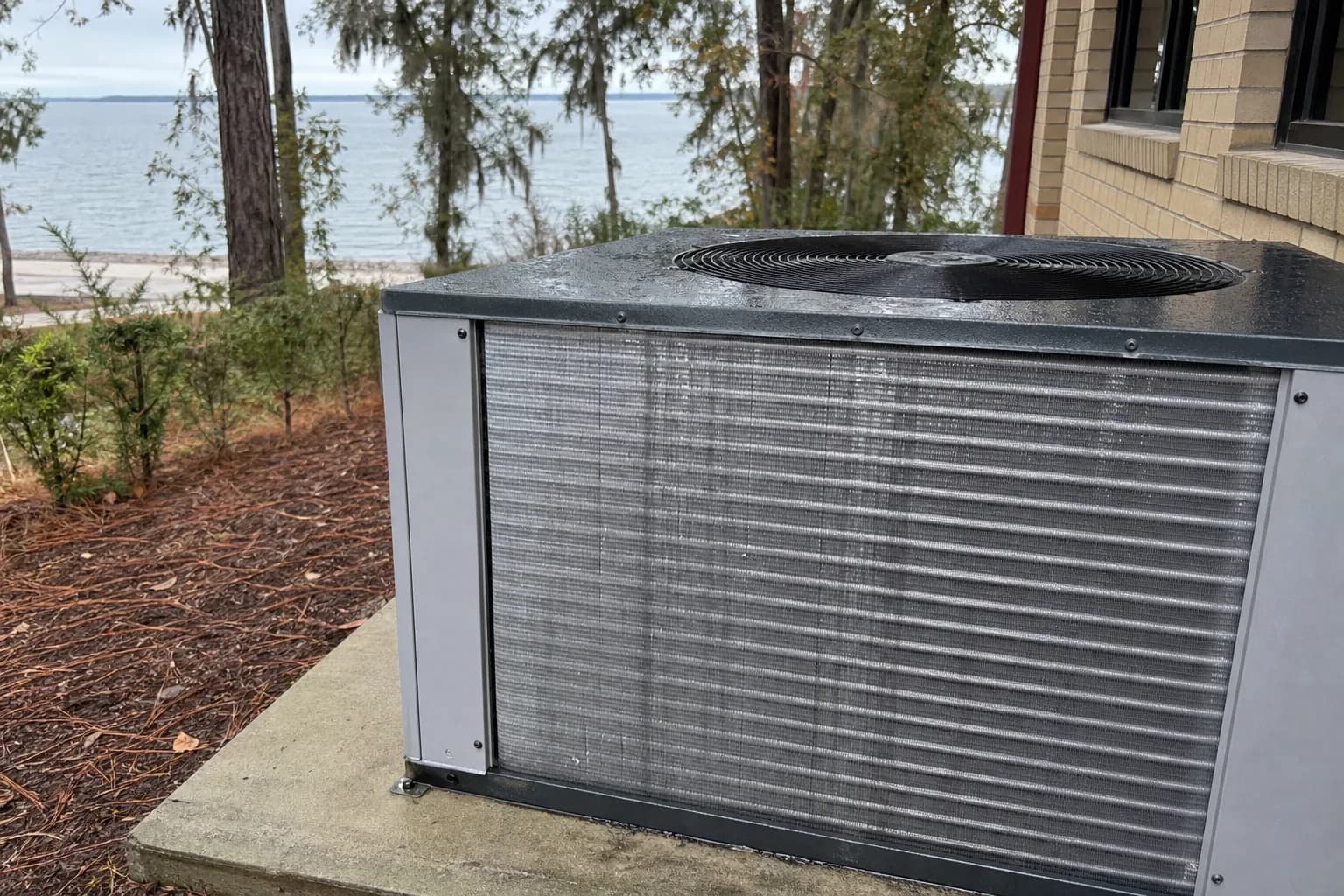
- Outdoor coil: moderate dust and pollen accumulation, no significant corrosion. A coil rinse was due. A full chemical wash was not.
- Indoor coil: light biofilm at the leading edge, otherwise clean. A chemical wash was reasonable preventive maintenance. Not urgent.
- Refrigerant pressures: within 3 PSI of design on both sides. No leak indicators.
- Condensate drain: flowing freely, P-trap had water seal.
- Filter: 2 months old, MERV 11, mildly loaded.
- Blower wheel: clean.
- Thermostat: working correctly.
- Outdoor disconnect: contactor pitting visible, approaching but not yet at replacement threshold. Worth flagging for the next visit.
That's the actual physical condition. Now let's compare what each estimate said.
Estimate A: $145 total
Five line items, one page:
- Spring tune-up service: $145
- Coil rinse (outdoor): included in tune-up
- Filter check: included in tune-up
- Refrigerant pressure check: included in tune-up
- Recommendations for next visit: contactor monitoring (no charge, just noted)
Estimate A described the system as "in good operational condition with light maintenance items addressed at this visit." The technician noted the contactor wear in writing for the next service interval but didn't flag it as urgent.
This is what an honest April invoice looks like on a Daphne system that's been reasonably maintained.
Estimate B: $1,847 total
Four pages. Twenty-three line items. Full-color photos of equipment, some of which on inspection don't even come from the actual system. Three items stamped "URGENT — replacement recommended within 30 days." Here's what's on the document:
- Diagnostic service call: $89
- Capacitor replacement (URGENT): $295
- Hard-start kit installation: $245
- Outdoor coil chemical wash: $215
- Indoor coil chemical wash: $195
- Refrigerant top-off (1 lb, "preventive"): $115
- UV light replacement: $185
- Anti-microbial drain line treatment: $85
- Surge protector replacement (URGENT): $245
- Contactor replacement: $185
- Blower wheel cleaning: $125
- Plenum sanitizer treatment: $145
- Duct cleaning estimate (separate quote attached): $1,200
- Smart thermostat upgrade: $385
- Float switch testing: $45
- Static pressure test: $95
- Combustion analysis (this is a heat pump, not gas): $85
- Heat exchanger inspection (also doesn't apply): $125
- Filter upgrade to "premium HEPA": $65
- Refrigerant line insulation replacement: $145
- Outdoor pad inspection: $45
- Air handler bracket inspection: $35
- Annual tune-up enrollment (URGENT): $549
Pages of color photos. Three urgent stamps. "Sign here to authorize" lines on the last page.
Total of items legitimately worth considering on this system: roughly five. Total of items either bogus, doubled-up, not applicable, or premature: roughly eighteen.
Walking through the padding line by line
Here's how to read an estimate like B and identify the padding pattern, category by category.
The "urgent" stamps that aren't urgent. Capacitor at 38.2 µF on a 40 µF spec is not urgent — it's within tolerance and is normal seasonal reading. Surge protector replacement is essentially never urgent unless the existing one has visibly failed (it hadn't). Tune-up plan enrollment is a sales push, not an emergency. None of the three "URGENT" items met the threshold.
The doubled-up items. Outdoor coil chemical wash AND outdoor coil rinse on the same visit — only one is needed depending on coil condition. Indoor coil chemical wash AND plenum sanitizer treatment AND anti-microbial drain treatment AND UV light replacement — those are four ways to charge for overlapping disinfection scope. One thorough indoor coil cleaning addresses the underlying issue.
The not-applicable items. Combustion analysis and heat exchanger inspection don't apply to a heat pump. They were on the document anyway. This is the kind of thing that signals a template-driven estimate rather than a system-specific one.
The premature items. Hard-start kit on a system with no hard-start indicators is a $245 part that may help slightly with capacitor longevity but isn't justified preventively. Refrigerant top-off "preventively" on a system with no leak indicators is unnecessary at $115/lb.
The aspirational items. Smart thermostat upgrade and duct cleaning are real services. Neither was triggered by anything we found on this system. They're add-ons being floated to bump the total.
The bracket and pad inspections. $45 and $35 are small numbers but they're padding — those inspections are either part of a real tune-up or they're not separately billable.
The filter upgrade. "Premium HEPA" residential filters often restrict airflow on residential equipment and reduce efficiency. The existing MERV 11 filter was appropriate for the system.
When you strip the padding off an estimate like B, the legitimate items left are: capacitor replacement (debatable — within tolerance), indoor coil chemical wash (reasonable, not urgent), contactor replacement (reasonable in the next 6-12 months), and a tune-up. That's a $400-$600 invoice if everything were done at once, not $1,847.
The four-question pushback
Here's the practical move for any Daphne homeowner staring at a high spring estimate. Four questions to ask the company that produced it:
Question 1: "What were the measured readings on the items flagged for replacement?" A reputable technician will give you actual numbers — capacitor microfarad reading, refrigerant pressures, static pressure, contactor visual condition. If the answer is vague ("it looked weak" or "they all need replacement at this age"), the item probably isn't justified by measurement.
Question 2: "Which items are required for safe operation, which are recommended within 12 months, and which are optional preventive?" This forces the categorization that the urgent stamps were trying to obscure. A real list usually has very few "required for safety" items, a moderate list of "recommended within 12 months," and the rest are optional.
Question 3: "If I do nothing today, what's the expected outcome?" A real technician will tell you. Often the answer is "the system will run normally through summer; we'll re-inspect in fall." If the answer is dire and emergency-flavored across multiple line items, the urgency is being manufactured.
Question 4: "Can you email me the full written estimate with line items today?" A reputable company will. A company that's worried about you getting a second opinion will hesitate, push for a same-visit signature, or offer a discount that expires within 24 hours.
That last one is the highest-information question on the list. The discount-expires-today move is the strongest signal that you're not looking at a real estimate.
What an honest independent measurement produces
For the same system, an honest May invoice would look more like:
- Diagnostic and full inspection: $79 (credited against the work that followed)
- Indoor coil chemical wash: $175
- Outdoor coil rinse: $35 (the surface light enough that a rinse is appropriate, not a chemical wash)
- Contactor noted for fall replacement (not done at this visit): $0 today, $185 in October
- Capacitor flagged for re-measurement at the next visit: $0
- Filter check, drain inspection, P-trap verification, refrigerant pressures: included in diagnostic
Honest shops decline to bill for items that aren't justified by measurement. The homeowner walks away with the maintenance actually needed and a written note about contactor replacement when it's actually due. Total for the year, including a planned fall contactor replacement, lands in the $400-600 range.
For homeowners trying to understand what a real April-May invoice should cover, the Daphne pre-summer punch list walks through the timing and scope. The Daphne spring pollen IAQ reset post covers indoor air quality items that are legitimately spring-priority and not just upsell vehicles. For broader context on what real repair pricing looks like across the county, see what AC repair actually costs in Baldwin County in 2026.
What to do with the company that wrote Estimate B
Naming the company in writing isn't necessary, and the conversation belongs to the homeowner, not the second-opinion contractor. The right deliverable from a second opinion is: a clear documented set of findings, a written line-by-line comparison, and a plain explanation of which items on the original estimate were real and which weren't.
Most homeowners who ask the four questions below get a conversation that gets short quickly. The relationship with that provider for routine service usually ends. The original estimate often ends up in a kitchen drawer as a reference for what the padding pattern looks like.
That kitchen drawer is the right place for one of those documents to end up.
What April looks like on the right kind of service call
Real spring tune-up scope, on a Daphne system in normal condition:
- Outdoor coil rinse and inspection
- Indoor coil inspection (chemical wash if biofilm present, rinse if not)
- Refrigerant pressure check on both sides
- Capacitor microfarad measurement
- Contactor visual inspection
- Condensate drain flow test and P-trap verification
- Float switch manual lift test
- Filter check and replacement if needed
- Static pressure measurement at the air handler
- Thermostat operation verification
- Written summary with measured readings
Time on site: 60-90 minutes. Cost: $135-$175 depending on whether the chemical wash is included. Real findings: usually 0-3 items worth flagging, almost never the 12-15 items a padded estimate produces.
If you're looking at an April Daphne estimate that's substantially above that range, the four questions above are the move. A reputable contractor will answer them clearly. A padded estimate will fall apart under them.
Two estimates side by side usually tell a homeowner everything they need to know. The job is just to walk through which one is real.
FAQ
- How can two Daphne HVAC companies inspect the same system and produce estimates that differ by $1,700?
- Because spring inspection pricing is a sales channel for some companies, not a service. The padded estimate isn't measuring different physical conditions — it's translating the same conditions into a longer line-item list with manufactured urgency. The real issues are usually the same. The difference is the markup, the unnecessary parts, and the items flagged 'urgent' that are actually routine wear. A homeowner who reads both estimates carefully can usually identify within five minutes which company is selling pricing and which is selling work.
- If I get a high spring estimate, what's the right way to ask for a second opinion without burning a relationship?
- Tell the first company you'd like to think about it for 24-48 hours and request that they email a copy of their full written estimate with line items. That request is normal and any reputable contractor will provide it. Then take that document to a second contractor — bring the actual estimate, don't paraphrase — and ask them to walk through it line by line. Free second opinions on quoted repairs are part of how ACExperts works. Honest reviews usually agree with 30-50% of the original estimate and respectfully disagree with the rest.
- Are there spring inspection items that are legitimately worth doing even if they sound like upsells?
- Yes. Coil chemical wash on a system that hasn't had one in 18+ months is real maintenance with measurable efficiency benefit. Capacitor replacement on a unit measuring more than 10% below rated microfarad is real preventive work. UV light replacement at the manufacturer's recommended interval is legitimate. The padded estimate problem isn't that everything on it is bogus — it's that real items get bundled with manufactured ones, and 'urgent' stamps appear on items that aren't urgent. The fix is line-by-line review, not blanket rejection.
- What does an honest April Daphne inspection actually look like in 2026 pricing?
- A standalone spring tune-up runs $135-$165 depending on system size and condition. Coil chemical wash if needed adds $145-$175. Capacitor replacement if needed adds $185-$215. A typical real April invoice for a Daphne system that hasn't had attention in 12-18 months lands somewhere between $135 and $545 depending on what actual maintenance was due. Anything substantially above that range deserves a closer look at the line items.
Need this handled?
Straight to the service page for your town — pricing, local details and a form that reaches a technician.
More from April Quote Padding

ACExperts HVAC
We Take The Heat So You Don't Have To
Fast, honest heating and air service across Baldwin County. Speak with a technician and get on the schedule today.