
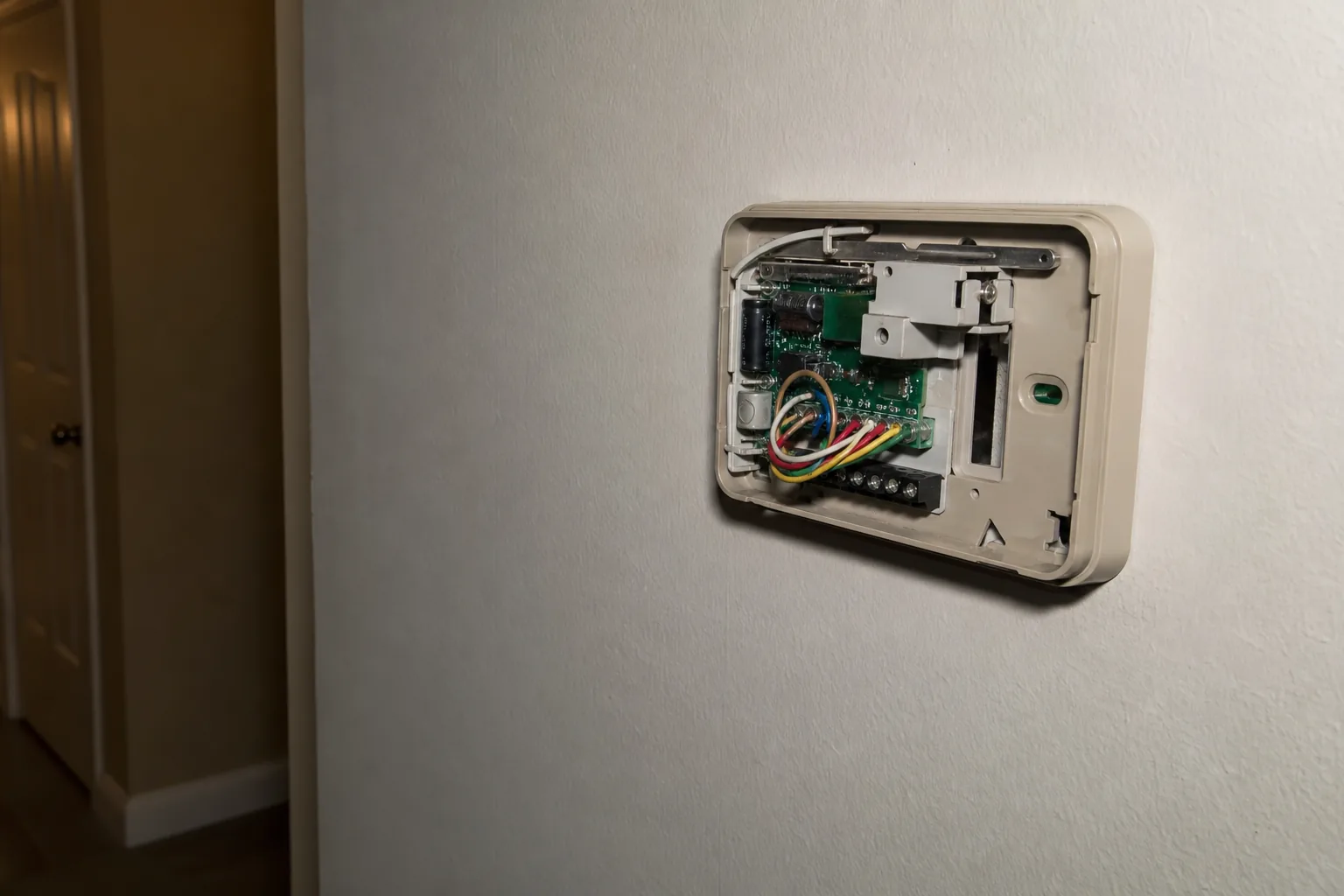
When a Gulf Shores Vent Blows Room-Temp Air — First Three Checks
Your Gulf Shores AC runs but the vents blow room-temp air. 90% of the time it's one of three things — and you can check them all in 12 minutes before calling.
Published 2026-08-27 · Updated 2026-08-27
Author: Landon Jahnke | ACExperts251
Reviewed by: Landon Jahnke · Owner · Alabama HVAC License AL #16117 · EPA 608 Certified
The customer asks: "Why is my AC blowing room-temperature air?"
The textbook answer: "Possible causes include refrigerant leak, frozen evaporator coil, dirty condenser, failed compressor, thermostat malfunction, blower motor failure, electrical fault at the contactor, blocked condensate drain triggering a float switch shutoff, or a TXV/metering device problem."
The honest answer for a Gulf Shores home in late August, based on 13 years of Baldwin County HVAC experience before founding ACExperts in 2026: most of the time it's one of three things, and if you check them in the order I'm about to give you, you'll often have your answer in about 12 minutes without spending a dime on a service call. Here are the three checks, in priority order.
This is written for Gulf Shores conditions specifically — coastal humidity, salt air on the outdoor unit, and the kind of runtime profile that pushes systems hard from May through October. The same three checks work in Foley or Fairhope. They're a little less likely to be the right answer in Bay Minette, where the inland equipment-failure profile skews differently.
Let's go.
Check 1 (60 seconds): The thermostat is on COOL and set below room temperature
Sounds dumb. Catches a real share of warm-air complaints before any tech ever rolls.
Walk to the thermostat. Confirm:
- The mode is set to COOL, not OFF, AUTO, FAN, or HEAT.
- The temperature setpoint is below the current room temperature reading on the thermostat. If the thermostat reads 72°F and the setpoint is 75°F, the system has correctly decided not to cool — it's already below your target. The vents will be blowing whatever the indoor blower is moving, which on most thermostats defaulting to AUTO means nothing at all, or on FAN means room-temperature air with no cooling.
- The thermostat batteries (if it's a battery-powered model) are fresh. A failing battery on some thermostats causes the display to read normally but lose the cooling call to the system.
- For programmable or smart thermostats: confirm you're not in a vacation mode, hold mode, or a scheduled setback that's overriding what you'd expect. Rental owners — check whether your last cleaning crew bumped the setpoint up to 78 or 80 to save energy between guests, then forgot to reset it for the new arrival.
If the thermostat is correctly set to cool, the setpoint is below room temp, and the system is calling for cool but the vents are still room-temp — proceed to Check 2.
Check 2 (3-4 minutes): The indoor air filter
This is the one that matters most. Filter neglect drives more late-August warm-air complaints in Gulf Shores than every other cause combined.
Locate your filter. In most Gulf Shores homes it's in one of three places:
- A return air grille in the wall or ceiling — usually a large grille with a hinge or screws, holding a filter directly behind the grille face.
- A slot at the air handler itself — if your air handler is in a closet or garage, there's often a slim slot near the bottom or side where a filter slides in.
- The filter cabinet between the return ductwork and the air handler, which on newer Gulf Shores construction may be a separate metal box accessible by removing a panel.
Pull the filter out. Hold it up to the kitchen ceiling fixture source — a window, a flashlight, anything bright. If you can't see the light through the filter, the filter is severely clogged. If the filter is a uniform gray-brown color across the entire surface and the pleats are matted flat, it's been in place too long.
Why this causes warm-air calls specifically: a clogged filter restricts airflow across the indoor evaporator coil. Lower airflow means the coil gets colder than design, eventually drops below 32°F, and ice forms on the coil. Once ice forms, airflow drops further, the coil gets colder still, and within a few hours the coil is a solid block of ice. The vents stop delivering cool air because air can't get past the ice block. The system is still trying to cool; it just can't push the cold through to the rooms.
If the filter is dirty, replace it now with a fresh one (any standard MERV 8-11 will work for emergency replacement; you can re-evaluate filter strategy later). Then look at the indoor coil if you can — through the access door on the air handler. If you see frost or ice on the coil, you've confirmed the runaway-freeze pattern. The system needs to thaw before it can cool again.
To thaw a frozen coil: Switch the thermostat to OFF (or set the mode to FAN ONLY for forced thaw). Leave the system in this state for 2-4 hours. The blower running without cooling will melt the ice off the coil. Then put a fresh filter in, switch the thermostat back to COOL, and let the equipment ease into the load. If the system cools normally, the filter was the cause and you're done.
If the filter looked fine and the coil isn't frozen, proceed to Check 3.
Check 3 (5-7 minutes): The outdoor unit and the condensate drain
Two physical checks, both outside or at the air handler. Both quick.
3A — Walk to the outdoor condenser.
The condenser is the metal box on the concrete pad outside the house, usually behind a hedge or in a side yard. Listen and look:
- Is the compressor running? You'll hear a hum or buzz from inside the cabinet, distinct from the fan noise.
- Is the fan blade on top spinning?
- Put your hand near the top grille — is air being pulled up and out, hot to the touch?
A normally-running outdoor unit has the compressor humming, the fan spinning, and hot air rushing out the top. If all three are present, the outdoor side is doing its job and the warm-air problem is on the indoor side or in the refrigerant circuit.
If the unit is silent — no compressor hum, no fan motion — that's why you have warm air. The outdoor side isn't running. Possible causes:
- The disconnect (the small box on the wall next to the unit) has been pulled or its fuse blew. Check that the pull-out is fully seated.
- The breaker in the main panel for the AC has tripped. Reset it once. If it trips again immediately, stop and call. A repeating breaker trip is an electrical fault, not a homeowner fix.
- The outdoor capacitor has failed. The compressor will buzz briefly when called and then go silent — distinctive "tries to start, can't" sound. This is a service call.
If the outdoor unit is running but loud, vibrating heavily, or surrounded by debris (leaves, grass clippings, hedge cuttings packed against the coil) — clear the debris and rinse the outdoor coil with a garden hose from the inside out if you can do so safely. A clogged outdoor coil reduces heat rejection and can cause poor cooling even when the system is otherwise healthy. For Gulf Shores homes specifically, salt-air corrosion can also reduce coil efficiency, but that's a slow process — not the cause of an acute warm-air problem this week.
3B — Check the condensate drain.
Most modern Gulf Shores air handlers have a float safety switch on the condensate drain. If the drain backs up (algae, biofilm, salt-air-driven corrosion debris from the line), the float switch shuts the system down to prevent water damage to the ceiling below.
The catch: on some systems, the float shuts off the cooling but the blower keeps running. That's why you might see a system "running" while the vents blow room-temperature air. The blower is moving air. The compressor and outdoor fan are off because the float switch tripped them.
Find the float switch — it's usually attached to the condensate line near the air handler, a small plastic box with two wires. If the indicator on the switch shows tripped (sometimes a colored flag, sometimes just the position of a small lever), the drain is the problem. Pour a cup of water into the drain pan to test it; if the water doesn't flow out, the line is clogged. Vacuum the outdoor end of the condensate line with a wet/dry vacuum for 30-60 seconds, and the clog usually clears.
After clearing the drain and resetting the float switch, the system should restore cooling within minutes.
What it isn't, 9 times out of 10
A few things people often jump to that are usually not the cause:
It's probably not a refrigerant leak. Real refrigerant leaks usually show up as gradual cooling decline over weeks or a frozen coil that won't recover after a thaw cycle. An overnight transition from cooling fine to blowing room-temperature air is more often filter or float, not refrigerant.
It's probably not the compressor. Failed compressors don't usually transition silently from working to not-working. They show electrical symptoms first — breaker trips, hard starts, audible buzzing on call — and the warm-air complaint comes after.
It's probably not the thermostat itself, beyond settings. Thermostat hardware failures are real but rare compared to filter and float failures. Don't replace the thermostat until you've confirmed the cheaper checks first.
For more on the broader frozen-coil sequence, our Fairhope frozen evaporator walkthrough covers what to do once you've confirmed ice on the coil. The Stockton drain pan overflow case is what happens when the float switch isn't there or doesn't work — worth reading if you've never thought about your condensate setup. For ongoing Gulf Shores rental management, our vacation rental HVAC checklist covers the seasonal cadence that prevents most of these calls in the first place. And if your warm-air call ends with confirmed equipment failure, our Spanish Fort warm-air diagnostic post goes through the full ranked-by-likelihood list.
When to stop checking and call
If you've worked through the three checks and:
- The thermostat is correctly set to cool.
- The filter was clean or has been replaced and the coil isn't frozen.
- The outdoor unit is running and the condensate drain is clear.
And the vents are still blowing room-temperature air after letting the system come up to load for 30-45 minutes — at that point, it's a service call. The remaining causes (refrigerant charge, metering device, compressor performance) need gauges and a tech.
Regular hours are Monday-Saturday 8am-6pm. Emergency calls are answered around the clock, every day of the week, including Saturdays at no extra charge. For Gulf Shores rentals during peak occupancy, mention it on the call. The ACExperts service fee is $79, with free second opinions on quoted repairs. Call 251-383-HVAC.
ACExperts is a one-truck shop — Landon Jahnke, AL #16117, 13 years of Baldwin County HVAC experience before founding the business in 2026.
FAQ
- How do I know if my outdoor unit is actually running?
- Walk outside to the condenser, the metal box on the concrete pad. If you can hear the compressor humming and you can feel air being pulled up out of the top through the fan grille, the unit is running. If the unit is silent and the fan blade isn't moving, the outdoor side is not running and that's the first thing to fix. Check the disconnect (the small metal box on the wall next to the unit) — if the pull-out is missing or sitting on the ground, it was pulled for service and not reinstalled. Check the breaker in the main panel labeled for the AC. If both look right and the unit still won't run, that's a service call.
- What does a frozen evaporator coil actually look like?
- If you can see the indoor coil — usually inside the air handler in the closet, garage, or attic — frost or ice on the copper U-bends and the aluminum fins is the obvious sign. If you can't see the coil directly, the second-best sign is the refrigerant line outside: the larger of the two copper lines (the suction line, usually wrapped in black foam insulation) will be cold to the touch and will often have frost or even visible ice forming on the metal at the service valve where the foam ends. A normally-running system has a cool but not freezing suction line. A frozen coil has a line that's literally iced over.
- Why does dirty filter cause warm air specifically?
- A dirty filter restricts airflow across the indoor evaporator coil. Lower airflow means the coil gets colder than it's designed to (because the same amount of refrigerant is absorbing heat from less air), and eventually the coil drops below 32°F and ice forms on it. Once ice forms, airflow drops further, the coil gets colder still, and you've entered a runaway freeze cycle. The vents start blowing room-temperature air because the air can't get past the ice block on the coil. The system is technically still 'cooling' — there's just no air making it through to the rooms.
- Should I call right away or try the checks first?
- Try the three checks first if you're comfortable doing so — they take 10-12 minutes, they don't require any tools, and they'll resolve a meaningful share of late-summer warm-air calls without a truck roll. If the checks don't identify the problem or if you find frost on the indoor coil, call 251-383-HVAC. Regular hours are Monday-Saturday 8am-6pm. Emergency calls are answered at any hour, every day, including Saturdays at no extra charge.
Need this handled?
Straight to the service page for your town — pricing, local details and a form that reaches a technician.
More from Warm Air Blowing

ACExperts HVAC
We Take The Heat So You Don't Have To
Fast, honest heating and air service across Baldwin County. Speak with a technician and get on the schedule today.