
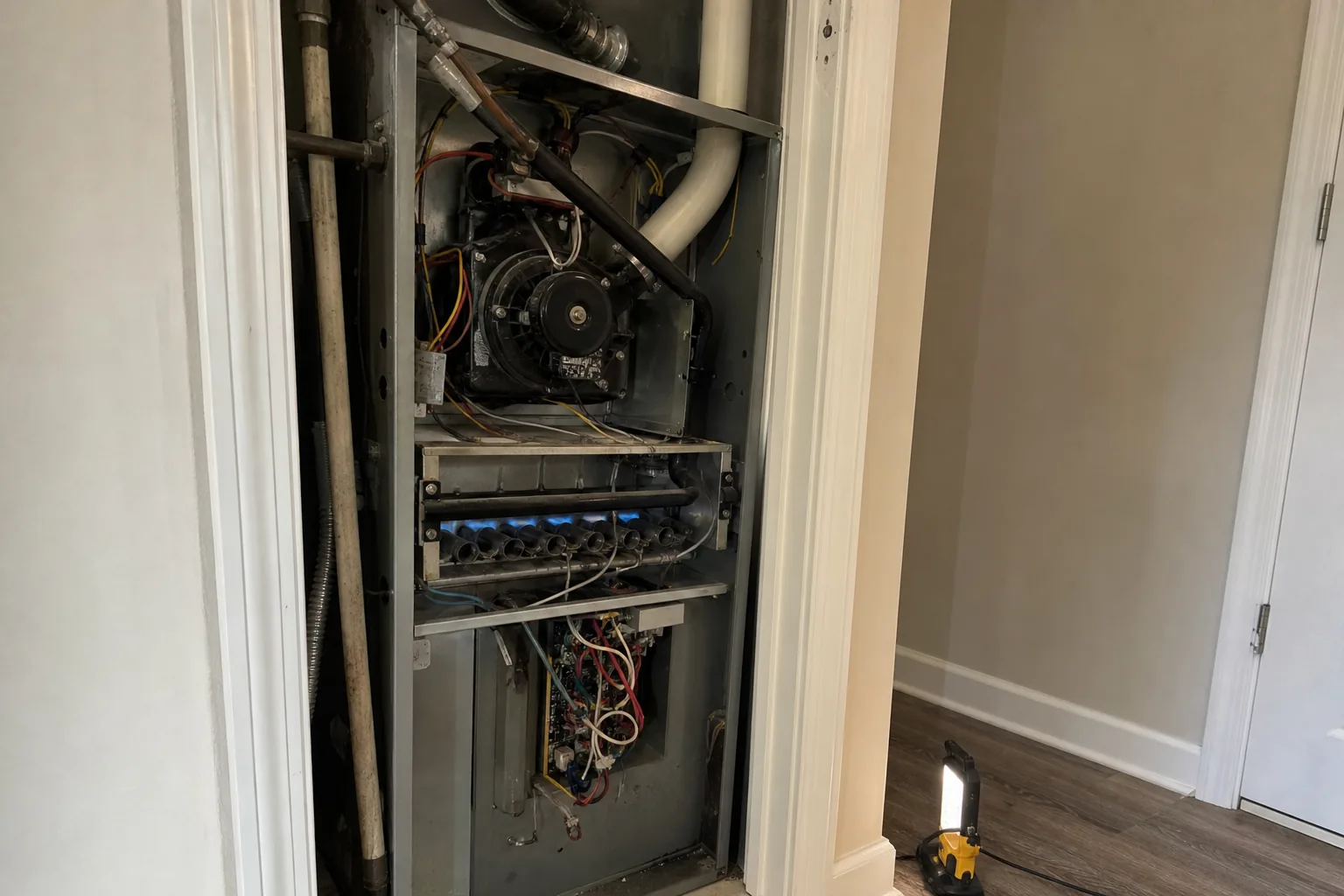
What an Honest Tech Charges for Spooky HVAC Noises in Gulf Shores in 2026
Banging, rattling, and groaning HVAC noises in Gulf Shores around Halloween: how to tell a 'do nothing' noise from a real problem, and why the right diagnostic wins.
Published 2026-10-01 · Updated 2026-10-01
Author: Landon Jahnke | ACExperts251
Reviewed by: Landon Jahnke · Owner · Alabama HVAC License AL #16117 · EPA 608 Certified
Fall in Gulf Shores generates a specific cluster of HVAC noises every year — and the right call ranges from "do nothing" to "yes that's actually a problem and needs fixing today." Knowing which is which saves a lot of money. The catch is that you can't honestly diagnose any of these by description over the phone or guess a repair price without putting a meter on the system. This post walks through the common October noise patterns in Gulf Shores so you can describe what you're hearing accurately when you call. For an actual diagnosis and written quote, call 251-383-HVAC.
Why I won't quote noise repairs by phone
Over thirteen years working Baldwin County HVAC before I founded ACExperts, the single most common pricing failure I saw was a phone quote based on a noise description. A homeowner says "banging when the heat kicks on," the dispatcher writes down "control board" and quotes a four-figure repair, and the actual problem turns out to be sheet metal duct expansion that needed nothing more than a strap of insulation.
That's why our pricing structure starts with the same diagnostic visit for every noise: $79 service fee, credited toward any repair you authorize. Free second opinions on quoted repairs from other shops, too — bring us the other tech's quote and we'll measure independently. No phone quote, no guessing.
What follows is the catalog of noises I work through on a fall diagnostic in Gulf Shores. Use it to describe what you're hearing — not to skip the diagnostic.
The October noise catalog
1. Bang or thump several seconds after heat startup
Most likely cause: expanding ductwork. Sheet metal trunk lines, especially older ones in unconditioned attic spaces, pop audibly as they warm up under heating-mode supply air. The bang is the metal moving into a new shape.
Diagnostic confirmation: noise is consistent with startup, comes from above the ceiling line not from the equipment itself, gets quieter or stops once the system runs for several minutes.
Likely action: often nothing. Sometimes a strap of expansion-tolerant insulation at the loudest joint during a regular maintenance visit. Occasionally replacement of a fatigued section of trunk.
Less likely cause for the same symptom: delayed gas ignition. Gas builds up briefly in the burner chamber before lighting and produces a small explosion. This sounds similar to duct expansion but is actually concerning. Diagnostic confirmation: noise is at the equipment itself, not in the ductwork, and there's a faint smell of gas immediately after.
If it's delayed gas ignition, that's a genuine repair — burner cleaning and gas valve adjustment. Don't ignore.
2. Rattling or buzzing from the outdoor condenser
Most likely cause: loose panel hardware. Outdoor units in Gulf Shores take a beating from salt air, and the screws holding the access panels and cabinet sides loosen with thermal cycling. Vibration during compressor operation rattles the loose panels.
Diagnostic confirmation: noise stops if you press on the panel with your hand while the unit runs. Sounds metallic, not mechanical.
Likely action: panel hardware retorquing. Often included as part of regular maintenance.
Less likely cause: bent fan blade. A fan blade that's been impacted by storm debris or warped from corrosion can clip the housing on rotation, producing a metallic ring once per revolution. Diagnostic confirmation: sound has a regular rhythm matching fan rotation speed. Action: blade replacement.
3. Whistling or whooshing from the supply registers
Most likely cause: dirty filter or undersized return air path. The blower is pulling against high static pressure and the air is moving fast through smaller-than-designed openings.
Diagnostic confirmation: replace the filter and see if it stops. We've covered the filter side in the IAQ reset guide for the Eastern Shore. If the new filter doesn't stop it, the return air path itself is undersized.
Likely action: filter swap (DIY) or, if confirmed undersized, return air path modification. The right scope depends on accessibility and how the original system was built — get a written quote before authorizing duct work.
4. Clicking from the air handler when the system cycles
Most likely cause: relay engagement. Single soft click is normal. Multiple rapid clicks is a relay or contactor failing to seat properly.
Diagnostic confirmation: count the clicks. One = fine. Three or more in a row = repair needed.
Likely action: contactor or relay replacement. We carry common contactor sizes on the truck so the repair can often happen in the same visit.
5. Squealing or screeching at startup
Most likely cause: blower motor bearing wearing out. The bearing has lost lubrication and is making metal-on-metal contact at startup before warming up.
Diagnostic confirmation: noise is loudest at first startup of the day, gets quieter or stops after a minute or so.
Likely action: motor lubrication if the motor is lubrication-tolerant, otherwise blower motor replacement. Variable-speed (ECM) motors cost more than PSC motors — exact pricing depends on which motor your system uses and which one we have to order.
This is the noise most likely to turn into an actual breakdown if ignored. A failing blower motor will eventually seize, and a seized motor on a Gulf Shores rental property in peak season is the worst possible time to deal with it.
6. Hissing from the indoor unit area
Most likely cause: refrigerant leak. Hissing means high-pressure gas escaping through a small opening.
Diagnostic confirmation: comfort drop accompanies the hiss, system runs longer, supply air feels less cold than it should.
Likely action: leak isolation, repair where repairable, refrigerant recharge. Cost varies hugely by leak location and refrigerant type. The Silverhill R-410A vs R-454B post covers the refrigerant cost side in detail.
This one is real and it doesn't get better on its own. Every day you wait, more refrigerant leaves the system.
7. Groaning or low-frequency rumble
Most likely cause: compressor under stress. Could be early bearing wear, could be high-side pressure issues from a dirty outdoor coil, could be undersized capacitor.
Diagnostic confirmation: requires gauges and meter readings. Not something to diagnose by ear.
Likely action: depends entirely on what the gauges say. Could be a capacitor swap, could be a coil cleaning, could be a compressor replacement at the high end. This is the noise where catching it early matters most — the cheap-to-fix versions and the catastrophic-to-fix versions sound similar from across the room. The hard-start kit guide covers when a capacitor or hard-start kit is the right answer and when it's a band-aid on a real problem.
Why this catalog matters in Gulf Shores specifically
Gulf Shores has the worst HVAC environment in the county, and fall amplifies a few things. Salt air from the Gulf has been working on outdoor equipment all summer; the first heat-mode call of the year stresses components in directions they haven't moved since March; and ambient quiet means small noises that were inaudible in August become impossible to ignore in October.
Add the rental factor. A Gulf Shores rental owner hearing a new noise from a unit that's about to host Halloween-week guests has a different urgency than a year-round resident in Craft Farms who can wait until next week for an appointment. We triage accordingly. Rental issues during occupancy or imminent check-in get prioritized routing within our regular service hours.
If you're a property owner managing a rental remotely, the rental property pre-check approach maps directly to fall noise diagnostics — same checklist, different season.
What an honest tech actually charges
Diagnostic call: $79 service fee in 2026, credited toward repair if you proceed.
That gets you time on site, full system inspection, electrical readings, refrigerant pressure check (where applicable), airflow and temperature differential, and a written summary of what we found and what it costs to fix. If your noise is the duct-expansion pop and the answer is "do nothing," you pay the $79 and we tell you that. If your noise is a failing blower motor, you pay the $79 and we quote you the repair in writing before doing anything else.
We don't quote repairs by phone. We don't sell repairs on noises that aren't actually problems. Free second opinions on quoted repairs are part of how we do business — bring us the other technician's quote and we'll measure independently and give you our reading. If our reading agrees with theirs, we'll tell you. If we think they're wrong, we'll show you why.
When to call vs when to wait
Call now:
- Hissing from anywhere in the system (refrigerant leak)
- Squealing that doesn't go away after the first minute (motor bearing failure imminent)
- Repeated rapid clicking from outdoor unit (contactor failure)
- Loud bang accompanied by a gas smell (delayed ignition)
- Any noise on a rental property within 48 hours of guest check-in
Schedule for the next maintenance visit:
- Bang at heat startup that fades after a few minutes (expanding ductwork)
- Whistle from supply registers if filter change doesn't fix it
- Rattling outdoor panel that you can stop by pressing on it
Usually ignore:
- Single soft click at thermostat call
- Quiet metallic ping from coil area on shutdown
- Refrigerant line creaking on temperature change
Service runs Monday through Saturday, 8am to 6pm, with emergency calls answered at any hour, every day at no extra charge for Saturdays. We cover Gulf Shores, Summerdale, Elberta, and Magnolia Springs on the same routing pattern. The noise you're hearing isn't always the problem you're worried about — and it's not always free, either. Honest diagnostics tell you which. Call 251-383-HVAC.
Nothing in this post is a tax, insurance, or financial recommendation. Pricing, parts availability, and refrigerant program details change over time and vary by household and equipment.
FAQ
- What's the most common 'spooky' HVAC noise in Gulf Shores in October?
- A loud bang or thump several seconds after the heating cycle starts. Most of the time, that's expanding ductwork — sheet metal duct sections that have cooled all summer and are now warming up under heating-mode supply air. The bang is the metal popping into a new shape. Annoying, harmless, and usually free to ignore. The exceptions are delayed gas ignition (genuinely concerning) or a fan blade striking a housing (expensive). The diagnostic listens for which pattern the noise actually fits — that's why we recommend a $79 diagnostic visit before anyone quotes you a repair price.
- Is a humming outdoor unit always a capacitor problem?
- No, but it often is. A capacitor-related hum sounds steady and constant, comes from the outdoor compressor, and is usually accompanied by the fan not spinning or the system not cooling. A different kind of hum — pulsating, lower-pitched, present even when the system isn't running — is typically a contactor that's vibrating against the panel. Different problem, different fix. We diagnose by listening with the panel open and measuring with a meter.
- Why does my AC sound louder in October when it's not even running as much?
- Two reasons. First: ambient noise drops in fall — your neighbors aren't running pool pumps, lawn equipment is quieter, traffic is lower. The same equipment noise you ignored in July is more noticeable in October. Second: the equipment itself runs differently in transitional weather. Heat-mode startup involves reversing valves and changing fan speeds, which are louder than steady-state cooling operation. If the noise is genuinely new — not just newly noticeable — that's worth a diagnostic.
- Should I be worried about clicking sounds when the system cycles on?
- Depends on what kind of click and where it's coming from. A single soft click from the air handler when the thermostat calls is normal — that's the relay engaging. A rapid series of clicks from the outdoor unit, three or four in a row, is a contactor failing to seat — that one is real and it'll get worse. A loud sharp click from the indoor coil area on shutdown is usually thermal expansion of metal connectors, harmless. We can diagnose the difference in a single visit.
Need this handled?
Straight to the service page for your town — pricing, local details and a form that reaches a technician.
More from Halloween Noises

ACExperts HVAC
We Take The Heat So You Don't Have To
Fast, honest heating and air service across Baldwin County. Speak with a technician and get on the schedule today.