
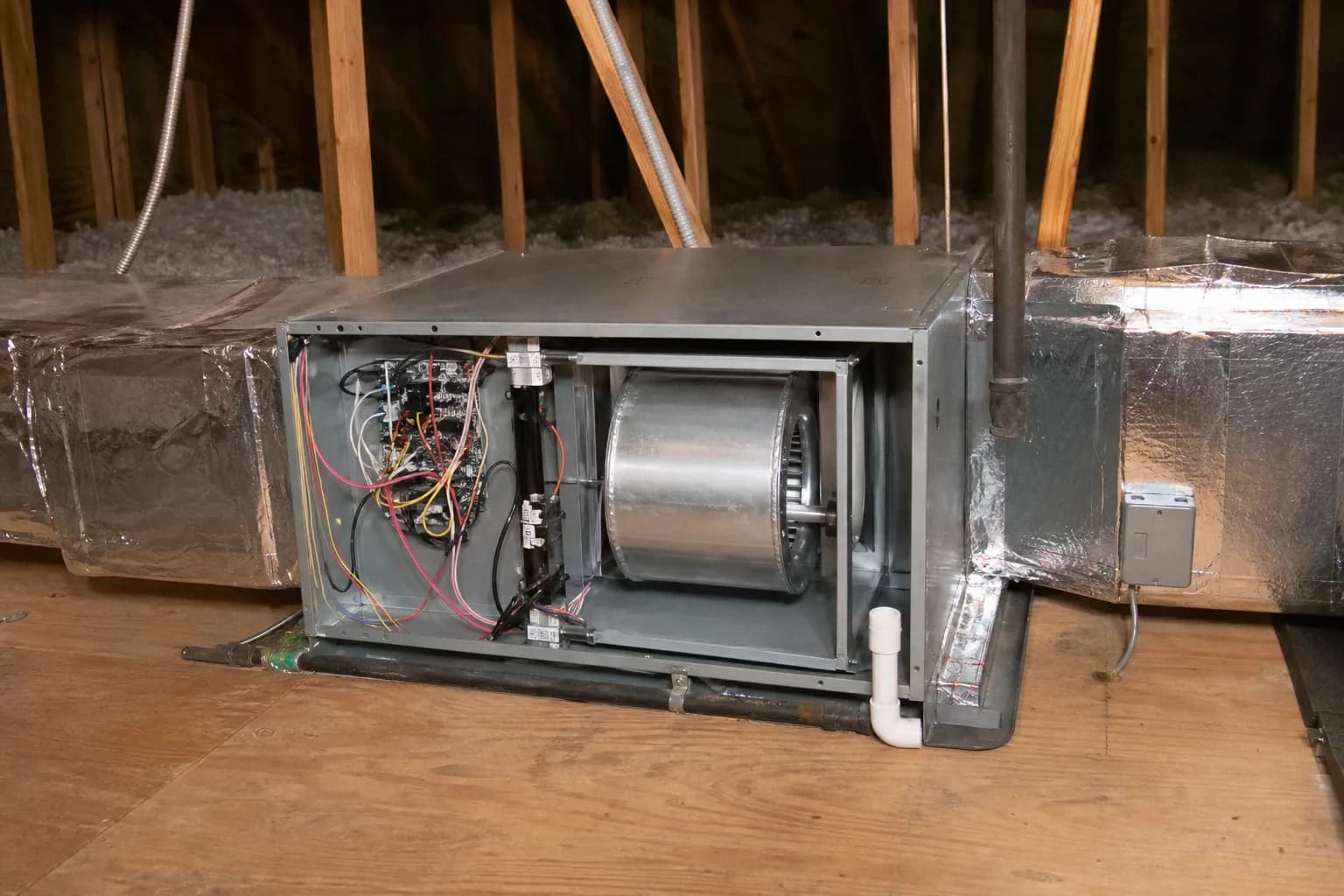
Stapleton Halloween Heating Noises: Three to Worry About, Several That Are Normal
The three first-cold-morning furnace sounds in Stapleton that aren't normal — and the several that are. What each one means and what to do about it, from the field.
Published 2026-10-02 · Updated 2026-10-02
Author: Landon Jahnke | ACExperts251
Reviewed by: Landon Jahnke · Owner · Alabama HVAC License AL #16117 · EPA 608 Certified
If I were writing the manual that ships with a Stapleton homeowner's furnace, page 47 would say:
"Late October's first cold morning will produce sounds you've never heard from this equipment. Most are normal. Three are not. Specifically: a high-pitched bearing whine on startup means the inducer motor needs lubrication; a delayed ignition rumble means burner residue has collected; a chain-reaction pop on shutdown means a duct support has come loose. Here is what each one looks like and what action to take."
Page 47 doesn't exist. So this post writes it, from 13 years working Baldwin County HVAC before founding ACExperts in 2026.
The three to actually worry about are below. A few common-but-normal sounds are at the end.
Sound 1: high-pitched bearing whine on startup
What it sounds like: A thin, sustained whine — somewhere between a dental drill and a slow-leaking tire — that starts when the inducer motor energizes (about 30 seconds after the thermostat calls for heat) and continues until the system either reaches steady state or, in worse cases, all the way through the cycle.
What it means: The inducer motor draws combustion air into the heat exchanger and pushes flue gases out through the vent. It's a small motor, runs continuously during heating cycles, and rides on two pressed-in sleeve bearings or sealed ball bearings depending on the era. Over time the lubrication migrates or the bearing surfaces develop wear. The whine is metal-on-metal with insufficient oil film in between.
Why fall: Six months of dormancy lets whatever lubricant was still in the bearing migrate. The first cold-snap startup loads the motor with normal operating force, but the bearing isn't ready for it. The whine appears, sometimes only at startup, sometimes throughout the cycle.
What to do: Don't ignore it, don't run it for weeks. The repair window between "noisy bearing" and "seized bearing destroyed the motor housing" is somewhere between 2 weeks and 2 months. Bearing service is meaningfully cheaper than full motor replacement on a seized bearing. A fall heating tune-up catches this before the symptom even appears.
Sound 2: delayed ignition rumble
What it sounds like: A clean ignition produces a soft "whoof" — gas meets flame, ignites smoothly across all burners, and you hear the air gently move into the flame. A delayed ignition produces a deeper, slower rumble or a small boom — sometimes loud enough to startle the homeowner, often paired with a visible flicker of light through the burner inspection window.
What it means: The igniter or pilot is firing, gas is flowing, but the gas is taking 1 to 5 seconds longer than spec to ignite. During that delay, unburned gas accumulates in the burner box. When ignition finally happens, all the accumulated gas ignites at once — that's the rumble or boom. Repeated delayed ignitions can crack the heat exchanger from thermal shock, which becomes a serious safety problem.
Why fall: Two causes show up in October. First, dust and pollen accumulate on the flame sensor over the off-season; the sensor reads low microamps and the control board takes a fraction of a second longer to confirm flame, delaying the gas valve next-cycle. Second, residue collects in the burner ports — spider webs, dust, oxidation — and the gas can't enter the burner box in a clean uniform pattern. Both produce delayed ignition.
What to do: Don't ignore. Multiple delayed ignitions per cycle, or rumble that's getting louder over time, are worth shutting the system off until a tech can clean the sensor and burners. Single delayed ignition on the first cold morning of the season, with normal ignition resuming after 2 or 3 cycles, is often the system clearing residue on its own — but worth a check.
Comfort Plan members get this work as part of the annual heating tune-up at no per-visit charge.
Sound 3: chain-reaction pops through the ductwork
What it sounds like: Multiple sharp pops, thunks, or bangs that cascade through the ductwork between the air handler and the supply registers within 30 to 90 seconds of the system cycling off. Sometimes heard through the floor in two-story homes.
What it means: Sheet-metal ductwork expands when heated and contracts when cooled. The expansion is gradual and quiet. The contraction is uneven — different sections of duct release their thermal stress at slightly different rates as the heat dissipates, and each release sounds like a pop. One pop per cycle, in roughly the same location each time, is normal duct behavior in any forced-air system. A chain reaction — multiple pops traveling through the system — is different. That suggests a loose duct support strap, a missing hanger, or ductwork that's resting against framing in a way it shouldn't be.
Why fall: First heat cycle of the season is the largest delta-T. A duct system that's been sitting at room temperature all summer suddenly carries 130 to 140 degree supply air, expands as it heats, then contracts sharply when the system cycles off. A weak support that held all summer can release on the first big contraction.
What to do: Verify whether it's a single pop or a chain. Single pop in the same location each cycle: normal, no action needed. Chain reaction: mechanical fix — re-secure the support hanger. Not an emergency, but worth scheduling before the system has run on it for weeks.
What's not on the list
Several sounds often get reported but aren't on the "three to worry about" list because they have benign meanings.
Clicking from the thermostat or air handler at the start of a cycle. The clicking is relays energizing — ignition control, gas valve, blower contactor. Normal. Every forced-air system clicks at startup.
Whoosh of air at the registers when the blower kicks on. Normal. Some duct designs amplify the whoosh more than others, and you'll hear it more clearly on the first cycle of the season.
Hum from the air handler that holds steady throughout the cycle. Usually normal blower motor or transformer hum. Worth a check if the hum is loud enough to be heard from another room, but rarely an emergency.
Faint metallic ticking that follows the cycle's thermal pattern. Almost always heat exchanger expansion ticking — the same physics as the duct pop, on a smaller scale, inside the equipment cabinet. Normal.
Dust burn-off smell paired with no abnormal sound. First-of-season heat run. The smell is dust that has collected on the heat exchanger over the summer burning off. Usually clears on its own within 20 minutes of the first cycle. Not an emergency.
The Stapleton-specific reality
Three things make Halloween-week heating noises more common in Stapleton than in coastal Baldwin County.
Older housing stock. Median construction year in Stapleton runs older than in Daphne and Spanish Fort. Older homes have older ductwork, older furnace inventory, and more accumulated thermal cycles on every component.
Inland heating load. Stapleton sees more nights below freezing per winter than coastal Baldwin County does. The first cold-snap night arrives harder here, which means the equipment comes up under more load during its first heat cycles of the season, which means dormancy-related issues surface faster.
Manufactured housing. A meaningful share of Stapleton's residential stock is manufactured housing, with sealed-combustion furnaces that have specific venting and clearance requirements. Manufactured-home heating systems have their own first-cold-morning noise profiles — reversing valve thunks on heat-pump-equipped models, sealed-combustion intake/exhaust whistling on calm nights — that don't show up in site-built homes.
If you've heard something new in your Stapleton home's heating system and you're not sure where it falls on the worry-not-worry line, give us a call. Phone consults are free, the in-home diagnostic is $79, and the Comfort Plan covers the fall heating tune-up at no per-visit charge.
The October check is what catches the inducer bearing early instead of late, the dirty flame sensor before the heat exchanger sees thermal shock, and the loose duct support before the homeowner is convinced the house is haunted. ACExperts is a one-truck shop — Landon Jahnke, AL #16117, 13 years of Baldwin County HVAC experience before founding the business in 2026.
FAQ
- Why are heating-noise calls more common in Stapleton than coastal Baldwin County?
- Two reasons. Stapleton sits about 25 miles inland with no bay-breeze moderation, so the first hard freeze nights drop sustained temperatures further than they do in Daphne or Fairhope — meaning systems that idle through the cooling season come up under heavier first-run load. The other reason is housing stock. Median construction year in Stapleton is older than in coastal cities, which means more retrofit ductwork and older furnace inventory that has accumulated thermal cycles for decades.
- Is the high-pitched bearing whine really worth a service call?
- It can wait a few days but not a full season. The whine is the inducer motor or blower motor running with a bearing that has lost lubrication. Continuing to run the motor in that state will eventually seize the bearing, which can damage the motor shaft or, on shaft-driven blowers, throw the wheel out of balance. A bearing service or motor swap done in late October is meaningfully cheaper than the same job done in December after the bearing has destroyed the motor housing.
- How do I tell a delayed-ignition rumble from a normal first-cold-morning startup sound?
- Timing is the cleanest test. Normal startup: thermostat calls for heat, inducer fan runs for 30 to 45 seconds (that's the pre-purge), igniter glows orange for 15 to 25 seconds, gas valve opens, burners light cleanly with a soft whoosh, and the blower kicks on 30 to 60 seconds later. Delayed ignition: same sequence except the burners don't light cleanly — instead there's a 2 to 5 second hesitation followed by a louder rumble or boom. That rumble is unburned gas accumulating in the burner box and igniting all at once. It is a real safety issue.
- My system makes one sharp pop on shutdown — is that the dangerous one or the normal one?
- Almost always normal. Sheet-metal ductwork contracts as it cools after the heat cycle ends, and the contraction isn't smooth — it happens in pulses as different sections release thermal stress at slightly different rates. Each release sounds like a sharp pop or thunk. One pop per shutdown cycle, in roughly the same location, is normal seasonal behavior. Multiple pops, pops that travel through the ductwork like a chain reaction, or pops accompanied by a ductwork rattle suggest a duct support has come loose — worth investigating but not an emergency.
Need this handled?
Straight to the service page for your town — pricing, local details and a form that reaches a technician.
More from Halloween Noises

ACExperts HVAC
We Take The Heat So You Don't Have To
Fast, honest heating and air service across Baldwin County. Speak with a technician and get on the schedule today.