
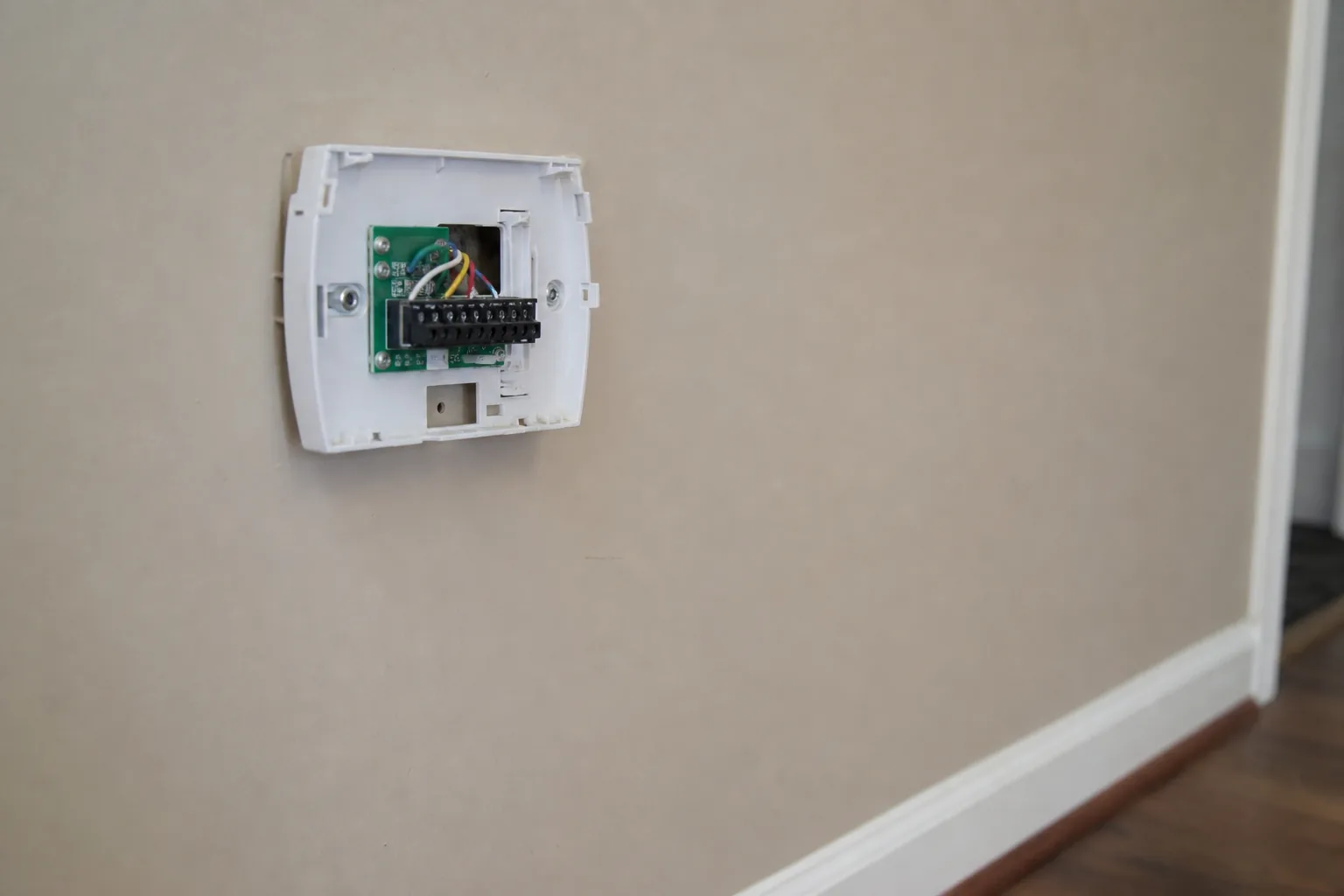
Should Daphne Homeowners Worry About Strange HVAC Noises?
Some sounds from your Daphne heat pump on the first cold night are normal. Others mean a service call. Here's how to tell which is which without guessing.
Published 2025-10-14 · Updated 2025-10-14
Author: Landon Jahnke | ACExperts251
Reviewed by: Landon Jahnke · Owner · Alabama HVAC License AL #16117 · EPA 608 Certified
Should Daphne homeowners worry about strange HVAC noises?
Depends on the noise. Eastern Shore homes on their first heat cycle of the year make a lot of sounds that aren't problems — and a few that are. The trick is knowing which is which before you spend money on a service call you didn't need or, the worse direction, before you ignore something that turns into a $3,000 fix.
This is the decision tree I walk Daphne homeowners through on the phone. If you can match what you're hearing to one of the three buckets below, you'll know within sixty seconds whether to keep watching, schedule a visit, or kill the breaker.
Bucket one: normal first-cold-snap sounds
The first cold morning in Daphne usually comes somewhere between mid-October and Thanksgiving, and a heat pump that hasn't run in heating mode since February is going to make noise on its first cycle. None of these sounds are problems on their own.
Expansion pops and ticks. Sheet metal ducts, especially the long supply runs in attics, expand when warm air starts moving through them after months of cool. Tick. Pop. Bigger pop. They settle within the first 5-10 minutes of a cycle. Older homes in Historic Malbis and Old Daphne have more ductwork length and more expansion noise; newer construction in The Reserve at Daphne and Hope Vineyard tend to be quieter because the ducts are shorter and better strapped.
Dust burn-off smell with brief mild crackle. First cycle of the season, the heat exchanger in a gas furnace and the electric strips in an electric/heat-pump system burn off accumulated dust. You'll smell it. You may hear a very faint crackle. It clears in 5-15 minutes and doesn't come back the next cycle. This is the most common first-of-season call I get and it's almost always nothing.
Heat pump defrost cycle. This is the big one Daphne homeowners need to know about because we don't have it explained to us when the system gets installed. Heat pumps build frost on the outdoor coil during heating mode when outdoor humidity is high and outdoor temperature is below about 40°F — which is most damp Eastern Shore mornings in November and December. The system periodically reverses its cycle for 5-10 minutes to melt the frost off. Symptoms: loud whoosh on entry into the cycle, hiss of refrigerant moving fast through the reversing valve, visible steam off the outdoor unit, brief cool air from the indoor registers (the indoor coil temporarily becomes the outdoor coil), and a metallic "thunk" when the cycle ends and switches back. All normal. The defrost cycle should run no more than once every 35-90 minutes during sustained cold and damp conditions.
Refrigerant flow gurgle right after a cycle ends. After the compressor shuts off, refrigerant is still equalizing pressure between the high and low sides. You'll hear a soft gurgle from the indoor coil for 15-30 seconds. Normal.
If what you're hearing fits any of the above, you're fine. Don't call yet. Watch it for a week of heating cycles and see if it changes.
Bucket two: schedule a service call within the week
These don't kill anything overnight, but they cost more the longer they're left alone. They also tend to get loud at the worst possible time — Christmas Eve, the first hard freeze, the morning company is arriving.
Squealing or screeching belt. Lake Forest and Historic Malbis homes from the 1970s-1980s often still have belt-drive blower motors. A screech on startup that fades after thirty seconds means the belt is stretched and slipping. A continuous screech means it's slipping continuously and the bearings are heating up. Belt replacement is inexpensive and quick. Wait too long and the bearings seize, which takes the blower motor with it — a much costlier fix.
Rattle or buzz from the outdoor unit, intermittent. Loose panel fastener, loose fan blade hub, or a contactor whose contacts are pitting and starting to chatter. None of those are immediate failures, but the contactor especially gets worse fast once it starts. A pitted contactor draws a little more current each cycle and eventually welds shut or burns out. Caught early, it's a routine repair; if it welds shut and runs the compressor against locked-rotor amperage, you can be looking at compressor replacement.
Ductwork bang-clap on cycle start. When the blower kicks on and a duct goes "BANG" then settles, that's an oilcanned section of sheet metal flexing under air pressure. Common in Lake Forest's older retrofit ductwork and in some Jubilee Farms homes where flex was used cheaply on long runs. It's not an emergency but it's an indicator that the duct system has problems — usually undersized returns, leaky joints elsewhere, or unsupported runs. Worth a duct inspection on the next service visit. While you're thinking about it, our preventive maintenance program catches most of these before they earn their own service call.
Whistle from a register or grille. Almost always undersized return air. Common in tightly-built newer Daphne construction (Hope Vineyard, parts of The Reserve at Daphne) where the return system was undersized at install. A return whistle won't break anything, but it costs you efficiency and comfort and can be addressed with a return air upgrade.
Heat pump that runs but doesn't heat well, with no obvious noise change. Not strictly a "noise" but a related diagnostic call. If the system runs longer cycles and the air feels cool-warm rather than warm-warm, the heat pump may be low on refrigerant or running on auxiliary heat strips because the outdoor unit is failing to deliver heat. Schedule a heating repair visit. Worth catching before a hard freeze.
Stockton homeowners deal with a related but not-identical noise profile — different equipment vintage, different duct construction. I wrote that one up separately if you've got family up there asking the same questions you are.
Bucket three: kill the breaker, call now
Some sounds are not "schedule a visit" sounds. They mean shut the system down and call. In rough order of how often I see each one in Daphne:
Gas smell, indoors or outside near the outdoor venting. Don't open windows and leave the system running. Shut the gas off at the meter (or have someone help you), get out of the house, and call the gas utility first, then us. Gas furnaces in Daphne are rarer than heat pumps but they exist, mostly in older Lake Forest and Historic Malbis homes. A gas smell is never something you wait on.
Repeated breaker trip. First trip can be a transient. Second is suspicious. Third means there's a fault and you're going to overheat wiring or start a fire if you keep resetting it. Leave the breaker off, call.
Smoke or visible electrical arcing from any component. Self-explanatory. Don't restart.
Loud, sustained mechanical grinding or knocking from the outdoor unit. Not a brief startup clunk — sustained grinding, sustained knocking, especially if the fan slows or stops. Compressor mount failure, bearing failure, or a loose internal component. Continuing to run it locks up the compressor entirely.
A high-pitched scream from the indoor unit that didn't exist before. Blower motor bearing about to seize. You have minutes, not hours. Shut it off and call.
Hissing that's loud enough to hear from another room and doesn't stop. That's a refrigerant leak under high pressure. Leaks under low pressure are usually inaudible — a hiss you can hear from outside the equipment closet means it's significant. Refrigerant under pressure displaces air and can be hazardous in a small enclosed space. Shut it down.
For any of those: 251-383-HVAC. We answer emergency calls 24/7, every day of the week, including Saturdays at no extra charge.
What's specific about Daphne's noise profile
A few things make the Daphne housing mix produce different noises than other Baldwin cities:
The split between newer tight construction (Jubilee Farms, The Reserve, Hope Vineyard) and older retrofit homes (Historic Malbis, Old Daphne, parts of Lake Forest) means I get totally different first-of-season calls from neighborhoods three miles apart. Tight new construction has whistles, returns, and humidity-related drain noises. Older retrofits have expansion pops, duct bangs, and belt squeals. Knowing which neighborhood I'm headed to tells me what to bring on the truck before I arrive.
Mobile Bay sits close enough that even a few miles inland the air carries salt content. That accelerates corrosion on outdoor unit fasteners and panels, which means rattles and buzzes get louder faster here than they would in Bay Minette. A panel fastener that's 70% rusted through will start buzzing in a Daphne installation a year or two before the same age fastener in an inland service area does.
Heat pumps dominate the Daphne equipment mix. Maybe 90-95% of what I service in Daphne is heat-pump-based, with very little straight gas furnace work compared to Bay Minette. That means the defrost cycle question is the single most-asked first-of-season question I get from this market, and it's almost always not a problem.
My Fairhope counterpart-post covers a few specific homeowner mistakes that send unnecessary service calls our way every fall — worth reading if you're in Daphne too because the patterns transfer.
A short way to use this
Match the noise to the bucket. If it's bucket one, leave it alone. If it's bucket two, call within a week. If it's bucket three, kill the breaker and call now.
If you can't tell which bucket you're in, take a fifteen-second video on your phone with the sound audible and text it to 251-383-HVAC. I'd rather get five videos a week of "is this normal?" than miss the one that was a contactor about to weld shut.
FAQ
- My heat pump in Jubilee Farms makes a loud whoosh and hiss for a few minutes — is that defrost or something wrong?
- Almost certainly defrost. On the first cold mornings of the Daphne season — late October through January — heat pumps periodically reverse their refrigerant cycle to melt frost off the outdoor coil. You'll hear a loud whoosh, hiss, and brief steam plume from the outdoor unit, lasting 5-10 minutes, sometimes with the indoor air briefly cooling. That's normal. If it lasts longer than 15 minutes or happens every 30 minutes, that's diagnostic-worthy.
- What does a screeching belt sound mean on a Lake Forest furnace?
- On older systems with belt-drive blowers — common in Lake Forest homes from the 1970s and 1980s — a screech on startup usually means the blower belt has stretched, slipped, or the bearings are failing. It's not an emergency, but it is a service call within a week. Belts are inexpensive and quick to replace; if the bearings fail entirely they can take the blower motor down with them — a much costlier fix.
- I smell something burning when my heat first comes on. Should I worry?
- Once a year, on the first heat cycle of the season, almost every Daphne system burns off accumulated dust on the heat exchanger and electric strips. That's 5-15 minutes of light burning smell, then it's gone for the rest of winter. If the smell persists past the first hour or comes back on later cycles, shut it off and call — that can indicate a wire insulation problem or a failing motor.
- My system is making a sound I've never heard before and I can't tell what category it falls into. What should I do?
- Phone video is the fastest answer. Take a 15-second clip of the system running with the sound audible and text it to 251-383-HVAC. We can usually tell from the recording whether it's expansion noise (no action), a repair-worthy noise (schedule), or a shut-it-down-now noise (kill the breaker and we come out).
Need this handled?
Straight to the service page for your town — pricing, local details and a form that reaches a technician.
More from Halloween Noises

ACExperts HVAC
We Take The Heat So You Don't Have To
Fast, honest heating and air service across Baldwin County. Speak with a technician and get on the schedule today.