
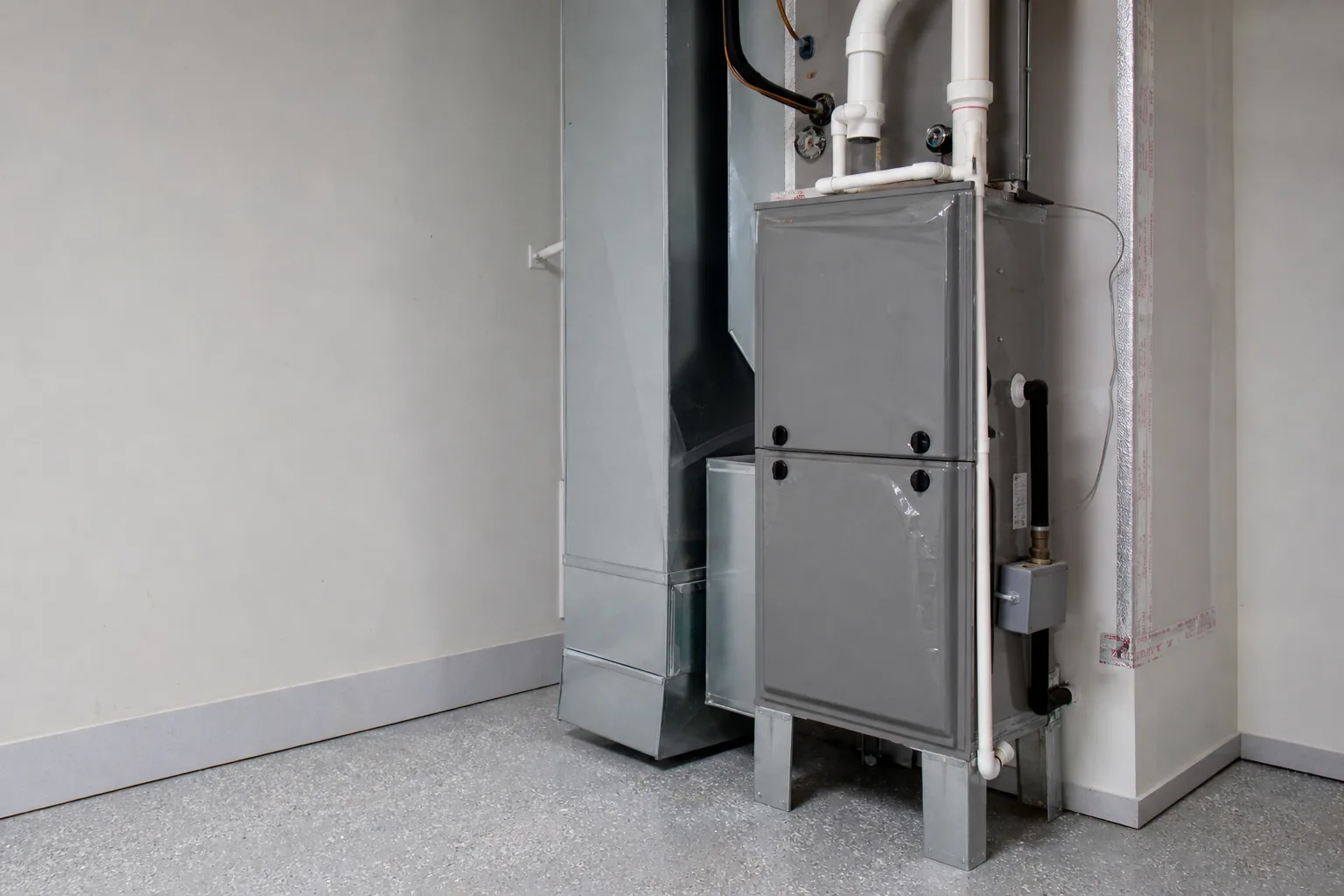
Fairhope Fall Furnace Inspection Upsells — What's Real vs. Manufactured
Fairhope fall furnace inspection upsells — how to tell a real recommendation from a manufactured one, and the questions a padded inspection asks to flip the answer.
Published 2026-10-16 · Updated 2026-10-16
Author: Landon Jahnke | ACExperts251
Reviewed by: Landon Jahnke · Owner · Alabama HVAC License AL #16117 · EPA 608 Certified
The five honest answers from a typical Fairhope fall furnace inspection on mid-aged equipment:
A1: "No, your heat exchanger is not cracked." A2: "Yes, the gas valve has a small leak — that's a real repair, not a replacement." A3: "No, you do not need a new flue." A4: "Yes, the inducer motor bearings are dry — preventive lubrication is a minor line item." A5: "No, your blower wheel does not need replacement."
Now figure out which questions a padded inspection would have asked to flip the answer set. Here are the inverse questions and how Fairhope homeowners can recognize them.
The exercise is useful because the padding pattern in fall furnace inspections is consistent across the contractors who run that play. They aren't responding to the system. They're running a script. The script has questions designed to produce specific answers, and the answers drive specific upsells. If you can recognize the questions, you can recognize the script.
Picture the kind of inspection that produces this answer set: a 12-year-old gas furnace in a Fairhope home in a Stone Creek-style subdivision. The system has received basic maintenance but hasn't had a thorough combustion analysis in three years. The five honest findings above are what a complete inspection produces. Now walk through the inverse — the questions a padded inspection would have asked instead.
The inverse question for A1: "Is your heat exchanger cracked?"
The padded inspection version: "We found a possible crack in your heat exchanger. This is a serious safety issue. Carbon monoxide could be entering your home. We strongly recommend immediate replacement of the entire furnace."
What the padded version usually skips: actual combustion analysis with carbon monoxide measurement, visual inspection with a borescope, and an explanation of how the crack was identified. The "possible crack" phrasing is the tell. Real heat exchanger cracks are visible (with proper inspection tools) or detectable through CO measurement during operation. "Possible" without measurement is a sales hedge.
How to push back: "Can you show me the CO measurement during operation? Can you walk me through where the visual inspection identified the crack, with photos or borescope footage?" A real finding has documentation. A padded finding doesn't.
In this scenario the furnace has no heat exchanger crack — confirmed by combustion analysis showing CO well within the safe operating range under 100 ppm and visual inspection of accessible heat exchanger surfaces. The cost of confirming this clearly is small — combustion analysis as part of the tune-up scope. The cost of a padded inspection that flags a "possible crack" and recommends replacement: $4,800-$8,500 for an unnecessary full furnace replacement.
For broader context on padded estimate patterns and how to read them, see why Daphne spring estimates run high — and how to push back and October Stockton heating quotes — why tune-up bait becomes a sale. Same play, different cities, different seasons.
The inverse question for A2: "Does your gas valve have a leak?"
The padded inspection version: this one usually doesn't get padded the same way, because gas valve leaks are real and verifiable. What does get padded around a gas valve finding is the scope of the repair — a sealing-and-retest repair gets converted into a full valve assembly replacement, often with "while we're in there" add-ons that aren't justified.
A typical small gas valve leak shows up at the connection fitting, detectable with electronic gas leak sensor and confirmed with soap-bubble test. The repair is straightforward: tighten and reseal the fitting, retest, document. The line item covers the sealing work plus time to verify no other leaks elsewhere on the gas train.
How a padded version of this same finding might present:
- Original finding: small connection leak at gas valve.
- Padded recommendation: "Gas valve assembly replacement, including new valve, new flex line, new connection hardware, leak test, and code inspection."
- Padded cost: several times the actual repair price.
- What's missing from the padded version: the actual measurement of leak size, the soap-bubble verification, and the explanation of why a sealing repair wasn't sufficient.
How to push back: "What size is the leak — can you measure it? Did you try sealing the connection first? What's the difference between the repair and the replacement?" A real gas valve leak has a measurable severity and a tiered repair path. The padded version skips the tiers.
This is the place where the answer set actually has a "yes" — real finding, real repair. The padding pattern doesn't always invent findings. Sometimes it just inflates the response to a real one.
The inverse question for A3: "Does your flue need replacement?"
The padded inspection version: "We noticed corrosion on your flue pipe. This is a safety concern — corroded flues can leak combustion gases into your home. We recommend full flue replacement, including the connector, the through-roof section, and the cap."
What the padded version usually skips: distinction between surface oxidation (cosmetic, normal on older galvanized flue pipe) and through-wall corrosion (real safety issue). Most "flue corrosion" findings on Fairhope furnaces are surface oxidation that's been there for a decade with no functional impact.
How to push back: "Is this surface oxidation or through-wall corrosion? Can you show me where you measured wall thickness? What's the safety threshold and how far below it are we?" Real flue replacement is justified by measurable wall thinning, visible perforation, or documented draft issues — not by surface appearance.
A typical 12-year-old galvanized flue shows normal surface oxidation along the through-roof section. Wall thickness measures within spec at every check point. Draft test is within design range. Flue replacement is not indicated. Cost saved by not pursuing unnecessary flue replacement: typically $385-$685.
For Fairhope homeowners with older homes — particularly in the Fruit & Nut District where original flue installations may date to the 1970s or 1980s — flue condition is a real conversation worth having. The historic-home HVAC dynamics are covered in Fairhope historic home HVAC sizing, and the broader question of when older equipment really should be retired versus refurbished is in how long does an AC last in Baldwin County.
The inverse question for A4: "Do your inducer motor bearings need attention?"
This is one of the rare findings where the padded inspection actually under-reports rather than over-reports. Inducer motor bearing maintenance is real preventive work that extends component life by 3-5 years for a small line item. Many fall inspections skip it entirely because it's a small ticket item that doesn't generate sales pipeline.
The padded inspection version sometimes goes the other way: "Your inducer motor is failing. We recommend replacement." When in fact the motor just needs bearing lubrication, not replacement. Dry bearings produce a slight noise increase but the motor otherwise runs normally — lubrication addresses the issue completely.
How to recognize the right answer: a real diagnostic distinguishes between bearing wear (lubrication or imminent replacement) and motor electrical failure (replacement only). A padded recommendation jumps to replacement without the intermediate step.
For more on diagnostic logic that distinguishes real component failure from premature replacement recommendations, see why silverhill outdoor fan motors die at the 7-year mark — same family of motors, similar diagnostic split, parallel pricing logic.
The inverse question for A5: "Does your blower wheel need replacement?"
The padded inspection version: "Your blower wheel is dirty and out of balance. We recommend blower wheel replacement to restore airflow performance and reduce wear on the motor."
What the padded version usually skips: the difference between a blower wheel that's dirty (cleanable) and one that's actually damaged or significantly out of balance (replaceable). Almost every blower wheel in a 5+ year old system is dirty enough to benefit from cleaning. Almost none of them are damaged enough to require replacement.
How to push back: "Is the blower wheel damaged or just dirty? Have you measured the imbalance? What's the cleaning option vs. replacement option?" Real blower wheel replacement is justified by measurable imbalance, visible damage to the fins, or motor wear that traces back to the wheel. Surface dirt is a cleaning ticket, not a replacement ticket.
A typical blower wheel after years of operation has moderate dust and biofilm accumulation but no damage and no measurable imbalance. Cleaning as part of the visit returns system airflow to design spec. Replacement cost typically saved: a few hundred dollars per occurrence.
A typical honest invoice on this scenario
Real findings, real repairs, real invoice on a Fairhope furnace inspection like the one above:
- Furnace tune-up with combustion analysis
- Gas valve connection leak repair (sealing, not replacement)
- Inducer motor bearing lubrication
- Blower wheel cleaning
Total typically lands in the mid-hundreds — meaningful money but appropriate for the actual maintenance and repair work.
For comparison, what a padded version of this same inspection might have produced:
- "Possible heat exchanger crack — full furnace replacement": $4,800-$5,800
- Or alternatively, a stacked recommendation: gas valve assembly replacement + flue replacement + blower wheel replacement + inducer motor replacement, ringing up multiple thousand dollars
- Plus the tune-up itself
The gap between an honest invoice and the padded version is exactly the padding scale this post is describing. None of the inflated items are physically justified by the system's actual condition. All of them are produced by a script that doesn't respond to measurement.
How to verify a fall inspection isn't running the script
Four questions to ask the technician on site, before they leave:
Question 1: "Can I see the combustion analysis numbers — CO ppm, oxygen percent, combustion efficiency?" A real inspection includes these. A padded one often doesn't.
Question 2: "What measurements support each finding on your written summary?" Real findings have measurements. Padded findings have adjectives ("rusty," "possible," "concerning").
Question 3: "Which items are required for safe operation, which are recommended within 12 months, and which are optional preventive?" This forces the categorization that urgent stamps try to obscure.
Question 4: "Can you email me the full written summary today?" Reputable contractors do. Padding-driven contractors often resist or push for same-visit signature.
For the parallel framework on AC inspections specifically, see why Daphne spring estimates run high — and how to push back. Different season, same diagnostic discipline.
The pricing reality for a real Fairhope fall furnace tune-up
Real scope for an October Fairhope furnace inspection:
- Combustion analysis with CO and efficiency measurement
- Heat exchanger visual inspection with proper tools
- Gas pressure test (manifold and inlet)
- Flame sensor inspection and cleaning if needed
- Inducer motor inspection
- Blower motor amperage measurement
- Blower wheel inspection (cleaning if needed)
- Belt and pulley inspection (older equipment)
- Limit switch and rollout switch verification
- Thermostat operation verification
- Filter check and replacement if needed
- Written summary with measured readings
Time on site: 75-105 minutes for a thorough job. The standalone tune-up gets its own line; Comfort Plan members get two annual visits included as part of the $20/month or $240/year membership.
If you're looking at a Fairhope fall inspection invoice that's substantially above what a real tune-up should cost — $800, $1,400, $3,500 — the four questions above are the move. A reputable contractor will answer them clearly, with measurements, and won't pressure for same-day signature. A padded inspection will fall apart under the questions.
For the broader context on how repair pricing actually moves in 2026-2027, see what AC repair actually costs in Baldwin County in 2026 and why Daphne HVAC labor rates climbed in 2027. The actual pricing trajectory is real but it's predictable. The padding pattern is a different conversation entirely.
An honest fall furnace inspection ends with a mid-hundreds invoice covering real maintenance and real repairs on a system that's now ready for the heating season. That's what a fall furnace inspection should produce. If yours produced something substantially different, the inverse-question exercise is worth running.
FAQ
- How often is a Fairhope furnace heat exchanger crack actually a real finding?
- Substantially less often than padded inspections claim. In practice, real heat exchanger cracks are rare and concentrated on equipment 18+ years old. The padded-inspection version of this finding shows up far more frequently — typically with phrases like 'rusty-looking area' or 'possible crack' that aren't backed by combustion analysis or visual inspection with a borescope. A real crack finding is supported by carbon monoxide measurements, flame pattern observation, and either visual confirmation with proper inspection tools or documented CO readings above safe threshold.
- What does an honest Fairhope fall furnace inspection actually cost?
- A standalone furnace tune-up varies with system size and condition. Combustion analysis (CO and combustion efficiency measurement) is the most important diagnostic — make sure it's in the scope. Real follow-up repairs (gas valve repair, blower capacitor replacement, flame sensor cleaning) get scoped after the tune-up identifies what's actually needed. ACExperts uses the standard $79 service fee structure with free second opinions on quoted repairs. For a written quote, call 251-383-HVAC.
- If a Fairhope contractor recommends a new furnace based on a fall inspection, what should I do?
- Get the recommendation in writing with the specific findings that support it: combustion analysis numbers, photos of any failed components, age of the system, and the diagnostic logic. Then get a written second opinion from a different contractor. Free second opinions are standard ACExperts policy. A real replacement recommendation on a 15-25 year old system with documented heat exchanger or compressor failure is reasonable. A replacement recommendation on an 8-year-old system after a single inspection is rarely justified by the physical evidence.
- Are there fall furnace items that legitimately should be done every year in Fairhope?
- Yes. Combustion analysis with CO measurement is real preventive work that catches developing safety issues. Inducer motor inspection and lubrication where applicable extends component life. Flame sensor cleaning improves ignition reliability. Air filter replacement before the heating season is non-negotiable. Belt inspection on belt-drive blowers (less common in modern equipment) catches wear before failure. The annual scope is real — the padding shows up when those items are bundled with manufactured findings to inflate the invoice.
Need this handled?
Straight to the service page for your town — pricing, local details and a form that reaches a technician.
More from October Quote Padding

ACExperts HVAC
We Take The Heat So You Don't Have To
Fast, honest heating and air service across Baldwin County. Speak with a technician and get on the schedule today.