
How Long Does an AC Last in Baldwin County's Humid Climate?
What Gulf Coast humidity, heat load, and salt air mean for air conditioner lifespan in Baldwin County — realistic year ranges, what shortens them, and how maintenance changes the math.
Published 2026-04-01 · Updated 2026-04-01
Author: Landon Jahnke | ACExperts251
Reviewed by: Landon Jahnke · Owner · Alabama HVAC License AL #16117 · EPA 608 Certified
It's one of the first questions homeowners ask when an air conditioner starts acting up: "How much life does this thing have left?" And right behind it: "Is what I'm about to pay for going to last?" Both are fair. The honest answer is that a well-cared-for central system in Baldwin County can run a long time — but our climate is genuinely harder on equipment than most of the country, and the number you get depends almost entirely on choices you make along the way.
Over 13 years working Baldwin County HVAC, I've pulled systems that died young from neglect sitting right down the road from systems twice their age that were still humming along. The difference is rarely the brand on the cabinet. It's sizing, protection, and maintenance. Here's how the math actually works on the Gulf Coast.
Why coastal Alabama is tough on air conditioners
Three forces stack up here, and they compound each other.
The cooling season is long. Our systems run hard from early spring well into the fall, and the shoulder seasons are longer than most of the country because the Gulf moderates both ends. More run hours per year means more cumulative wear on the compressor, the fan motors, and the electrical components than the same equipment would see in a milder climate. The clock on an AC isn't really measured in years — it's measured in hours of runtime, and we put a lot of hours on ours.
The humidity is relentless. When the dew point sits in the seventies for months, the indoor coil is condensing water constantly. That means more moisture moving through the system, wetter coils, and a condensate drain that's working overtime. Neglect that drain and it clogs with biofilm, water backs up, the float switch trips, and the system shuts down — usually on the hottest day of the year. Chronic high humidity also creates the conditions for corrosion and mold if the equipment isn't maintained.
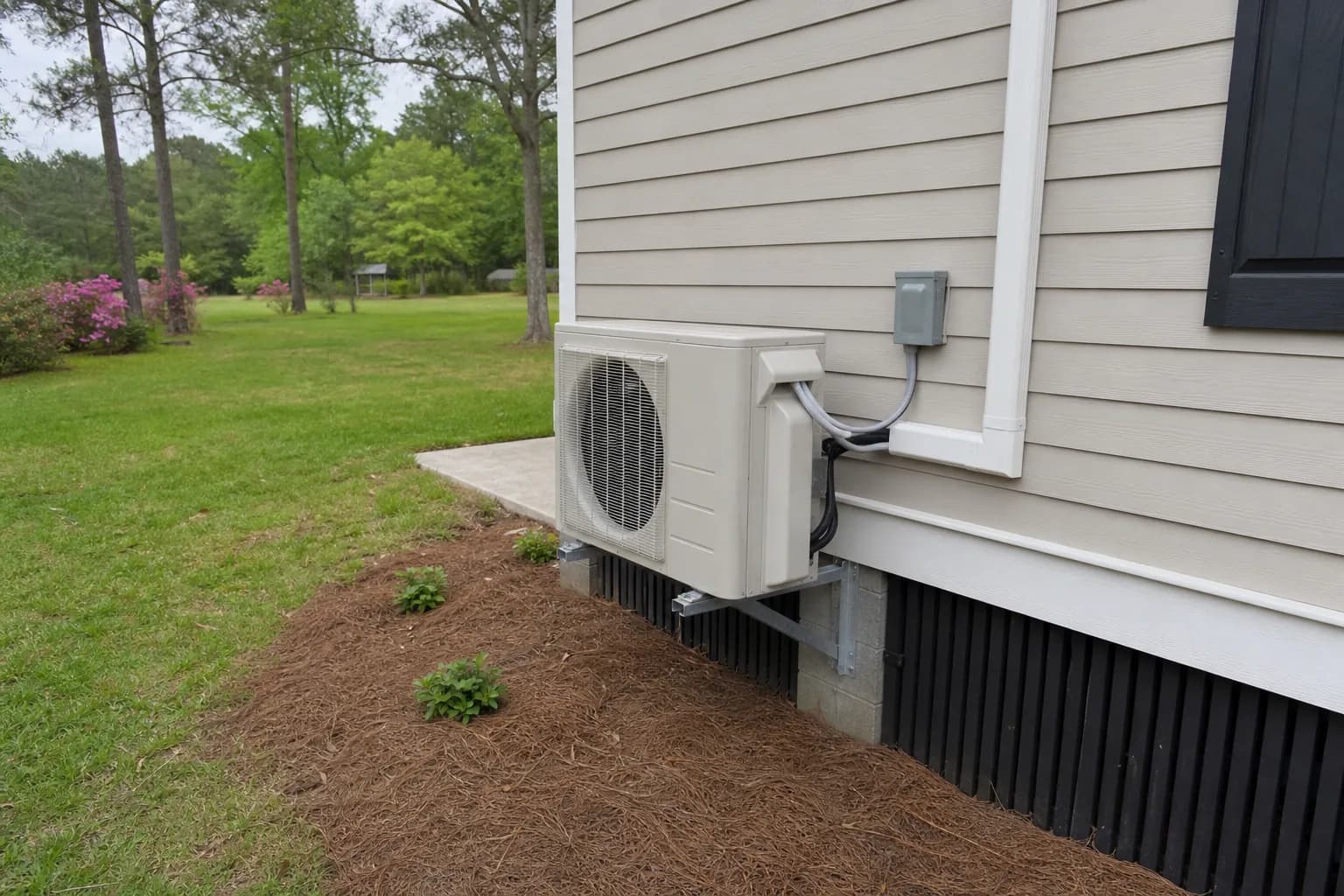
Salt air corrodes everything near the water. Closer to the Gulf and Mobile Bay, salt particles in the air settle on outdoor units year-round, not just during storms. They pit the aluminum fins on the condenser coil, drive pinhole leaks in copper refrigerant lines, and erode the electrical contactors that switch power to the compressor. We wrote a whole visual breakdown of this in how salt air eats coastal condensers — it's the single biggest reason a beachfront system fails younger than an inland one.
Realistic lifespan expectations (with caveats)
So what's a real number? With consistent maintenance, many central air conditioners in Baldwin County reach the mid-teens in years, and well-protected inland systems can stretch beyond that. Closer to the coast, even good equipment tends to land on the shorter end of that window unless it's coastal-rated and rinsed regularly, because the salt is always working.
But age alone is the wrong way to think about it. A 12-year-old system that's been maintained, runs efficiently, and isn't leaking refrigerant has plenty of life left. A 12-year-old system that's lost half its coil to corrosion, struggles to keep up on hot afternoons, and has needed two repairs in two summers is telling you something different. The better questions are:
- Is it still reliable, or are you calling for service more often?
- Is it still efficient, or has your power bill been climbing for reasons you can't explain?
- What's the repair-cost trajectory — are the fixes getting bigger and closer together?
- Is it still comfortable, or does the house feel humid even when the thermostat reads cool?
A system that's failing on those measures is near the end regardless of what the calendar says, and a system that passes them has more road ahead even if it's older than you expected.
What shortens an AC's life on the Gulf Coast
A handful of avoidable things are responsible for most of the early failures we see:
- Oversizing. Bigger is not better. An oversized unit short-cycles, never runs long enough to pull humidity, and wears out its compressor with constant starts and stops. This is one of the most common avoidable problems on the coast.
- Neglected coils. Dirty and salt-crusted coils force the system to run longer and hotter to do the same work, which ages everything faster and eventually leads to refrigerant and compressor trouble.
- Clogged condensate drains. Standing water, biofilm, and a tripped float switch are humidity's most common revenge on a neglected system.
- Deferred repairs. A worn capacitor or pitting contactor is a cheap fix on its own. Ignored, it can take out a compressor that costs orders of magnitude more — the classic small-part-kills-big-part failure.
- Skipping maintenance entirely. Run-it-until-it-dies is the most expensive way to own HVAC on the Gulf Coast.
Maintenance that actually extends life
Here's the good news: the things that extend an air conditioner's life here are simple, predictable, and not expensive.
Seasonal tune-ups, twice a year. A spring AC tune-up before peak cooling season and a fall heating check before the first cold snap is the baseline cadence. Each visit cleans the coils, checks refrigerant pressures and electrical components, clears the condensate path, and catches small problems while they're still small. Our preventive maintenance service covers what each visit includes.
Regular coil rinsing, especially near the water. A low-pressure garden-hose rinse — top down through the fins, never a pressure washer — knocks salt and dust off the coil before it holds moisture against the metal long enough to drive corrosion. On Gulf-front and bay-side homes this is the single highest-leverage thing a homeowner can do between visits.
Sensible filter discipline. A clogged filter restricts airflow, freezes the coil, and shuts down cooling. Change it on a schedule, not when you remember.
Prompt repairs when performance drops. Don't ride out a strange noise or a system that's not keeping up. The longer a small problem runs, the more collateral damage it does.
If you want one simple rule to live by: spring AC tune-up before the heat, fall heating check before the cold. That rhythm, plus regular coil rinses near the water, beats "run it until it dies" every time. Our Comfort Plan bundles two tune-ups a year with 10% off repairs and replacements, $0 service fees, and no overtime fees, which is the easiest way to keep a coastal system on schedule without thinking about it.
When replacement beats another repair
At some point, every system reaches the line where another repair stops making sense. We hit that decision honestly with homeowners by weighing the cost of the repair in front of you — plus the repair you can reasonably expect next year — against the cost of replacement and the age and condition of the system.
If you're facing a major compressor failure, a costly coil replacement, or repeated refrigerant leaks on an older, salt-exposed system, replacement usually wins. It improves comfort, lowers the risk of a peak-summer breakdown, and resets the corrosion clock — ideally with coastal-rated equipment that's built to last in our environment. Our AC installation page covers what a proper replacement includes, and the ROI calculator runs the repair-versus-replace math on your specific numbers.
But replacement isn't always the answer, and we'll tell you when it isn't. A local technician should show you the options with honest math — not fear-based selling. We give free second opinions on quoted repairs precisely because we'd rather you trust the recommendation than wonder if you were pushed into a new system you didn't need.
The bottom line
A central air conditioner in Baldwin County's humid, salt-tinged, long-season climate can last a good long while — if it's sized correctly, protected against the coast, and maintained on a regular rhythm. Skip those, and the same climate that rewards good care will quietly take years off your equipment. The lifespan is, to a surprising degree, a choice.
We're glad to take a look and give you a straight answer about where your system stands. Regular calls are answered Monday–Saturday, 8am–6pm, and we're available 24/7 for emergencies, every day. Call 251-383-HVAC or schedule a visit online.
FAQ
- Does a bigger AC last longer?
- No — usually the opposite. An oversized system cools the air fast and shuts off, which means short, hard cycles that don't run long enough to remove humidity and that hammer the compressor and electrical components with constant starts and stops. The result is a clammy house and more wear, not more life. A correctly sized system that runs longer, gentler cycles is easier on itself and more comfortable. Right-sizing with a real load calculation, not a square-footage guess, protects both comfort and lifespan.
- Should I cover my outdoor unit in the off-season?
- Be careful with this. A full wrap-around cover can trap moisture against the coil and cabinet, and trapped humidity in our climate accelerates corrosion rather than preventing it — exactly the opposite of what people intend. It can also become a home for rodents and insects. If your goal is keeping leaves and debris off the top during fall, a breathable top-only cover is fine, but never seal the whole unit up tight, and never run the system with a cover on. Ask your technician what makes sense for your specific model and location.
- How much longer does maintenance make an AC last on the Gulf Coast?
- Meaningfully longer — often the difference between replacing at year 10 and replacing at year 15-plus, especially near the coast. Twice-yearly tune-ups keep the coils clean so the system runs cooler and easier, catch small electrical problems before they cascade into compressor failures, keep the condensate path clear, and slow salt-driven corrosion through regular coil rinsing. We can't promise a specific number for your house, but the gap between maintained and neglected equipment is large and consistent, and it widens the closer you live to salt air.
- Is it worth repairing an older AC or should I just replace it?
- The honest rule of thumb: weigh the cost of the repair, plus the repair you can reasonably expect next year, against the cost of replacement and the age of the system. A small fix on a 9-year-old unit that's otherwise healthy is usually worth it. A major compressor or coil repair on a 14-year-old salt-exposed system usually isn't, because the next failure is close behind. We give free second opinions on quoted repairs and free written estimates on replacements, and our ROI calculator can run your specific numbers without any sales pressure.
- Why does coastal Alabama wear out air conditioners faster than other places?
- Three things stack up here. First, a long cooling season means the system simply runs more hours per year than equipment in milder climates. Second, high humidity means heavy condensation, wet coils, and clogged drains if they're neglected. Third, salt in the air near the Gulf and the bay corrodes aluminum fins, copper lines, and electrical contacts. None of these are deal-breakers on their own, but together they mean a coastal system has to be sized right, protected, and maintained to reach a full lifespan.
Need this handled?
Straight to the service page for your town — pricing, local details and a form that reaches a technician.
Related reading

ACExperts HVAC
We Take The Heat So You Don't Have To
Fast, honest heating and air service across Baldwin County. Speak with a technician and get on the schedule today.