
Why Foley Builder Installs Fail at Year 6 and What Replaces Them
The Foley builder-grade AC failure curve, mapped year by year from year 6 through year 10, with cumulative repair totals and the premium replacement math that actually pencils out.
Published 2026-10-20 · Updated 2026-10-20
Author: Landon Jahnke | ACExperts251
Reviewed by: Landon Jahnke · Owner · Alabama HVAC License AL #16117 · EPA 608 Certified
Just the facts. Foley housing built 2018-2020. Builder-grade Goodman 14 SEER common. Year 6 average: capacitor #1 fails. Year 7: contactor pits. Year 8: indoor coil leaks (manufacturer warranty just expired at 10 years; coil failure at 8). Year 9: outdoor fan motor seizes. Year 10: condenser dies. Total repair cost over years 6 through 10: $2,800 to $4,400. Net cost over the savings vs. premium install: -$2,100. Conclusion: builder-grade saved you $1,200 at install and cost you $3,300 over years 6 through 10. Here's how that plays out and what's worth replacing it with.
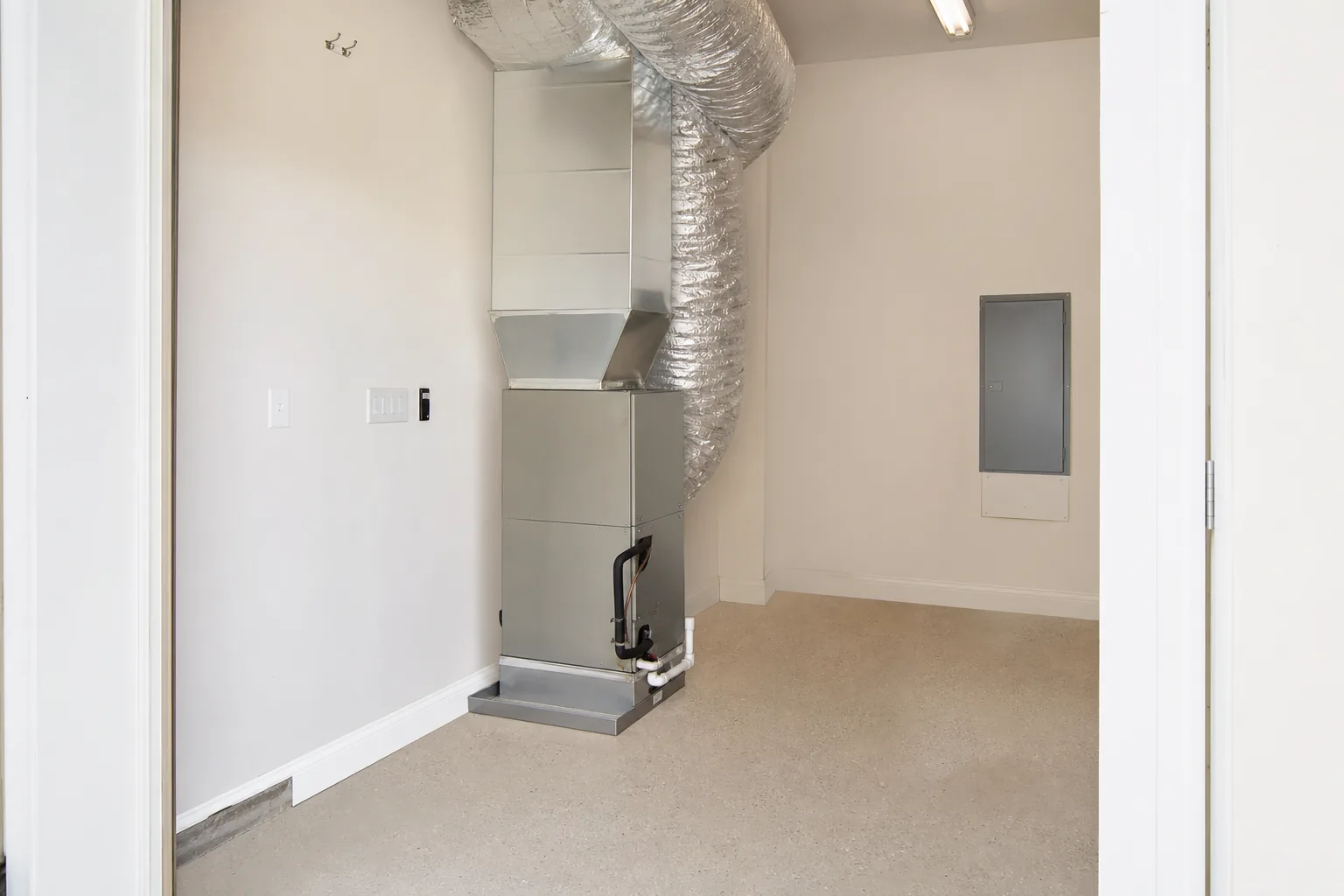
The Foley housing boom from 2017 to 2021 produced thousands of nearly-identical single-family homes across Glenlakes, Cypress Gates, Cottages on the Greene, Graham Creek Estates, and a dozen smaller subdivisions, and almost all of them got the same HVAC equipment package: a Goodman or Amana 14 SEER condenser paired with a base-model coil, run through ductwork sized to spec-home minimums. That equipment is now between 5 and 9 years old, and the predictable failure cascade is hitting the year-6 wave first across north Baldwin. Over 13 years working Baldwin County HVAC, this is one of the cleanest year-by-year staircases in the local stock. This post walks through what's failing, when, why, and what makes economic sense to do about it.
The year-by-year failure cascade
The Foley builder-grade failure curve isn't a bell shape — it's a staircase. Each tread is a specific component reaching its design-life ceiling under Foley's load profile. Walking through each tread:
Year 6: the capacitor
The dual-run capacitor on a 14 SEER builder-grade condenser is rated for roughly 60,000 starts. A Foley AC running 1,800 to 2,200 cooling-mode hours per year and short-cycling 12 to 18 times an hour in a moderately-oversized configuration burns through that 60,000-start rating in 5 to 6 years. The symptom is a system that hums at the outdoor unit but the fan doesn't spin, or a system that runs but doesn't cool because the compressor isn't starting. The failure mode and replacement path are covered in detail in the Foley pre-summer punch list walkthrough.
Year-6 Foley capacitor replacement: $185 to $285 depending on whether it's a same-day weekend call or a scheduled weekday visit. Most homeowners pay this once and don't think about it again — and that's the trap, because the next failure is queued up directly behind it.
Year 7: the contactor
The contactor is the high-voltage relay that closes when the thermostat calls for cooling, sending 240 volts to the compressor and condenser fan motor. Builder-grade systems use a single-pole 30-amp contactor with silver-cadmium contact pads. Each cycle pits the contact surfaces a little. After roughly 75,000 cycles — Foley's typical year 7 — the pits have grown into craters and either the contactor fails open (system won't turn on) or fails closed (system won't turn off, leading to the welded-contact symptom covered in detail in the Bay Minette welded-contact post).
Year-7 Foley contactor replacement: $220 to $340. The part is $14. The rest is the diagnostic, the truck roll, and the labor to remove and reinstall the cover, terminals, and access panel.
Year 8: the indoor coil
This is the failure that hurts. Builder-grade indoor coils — particularly the cased coils that came on Goodman and Amana matches in 2018 to 2020 — are aluminum-microchannel construction with copper-tube manifolds. The transition between aluminum and copper is the corrosion failure point, and Foley's 8-mile inland distance from the Gulf still produces enough atmospheric chloride to attack that bimetal joint over a 7- to 8-year window.
The symptom is gradual refrigerant loss: the system cools fine in May, less fine in June, terribly in July, and not at all by mid-August. A year-8 Foley homeowner often pays for two separate refrigerant top-offs ($380 to $480 each) before a tech finally puts the bubbler on the indoor coil and finds the leak.
Year-8 indoor coil replacement on a builder-grade match: $1,650 to $2,200 including refrigerant recharge and labor. The manufacturer warranty on the coil is typically 10 years, but builder-installed equipment often gets registered to the developer rather than the homeowner, and warranty claims hit a paperwork wall that adds 4 to 8 weeks of summer downtime. This pattern shows up in Spanish Fort and Foley both.
Year 9: the outdoor fan motor
The condenser fan motor on a builder-grade unit is a 1/4 HP single-speed PSC motor with sleeve bearings. It's not built to last 9 Foley summers. The bearings dry out, the motor gets noisy at startup, and eventually it seizes — usually on the hottest week of the year, because that's when it's been running the most consecutive hours.
Year-9 Foley fan motor replacement: $385 to $520. The motor itself is $140 to $180; the rest is the labor to pull the top of the condenser, swap the motor and blade, balance the new blade on the shaft, and recharge if any refrigerant was vented during the work.
Year 10: the compressor or the whole condenser
By year 10, the cumulative wear on the compressor — running through 10 summers of starts on a worn capacitor and pitting contactor — has produced internal mechanical wear that shows up as either a hard-start condition (covered in the Foley hard-start kit post) or an outright compressor lockout. Repair pricing on a year-10 builder-grade compressor swap is $2,400 to $3,200 — within striking distance of a partial replacement, which is when the conversation finally tilts toward replacement instead of repair.
The cumulative number
Add the staircase:
| Year | Failure | Foley repair cost | |---|---|---| | 6 | Capacitor | $185 - $285 | | 7 | Contactor | $220 - $340 | | 8 | Indoor coil | $1,650 - $2,200 | | 9 | Fan motor | $385 - $520 | | 10 | Compressor or condenser | $2,400 - $3,200 (or replace) |
Low end: $4,840. High end: $6,545. Most Foley builder-grade systems land in the $4,800 to $5,500 range across years 6 through 10. That's not counting the two refrigerant top-offs in year 8, which add another $700 to $900.
Real total: $5,500 to $6,400 in repairs across years 6 through 10. And at the end of those repairs, you have a 10-year-old system that's about to need a full replacement anyway.
What replaces them
The replacement question for a Foley homeowner sitting at year 7 or year 8 has three real options.
Option A: same-tier replacement. Pull the failing 14 SEER builder-grade system, install a new 14.3 SEER2 single-stage R-454B system. Foley fall 2026 pricing: $7,100 to $7,400 on a 3-ton match. This resets the failure clock to year 0 — but starts the same staircase running again. You'll be back here in year 6 of the new system. It's the cheapest path and the path most contractors push when they sense budget sensitivity.
Option B: mid-tier two-stage upgrade. Two-stage condenser, better matched coil, ECM blower motor on the air handler, smart thermostat. Foley fall 2026 pricing: $8,200 to $8,800 on a 3-ton match. This buys you better humidity control (Foley's actual second comfort problem), longer compressor life from gentler staging, and 10 to 12 percent lower cooling bills. The failure curve still exists but starts later — typically year 8 or 9 instead of year 6 — and the failures themselves are smaller because the components are better.
Option C: variable-speed premium tier. Inverter-driven variable-speed condenser, communicating-system air handler, premium thermostat with humidity-aware logic, 12-year parts-and-labor warranty. Foley fall 2026 pricing: $9,400 to $9,800 on a 3-ton match. Failure curve effectively pushes to year 10+, power bill drops 18 to 22 percent vs builder-grade, indoor humidity holds in the 45 to 52 percent band year-round. The math in the Foley 3-ton vs 4-ton vs 5-ton replacement breakdown shows variable-speed coming out ahead by $600 to $1,100 over an 8-year window even before counting avoided repairs.
The decision matrix
If you're at year 6 with one capacitor failure: don't replace yet. Pay the $185, schedule annual maintenance, and revisit at year 7.
If you're at year 7 with capacitor plus contactor: still don't replace. Pay the $220, schedule the maintenance, reassess at year 8.
If you're at year 8 with capacitor plus contactor plus a refrigerant top-off that didn't hold: replace. Don't put $1,650 into a coil on a builder-grade chassis that's going to need a fan motor in 12 months. The repair-vs-replace math has tipped. Go to option B or C depending on how long you plan to be in the home.
If you're at year 9 or 10 with multiple failures already paid for: replace, full stop. The remaining life of a builder-grade chassis at that age isn't worth the next $400 to $500 repair invoice. Same logic applies in Daphne, Stapleton, and Stockton where the housing stock is older but the failure-cascade economics are similar.
The honest note on builder warranties
Most Foley builder-grade systems came with 10-year parts warranties from the manufacturer. In practice, those warranties have three problems for the homeowner. First, registration. If the builder didn't register the equipment to your name at closing, the warranty defaults to 5 years instead of 10. Check your paperwork. Second, the warranty covers parts only — labor is on you, and labor is 60 to 70 percent of the bill on a coil swap. Third, parts availability. The exact builder-grade coil you need may have been discontinued by year 8, and the warranty replacement gets substituted with a current equivalent that may or may not match your existing condenser cleanly.
This is why a 12-year parts-and-labor extended warranty on premium-tier replacements is worth the math. The extended-warranty calculation is a separate post, but the short version: on a $9,400 install where the homeowner is staying 12+ years, the warranty pays for itself by year 8 if any single major component fails — and the failure curve shows that one will.
If you want the actual sizing and pricing math run on your Foley home, call 251-383-HVAC or book online. The diagnostic visit is $79, credited to whatever work you decide to schedule. Phones are answered Monday through Saturday, 8am to 6pm, with emergency calls answered 24/7, any day of the week at no extra charge for Saturdays.
FAQ
- How do I know my Foley home is on a builder-grade AC?
- Three giveaways. First: the data plate on the outdoor unit reads Goodman, Amana, or a base-model Carrier Comfort series, with a SEER rating between 14.0 and 14.5. Second: the indoor coil is the matched cased coil that came with the spec home, not an upgraded variable-speed match. Third: the install paperwork from closing — if you have it — shows the HVAC line item under $5,000. That combination is builder-grade across virtually every Glenlakes, Cypress Gates, Cottages on the Greene, and Graham Creek Estates production home built between 2017 and 2021.
- Is it worth replacing a builder-grade Foley system before year 6 if I'm planning to sell?
- Generally no. The market doesn't price a 4-year-old AC differently from a 6-year-old AC at resale, and you won't recover the install cost. Wait. The replacement conversation gets honest at year 7 or 8, when repair invoices start stacking and a buyer's home inspection starts flagging the indoor coil as nearing end-of-life. If you're staying past year 8, plan and budget for replacement around year 9 — that's when most builder-grade Foley systems hit the breakpoint where the cumulative repair math no longer beats a clean install.
- What's the actual price spread between matching builder-grade and going premium in Foley right now?
- Builder-grade equivalent replacement (3-ton 14.3 SEER2 single-stage R-454B in fall 2026 Foley pricing): around $7,100 installed. Mid-tier two-stage with a better coil and a better thermostat: $8,200. Variable-speed premium tier with a 12-year parts-and-labor extended warranty: $9,400 to $9,800. The $2,300 to $2,700 spread between builder-grade and premium gets recovered over a 12-year ownership window through lower power bills, fewer repair calls, and avoided capacitor and contactor failures that builder-grade systems develop on a predictable schedule.
- Does a Foley homeowner gain anything by repairing a year-9 builder-grade system one more time?
- Sometimes — if the failure is a single $300 to $500 part and the system is otherwise still cooling and dehumidifying acceptably, one more season is reasonable. The trap is the year-9 contactor failure followed by a year-10 fan motor failure followed by a year-10.5 compressor noise, where each individual repair seemed reasonable but the cumulative spend hits $2,400 inside 14 months. Set a stop-loss number — $1,200 in repairs across any 18-month window — and when you hit it, schedule the replacement instead of feeding another part into a tired chassis.
Need this handled?
Straight to the service page for your town — pricing, local details and a form that reaches a technician.
More from Builder Grade VS Premium

ACExperts HVAC
We Take The Heat So You Don't Have To
Fast, honest heating and air service across Baldwin County. Speak with a technician and get on the schedule today.