
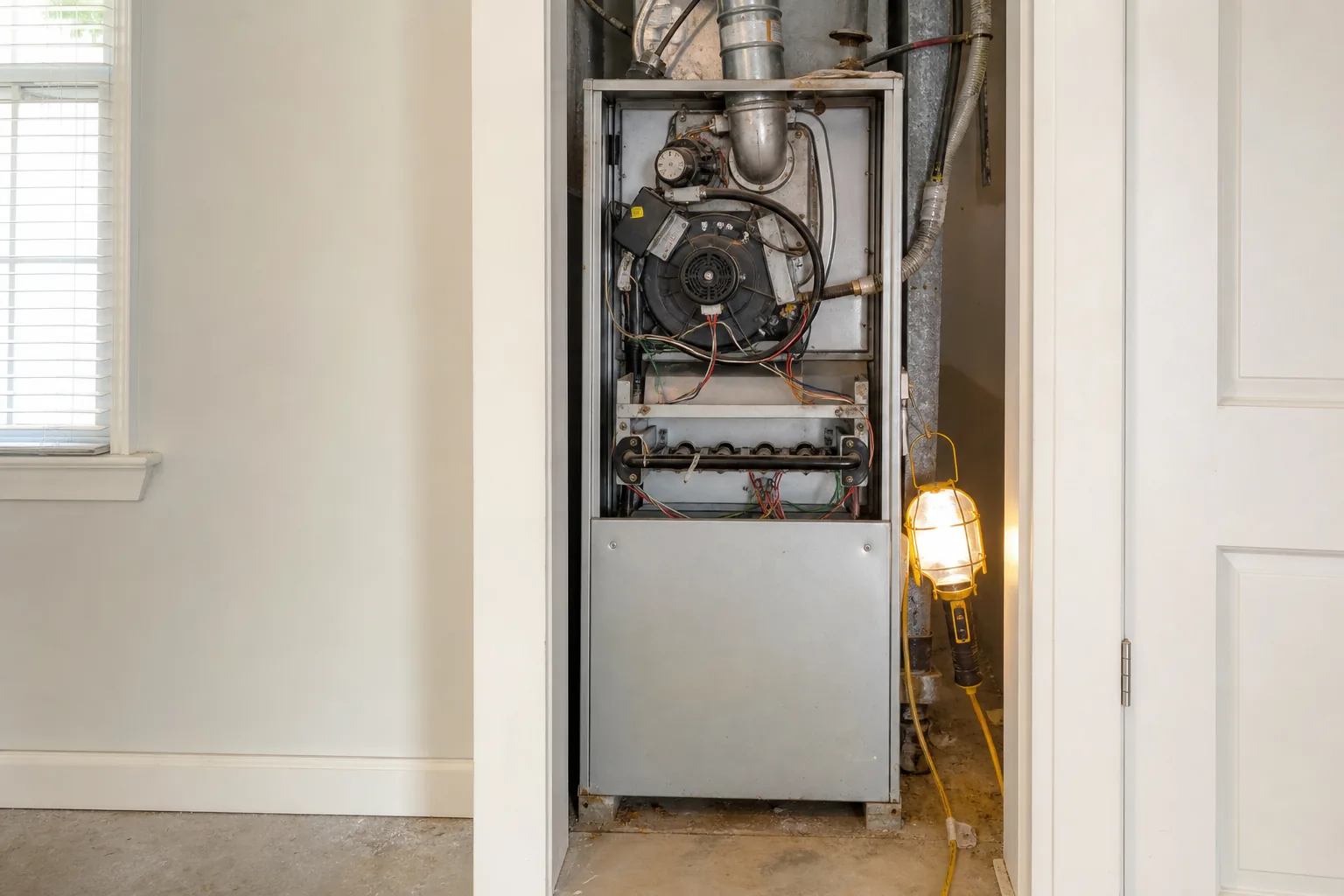
Gas Furnace or Heat Pump in Elberta: Real Bills, Not Brochures
Gas furnace or heat pump in Elberta — a six-row comparison from real bills, not brochures. Three rows favor the heat pump, one favors gas, two wash. How to read it.
Published 2026-09-16 · Updated 2026-09-16
Author: Landon Jahnke | ACExperts251
Reviewed by: Landon Jahnke · Owner · Alabama HVAC License AL #16117 · EPA 608 Certified
                    | Gas Furnace + AC  | Heat Pump only
--------------------|-------------------|-------------------
Upfront install     |  Higher           |  Lower
Jan utility bill    |  Higher (gas+elec)|  Lower (elec only)
Jul utility bill    |  Similar          |  Similar
10-yr maintenance   |  Higher (flue req)|  Lower
Flue/safety inspect |  Required annual  |  None
Lifespan            |  18-22 years      |  12-16 years
Six rows. Three favor heat pump, one favors gas, two are wash. Here's how to read the table for your specific Elberta situation.
Where the framing comes from
Before walking through the rows, the source of the numbers matters. These aren't manufacturer brochures, and they aren't claims that ACExperts has pulled from a long company history — ACExperts is a 2026 startup. The framing here pulls from over 13 years of working Baldwin County HVAC at a previous employer, plus the published comparative data on heat pumps versus gas furnaces in Climate Zone 2A. Specific dollar amounts on your home will depend on your actual envelope, your actual ductwork, current propane and electric pricing, and what's available in rebates the month you buy.
So the table is directional, not exact. It's better than a brochure. It is not a quote.
Reading row 1: upfront install
Gas Furnace + AC vs Heat Pump only.
Heat pump usually comes in cheaper to install. The reason is straightforward — a heat pump is a single piece of equipment that handles both heating and cooling, while a gas-and-AC combo is two pieces of equipment (an outdoor condenser plus an indoor furnace) plus the gas piping and venting that the heat pump doesn't need.
The range within each option reflects equipment grade. Builder-grade single-stage at the low end, two-stage or premium-grade at the high end. Both options assume existing ductwork in reasonable condition; meaningful duct replacement adds to either price.
If the home already has a propane tank for cooking or hot water, the gas-side install drops because the gas piping run is shorter. If the home doesn't have any existing gas service, the gas-side install climbs for new propane tank installation and gas line run.
Note on federal tax credit. The federal 25C heat-pump tax credit (30% of cost, capped at $2,000) expired December 31, 2025 and does not apply to installs in 2026 or later. Confirm any tax question with a CPA — do not plan on this credit for a current replacement quote.
Verdict on row 1: heat pump favored.
Reading rows 2 and 3: utility bills
January (heating month): gas-and-AC pays both propane (or natural gas) and a smaller electric bill; heat pump pays only electric, but a bigger electric bill than the cooling-only summer version. July (cooling month): essentially no difference because both systems use the same air conditioning component to cool the house.
January is where the meaningful difference shows up. Across November through March (the heating months in Elberta), the heat pump tends to run cheaper than the gas-and-AC combo on equivalent homes, and the gap depends heavily on current propane prices. July is the cooling month and the two options wash out — small variations in compressor size and indoor blower size produce minor differences that don't move the season's total.
The exact number depends heavily on propane pricing and electric rates, both of which move year to year. Propane has been volatile since 2022 — prices have ranged widely in the delivery area across that period. Electric rates have been more stable. The math has favored heat pump most years in Elberta, but the gap was wider when propane was higher.
Verdict on row 2 (January): heat pump favored. Verdict on row 3 (July): wash.
For Elberta-specific climate context that supports the heat pump math, the Bay Minette gas vs heat pump post covers a similar comparison from a north-Baldwin perspective where winter heating loads run higher, and the heat pump vs central AC post covers the broader Gulf Coast technical comparison.
Reading row 4: 10-year maintenance
Gas-and-AC requires more maintenance dollars over 10 years than a heat pump. The difference is the mandatory annual gas safety inspection that the gas furnace requires and the heat pump doesn't.
A standard annual maintenance visit on either system covers refrigerant pressures, capacitor and contactor inspection, blower performance, drain and filter check, and thermostat verification. That visit is roughly the same price for either system.
The gas-side adds combustion analysis, gas pressure verification at the manifold, heat exchanger inspection, and flue draft testing on top of the standard visit, because the work is real and the safety implications are meaningful.
Across 10 years, that's an additional gas-side maintenance cost. The heat pump doesn't have a corresponding equivalent — there's no flue, no combustion, no carbon monoxide concern.
The catch on the 10-year number. Heat pumps typically need one major repair across the 10-year window that gas systems don't (compressor or reversing valve work). Gas furnaces typically don't need a comparable major mid-life repair on the heating side, because the heating components are relatively simple. So the maintenance-cost row narrows when major repairs are included; the gas system catches up some, but not all the way.
Verdict on row 4: heat pump favored, slightly.
Reading row 5: flue and safety inspection
Gas: required annual. Heat Pump: none.
This isn't really a cost row — it's a hassle row. The gas-side annual safety inspection is non-negotiable in Alabama for properly-installed gas equipment, and skipping it creates real safety exposure (carbon monoxide, gas leaks, heat exchanger cracks). Most homeowners hire it done with the regular tune-up; some forget; the ones who forget are the ones to worry about.
The heat pump has no comparable safety inspection requirement because it has no combustion. A heat pump can certainly fail in expensive ways, but it can't fail in a way that makes the house unsafe to be in. That's a meaningful peace-of-mind difference for some homeowners — particularly for second homes or Elberta seasonal properties where the equipment runs unattended for weeks at a time.
Verdict on row 5: heat pump favored on convenience and risk profile.
Reading row 6: lifespan
Gas: 18 to 22 years. Heat Pump: 12 to 16 years.
This is the row that favors gas, and it's a real factor.
A gas-and-AC combo system effectively has two lifespans operating in parallel — the AC side typically reaches end of life at 12 to 16 years (the same as a heat pump, because it's the same compressor technology), but the gas furnace side often runs 22 to 28 years before replacement is necessary. Practical homeowner experience is replacing the AC side at year 14 or so and keeping the existing furnace for another 6 to 10 years.
A heat pump replaces both sides simultaneously at year 12 to 16, because the compressor (which does both heating and cooling) is the limiting component.
The amortization math. Across 24 years of homeownership (a reasonable projection for an Elberta home), the gas-and-AC scenario typically goes through 1.5 to 1.7 system replacements (one full replacement plus a partial AC swap). The heat pump scenario goes through 1.7 to 2 full replacements. Over the long horizon, the heat pump owner buys roughly 0.3 to 0.5 more equipment than the gas-and-AC owner.
That additional equipment cycle costs real money, spread across the long horizon. Annualized, the extra capital cost on the heat pump side is roughly the same magnitude as the annual utility savings on heating. Across long horizons, the gas-and-AC and heat-pump options actually converge on total cost of ownership, with the deciding factor being where each homeowner is in their ownership window when the next replacement comes due.
Verdict on row 6: gas favored, meaningfully on long-horizon math.
For broader equipment lifespan context, the Bay Minette heat pump install post walks through real install pricing in detail, and the pre-summer punch list covers maintenance practices that genuinely extend equipment life on either platform.
How to read the table for your specific Elberta home
The comparison table reflects averages, but the right answer depends on your specific situation. Three filters to apply.
Filter one: how long do you plan to own the home?
If you're at year zero of a 25-plus year ownership horizon, the long lifespan of gas equipment matters more, and the upfront-cost advantage of heat pump matters less. Two equipment cycles instead of 1.5 cycles is real money over a long stretch.
If you're at year zero of a 7-to-12 year horizon (most common scenario for Elberta homes that aren't multi-generational), the heat pump's lower upfront cost and lower utility cost wins, because you'll likely sell the home before the lifespan disadvantage matters. Either way, the next owner gets a relatively new system.
If you're at year zero of a 3-to-5 year horizon, it doesn't matter much — both systems will outlast your ownership window, and the heat pump's lower upfront cost and easier-to-show utility savings probably increase resale appeal slightly.
Filter two: do you already have propane infrastructure?
If yes, the gas-and-AC option is meaningfully more attractive because the install cost drops and you have backup heating capacity even if power fails. Power outages are real in rural Elberta — a propane furnace with battery-backed thermostat keeps the house warm through a 12-to-24-hour outage, where a heat pump goes cold the moment the breaker trips.
If no, installing new propane infrastructure adds material cost to the gas option and the math shifts hard toward heat pump.
Filter three: how cold-tolerant is the household?
Some homeowners are entirely fine with the indoor temperature dropping to 64°F during a 22°F outdoor cold snap if the heat pump struggles to maintain setpoint. Others find that genuinely uncomfortable. The heat-pump-only option is lower-margin during cold snaps even with modern variable-speed equipment; if cold-snap performance matters, dual-fuel (heat pump primary, gas furnace backup) is the right answer at additional upfront cost.
For comparable analysis on a different north-county location, the Stockton FAQ on heating recommendations covers the further-north version of the same conversation, and the Fort Morgan heat pump backup post covers the coastal cold-snap concern in detail.
What I generally recommend for typical Elberta homes
For an Elberta home with no existing gas service, a 5-to-15-year ownership horizon, and standard cold-tolerance — heat pump.
For an Elberta home with existing propane and a long ownership horizon — gas-and-AC combo.
For an Elberta home with existing propane and concern about cold-snap performance — dual-fuel heat pump with gas backup.
For an Elberta seasonal property that runs unoccupied for weeks at a time — heat pump (no flue inspection burden, no gas-leak risk during long unoccupied stretches).
For an Elberta historic or older home with original ductwork — start with the duct evaluation, not the equipment decision. Bad ducts will kill the performance of either system, and getting the duct side right often delivers more comfort improvement than upgrading the equipment.
For the duct-side context on older Elberta homes specifically, the Fairhope historic home sizing post covers the same older-home considerations in depth.
Booking the conversation
ACExperts does free written estimates on replacements for Elberta homeowners considering either option. The estimate covers the upfront cost on the specific equipment recommended for the home, the projected annual utility cost based on your envelope and usage pattern, estimated lifespan based on equipment grade and exposure, and the current utility-rebate math from Alabama Power and Baldwin EMC.
The honest answer for one home is heat pump; the honest answer for the next home down the road is gas-and-AC combo; the answer for a third home is dual-fuel. The math on the table makes the case differently for each house, and the right contractor reads the table with you instead of for you.
Call 251-383-HVAC to book the free estimate, or to talk through the Comfort Plan for whichever platform you end up on. Either system performs better on a maintenance plan than off one; that's the one part of the comparison that's the same on both sides.
FAQ
- Does Elberta really get cold enough that heat pumps struggle?
- Rarely, and that's a meaningful change from how the conversation went 15 years ago. Elberta sits in Climate Zone 2A, which is favorable for heat pump heating. Sustained sub-freezing weather in Elberta is realistic 4 to 8 nights per winter — meaningfully less than Stockton or Bay Minette to the north. Modern variable-speed inverter heat pumps maintain near-rated capacity down to about 17°F, well below typical Elberta lows. The cold-snap concern was real on 1990s heat pump technology and is largely solved on 2020s equipment. The places where heat pumps still struggle around here are Fort Morgan and Gulf Shores during direct cold-front events with high winds, and the [Fort Morgan heat pump backup post](/blog/why-fort-morgan-heat-pumps-struggle-below-32-without-a-backup/) covers that specific scenario in detail.
- What's the actual lifespan difference between gas and heat pump?
- Working from a long Baldwin County career and the broader industry data: gas furnaces typically last 18 to 22 years on properly-sized residential equipment with annual maintenance, while heat pumps typically last 12 to 16 years in the same conditions. The lifespan gap is real and has economic implications. Gas furnaces have fewer moving parts in the heating side (the burner assembly, inducer, blower) and the components don't run year-round; heat pumps run their compressor in heating and cooling, doubling the operating hours on the most expensive component. The gap narrows on premium-grade heat pumps with two-stage or variable-speed compressors, where the lifespan can extend to 14 to 18 years.
- Are there utility rebates that change the upfront cost math?
- Utility rebates are still worth checking. Alabama Power runs heat pump rebate programs intermittently; current rebate amounts and qualifying equipment lists change roughly annually. Baldwin EMC has historically run smaller heat pump incentives. Verify current rebate eligibility before committing — the post-rebate math sometimes flips the upfront-cost row of the comparison table. Note: the federal 25C heat-pump tax credit (up to $2,000, 30% of cost) expired December 31, 2025 and does not apply to installs in 2026 or later — confirm your specific situation with a CPA before factoring a federal credit into your planning.
- What about a dual-fuel setup — heat pump primary, gas backup?
- Dual-fuel is the right answer for some Elberta homes and overkill for others. The setup uses a heat pump as the primary heating and cooling source, with a gas furnace as backup that engages only on cold-snap nights below a settable balance point (typically 30 to 35°F). Pros: extracts most of the heat-pump efficiency benefit while eliminating the cold-snap concern, longer combined system life because the gas side runs less than a gas-only setup. Cons: upfront cost is higher than either single-system option, and the controls are more complex to set up correctly. For Elberta specifically, dual-fuel makes sense on homes that already have a propane tank for hot water or cooking; for all-electric Elberta homes, single-system heat pump is usually the cleaner answer.
Need this handled?
Straight to the service page for your town — pricing, local details and a form that reaches a technician.
Related reading

ACExperts HVAC
We Take The Heat So You Don't Have To
Fast, honest heating and air service across Baldwin County. Speak with a technician and get on the schedule today.