
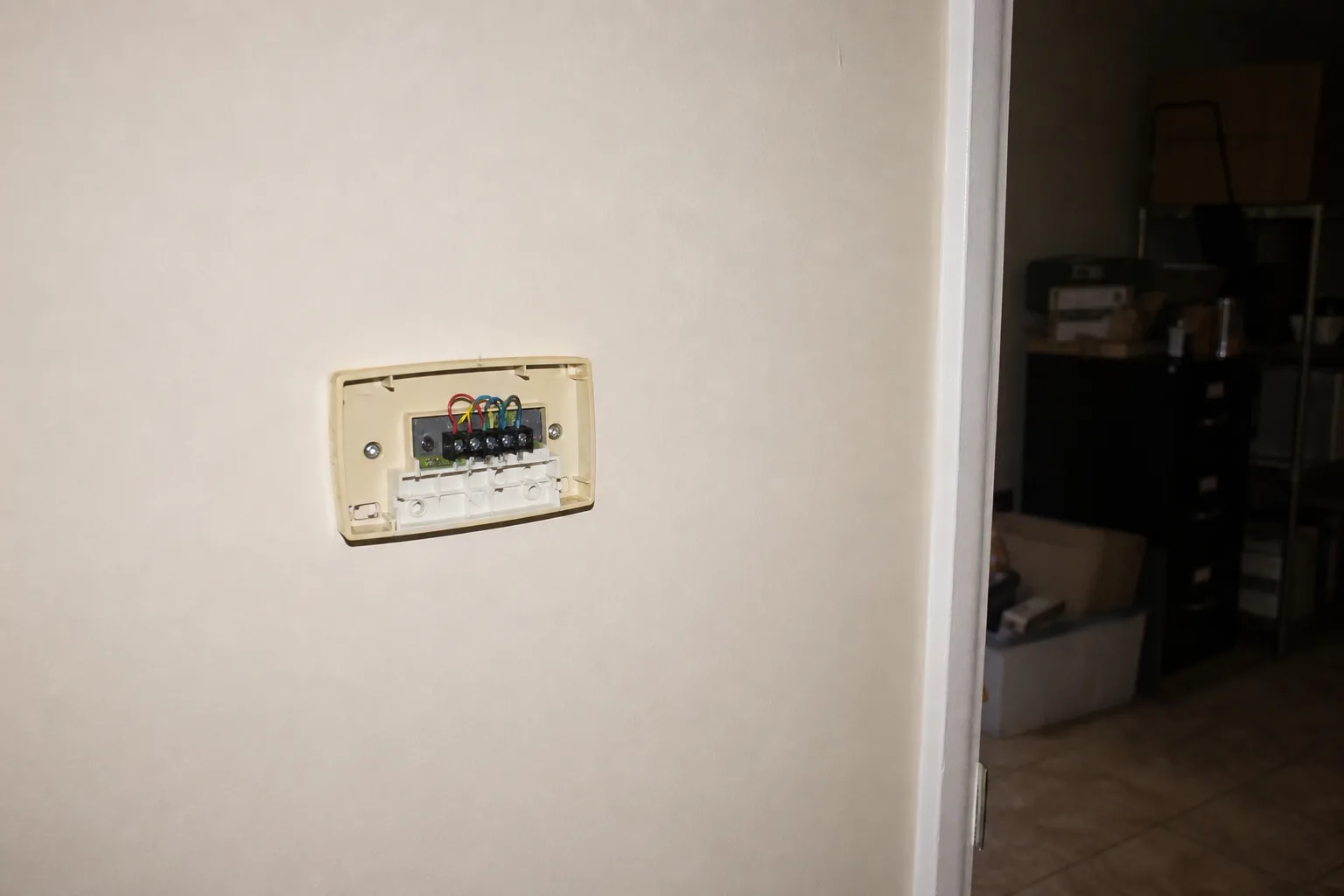
The Bay Minette Disconnect Box That Was Slowly Cooking
A failing disconnect on a Bay Minette outdoor unit is the easy fix, but on older homes with original underground service it's the symptom, not the cause. The signs.
Published 2026-09-15 · Updated 2026-09-15
Author: Landon Jahnke | ACExperts251
Reviewed by: Landon Jahnke · Owner · Alabama HVAC License AL #16117 · EPA 608 Certified
A disconnect that keeps cooking itself isn't a parts problem — it's a wiring problem. Over 13 years working Baldwin County HVAC, the pattern I've learned to recognize on older Bay Minette homes is this: swap the failed disconnect, system runs fine for a few weeks, then the new disconnect starts showing the same heat damage as the old one. The disconnect wasn't the cause. It was the symptom.
Here's why this diagnosis is easy to miss the first time, what's actually happening underground, and how to spot the signs on your own home before the second call.
The first call: classic-looking diagnosis
Picture an older central Bay Minette neighborhood — Hand Park, Old Town, the streets around Stockton Road. House from the 1970s. Original outdoor unit replaced sometime in the last decade, but the disconnect box and the underground service to the condenser still original. That last detail is where the trouble lives.
Symptoms on a first call like this: AC running fine for 30-45 minutes, then the breaker trips. Reset, run another half hour, trip again. Pattern getting worse over the previous week — earlier and earlier in each cycle.
Standard diagnostic for a tripping breaker on a hot-day call:
- Check refrigerant charge — normal.
- Check compressor amp draw — slightly elevated but within range.
- Check the contactor — pitting visible but functional.
- Check the disconnect — corrosion at the lugs, one of the fuse holders showing heat discoloration, the disconnect itself feeling unusually warm.
The straightforward call is: failing disconnect. Pull it, swap it for a new 60-amp disconnect (standard part), tighten the lug connections, restore power, verify operation. System runs clean. Breaker holds.
That's how the vast majority of disconnect-related tripping calls resolve. Failed disconnect causes increased contact resistance, the resistance generates heat, the heat damages the disconnect further, you swap the failing part, the system goes back to working. Over years of working those calls, the diagnostic logic is sound — most of the time.
The six-week tell
When the same symptoms come back six weeks later on a freshly installed disconnect, the diagnosis changes. Pulling the cover off a brand-new disconnect and finding heat damage already — discolored lugs, browning plastic around the wire entries, a faint smell of cooked plastic that you only get from sustained low-grade overheating — means something is driving heat into the part from upstream.
A six-week-old disconnect doesn't cook itself. The next thing to look at is the conduit running from the disconnect down into the ground, especially on older homes where that conduit is original.
Pull a few inches of wire out of the conduit. If the insulation on the visible portion is discolored — yellow-brown rather than normal black or white — and the discoloration extends down into the conduit, you've found the real problem. Stop pulling. The wires below are likely sitting in water and have been for years.
What's actually happening underground
On a typical older Bay Minette failure of this type, the conduit — buried 18 inches or so across a side yard — has filled with water at some point in the past several years and never drained. The seals at the conduit hub on the main panel side and at the entry to the disconnect have degraded enough that the conduit is bridging moisture from the soil into the wire path. The conduit's original drainage point — a small weep hole near the lowest part of the run — has corroded shut.
The wires inside are sitting in standing water. Insulation designed to operate dry has been soaking for years. Insulation resistance has dropped from the megohm range it should be at down toward the kilohm range — meaning a meaningful current bleeds from the conductors to the conduit and to ground continuously, even with the disconnect at rest.
That bleed isn't enough to trip a breaker by itself. But under load — when the AC is running and pulling 22-28 amps — the bleed scales up. The wire runs hotter than spec because of the insulation degradation. The heat is conducted up the wire to the disconnect, where it accumulates in the lugs and the contactor surfaces. The disconnect cooks from the inside.
The breaker trips, when they happen, are a symptom of accumulated insulation breakdown reaching a threshold during peak demand. As the wire heats, insulation degrades a little more, ground bleed scales up a little more, and at some point the combination trips the GFCI characteristic of a modern panel breaker that detects ground faults.
Why the first diagnosis can miss it
A standard outdoor-unit electrical diagnostic doesn't include resistance testing on the underground feed. You test what's accessible at the disconnect and at the unit. You don't typically pull wires out of buried conduit during a routine call — the cost of that full diagnostic is significant on a job that presents as a simple disconnect failure, and the vast majority of the time the simple diagnosis is correct.
The miss rate on this is small but it's real. What I now flag on the first call, before swapping anything, is the age of the underground feed and the visible condition of the conduit at the surface. A cracked surface pad and visible corrosion at the disconnect hub aren't enough on their own to predict the buried-water issue, but they're enough to warrant a conversation with the homeowner about the underground feed's age and condition before committing to a disconnect-only repair.
The signs to look for on your Bay Minette home
If your Bay Minette home is from the 1960s-1980s and the underground service to the outdoor unit hasn't been replaced, here's what to watch for.
Conduit surface signs. Walk the conduit run from the panel side of the house out to the unit. Is the conduit galvanized steel showing rust at the soil line? Is the concrete or asphalt pad it emerges from cracked? Is there visible corrosion at the disconnect's bottom hub? All of those suggest moisture has been involved at the surface for a long time, which usually means it's been involved underground for longer.
Disconnect temperature. With the AC running on a hot day for at least 20 minutes, place your hand on the disconnect cover (don't touch the wires inside — keep it closed). A normally-running disconnect feels warm but not hot — comfortable to leave your hand on for 10-15 seconds. A disconnect that's hot enough to be uncomfortable in 5 seconds or less is running too warm and warrants investigation.
Breaker trip pattern. Random trips during normal operation are different from trips during high-demand events. If your breaker trips on hot afternoons during AC operation but not during similar non-AC events, the AC circuit is the load that's exposing an underlying problem. If the trips correlate with rain or with recent rainfall (within 1-3 days), groundwater intrusion is a leading suspect.
The repeat-failure pattern. If you've had a disconnect or contactor replaced in the past two years and you're seeing similar symptoms again, don't assume the parts were defective. The underlying cause might not have been the part that was replaced.
For more on the broader breaker-trip diagnostic landscape, the Loxley breaker-tripping post covers the six-suspect ranking I use for those calls. The Robertsdale surge protector math is in the same electrical-failure family. For the older-housing-stock picture in Bay Minette specifically, the Bay Minette gas vs heat pump comparison and the Bay Minette Christmas Eve failure diary cover the same era of homes from different angles. And the post-storm Silverhill restart guide covers when not to just reset and run.
The real fix
The clean correction is three steps: replace the failed disconnect, excavate the conduit run from the foundation to the unit, and replace the conduit, the conductors, and the connectors with modern PVC schedule 80 and weatherproof fittings at both ends, pitched for drainage.
When a contractor sells you only step one and skips steps two and three, the system goes back to working — until the new disconnect cooks itself the same way the old one did. That's the cycle to break. I'll quote the full corrective work in writing, walk you through what's behind the number (length, depth, soil conditions, sidewalk or driveway crossings, existing wire gauge), and give you a free second opinion on any other contractor's quote for the same scope.
What I tell Bay Minette homeowners now
If you've got a 1960s-1980s home in central Bay Minette with original underground service to the outdoor unit — Hand Park, Old Town, the streets around Stockton Road, anywhere with that age of housing stock — get the underground feed inspected the next time I'm out for any other reason. It's a 10-minute add to a maintenance visit. I test the insulation resistance on the conductors, look at the conduit condition, and flag anything that looks like it's heading toward the failure profile.
Most underground feeds at that age are fine. A meaningful minority are sitting in standing water and silently cooking the components above them. Knowing which one yours is costs nothing on a visit I'm already doing. Discovering it the hard way costs much more, plus a stretch of being without AC during the dig.
I answer the phone Monday-Saturday 8a-6p, and emergency calls 24/7, every day of the week with no Saturday upcharge. Call 251-383-HVAC.
FAQ
- How can a buried conduit cause a disconnect to fail without obvious symptoms?
- When a buried conduit fills with water — which happens slowly over years as the conduit weep holes corrode shut, the connector seals degrade, or root pressure compromises the joints — the wire inside is no longer getting the convection cooling it was designed for. Wire ampacity ratings assume the conductor is in dry conduit at typical ambient temperatures. Submerge the same wire and the heat dissipation profile changes; the wire runs warmer and the insulation degrades faster. The disconnect at the surface end sees the heat conducted up the wire, plus electrical resistance increases as the insulation breaks down. The disconnect cooks from the heat coming up through the wire, not from a fault at the disconnect itself.
- How do I know if my outdoor conduit is wet inside?
- You usually can't see it directly, but there are diagnostic signs. The disconnect feeling warm to the touch (with the unit running) compared to a normal cool-to-warm reading is a flag. Visible corrosion or rust on the disconnect's exterior, particularly around the bottom or where the conduit enters, suggests moisture has been wicking up. The breaker tripping pattern — random in mild weather, more frequent in rain or after rainfall — is highly suggestive. The ground around the conduit being soft, eroded, or showing signs of long-standing dampness independent of recent rain is the underlying cause. A multimeter reading on the conductors with the disconnect open showing resistance to ground (rather than infinite) is the definitive test, but that requires opening the disconnect.
- Why is this more common in Bay Minette than other Baldwin County cities?
- Two reasons. First, the soil in much of Bay Minette is heavy clay that holds water for long periods after rain — different from the sandy soils of the southern coastal cities, where water drains quickly. Conduits buried in clay soil sit in damp conditions for months at a time, which accelerates the seal failure that lets water in. Second, much of the Bay Minette housing stock dates from the 1960s-1980s, with original underground service entries that are now 40-60 years old. The conduit, the connectors, and the underground splices in those installations have aged into the failure window. Newer construction with modern conduit fittings and proper drainage doesn't see this nearly as often.
- What does the actual repair look like?
- The clean fix involves three steps. Replace the failed disconnect. Excavate the conduit run from the foundation to the unit. Replace the conduit, the conductors, and the connectors with modern weatherproof fittings, with the new run pitched for drainage. Costs vary by length, depth, soil conditions, whether the run goes under a sidewalk or lawn, and whether the existing wire gauge is correct for the unit's amperage requirements. I'll quote it in writing before any work is done. The shortcut fix — swap the disconnect, leave the wet conduit — is what other contractors do all the time, and it's why this problem keeps coming back at the same houses. Real fix: do the dig once.
Need this handled?
Straight to the service page for your town — pricing, local details and a form that reaches a technician.
More from Breaker Tripping

ACExperts HVAC
We Take The Heat So You Don't Have To
Fast, honest heating and air service across Baldwin County. Speak with a technician and get on the schedule today.