
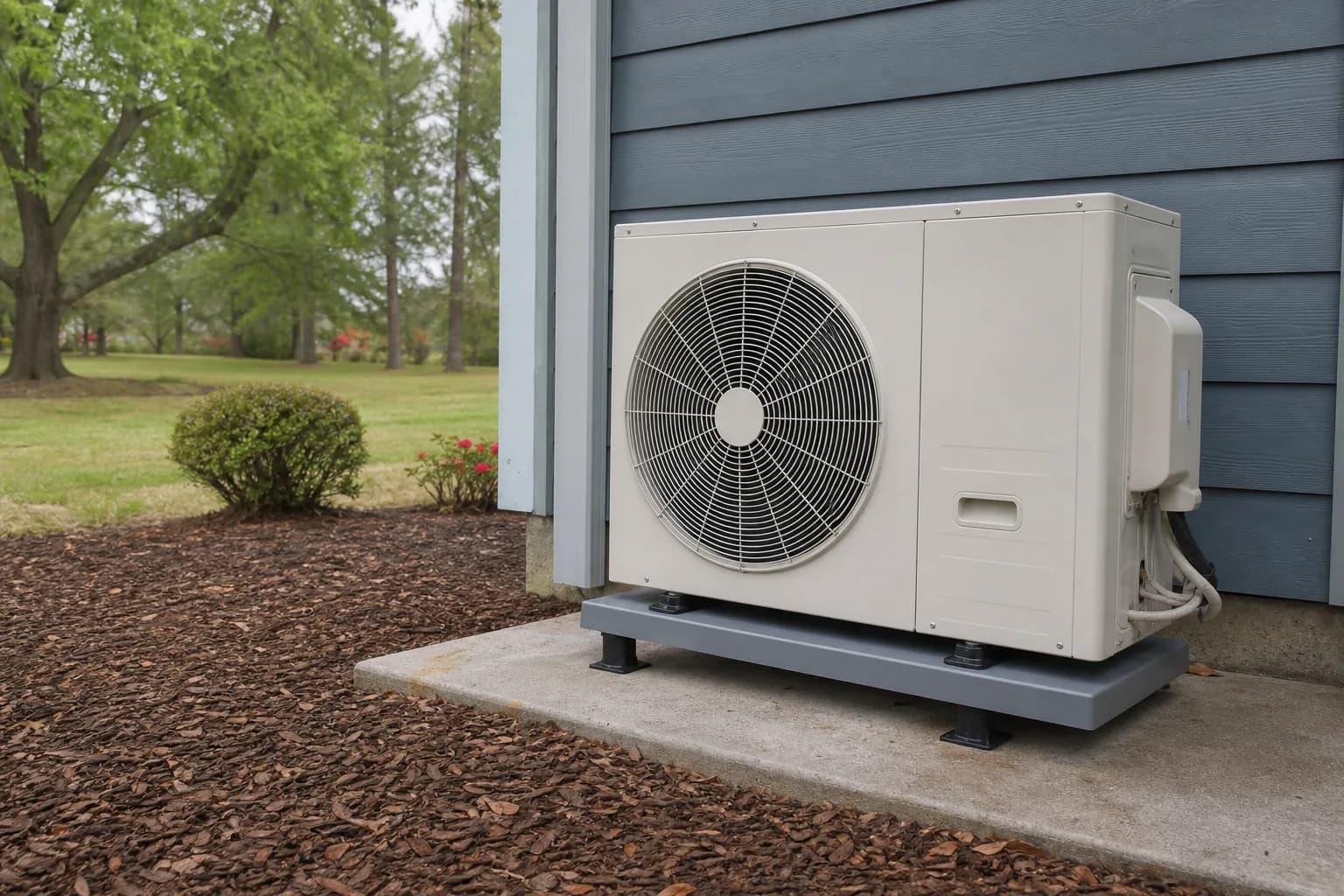
Heat Pump vs Central AC on the Gulf Coast: Which Wins?
Heat pump vs central AC on the Gulf Coast: why Baldwin County's mild winters tilt the math toward heat pumps, and when a straight AC-plus-furnace still wins.
Published 2026-04-03 · Updated 2026-04-03
Author: Landon Jahnke | ACExperts251
Reviewed by: Landon Jahnke · Owner · Alabama HVAC License AL #16117 · EPA 608 Certified
When a Baldwin County homeowner is replacing a system and asks us whether they should get a heat pump or a central air conditioner, the honest first answer is that the question means something different here than it does in Ohio. Up north, where winter is the dominant load and freezes last for months, the heat-pump conversation is genuinely complicated. On the Gulf Coast, where we cool far more than we heat and a hard freeze is a handful of nights a year, the math leans a particular direction — and understanding why helps you make the call with confidence instead of going off a salesperson's preference.
Let's start with what these two things actually are, because the marketing tends to make them sound more different than they are.
They are closer cousins than you think
A central air conditioner and a heat pump are built around the same core: refrigerant, a compressor, an outdoor coil, and an indoor coil. In cooling, they are nearly identical — both move heat out of your house to make it cooler inside. If you only ever used either one to cool, you would be hard-pressed to tell them apart.
The difference is one component: a reversing valve. A heat pump has one; a central AC does not. That valve lets a heat pump run its refrigerant cycle in reverse, so in winter it pulls heat out of the outdoor air — yes, even cool outdoor air has heat in it — and moves that heat inside. A central air conditioner can't do this. It only cools. That is why a central AC has to be paired with a separate furnace to heat the house, while a heat pump can do both jobs on its own.
So the real framing is not "two completely different systems." It is: do you want one machine that heats and cools (a heat pump), or a cooling machine plus a separate heating machine (central AC plus a furnace)? In our climate, that distinction has real consequences.
Why heat pumps shine in our climate
A heat pump's signature trick is that it moves heat instead of creating it. A gas furnace or electric heat strips make heat by burning fuel or running current through resistance coils. A heat pump just relocates heat that already exists in the outdoor air, which takes far less energy to do — and that efficiency advantage is largest precisely when the weather is mild. Which describes most of a Baldwin County winter.
That is the crux of it. Our winters are short and gentle. The system spends the overwhelming majority of the year cooling, and a heat pump cools exactly as well as a central AC because it is, in cooling mode, the same machine. Then for the modest amount of heating we need, the heat pump handles it efficiently without a separate furnace sitting in the house. For a lot of homes here, that makes a heat pump the cleaner fit — one system, matched to a climate that is cooling-dominant with a mild heating season.
The old knock on heat pumps was cold-weather performance, and it is worth addressing head-on because the reputation outlived the reality. Heat pumps from decades ago genuinely struggled when it got cold. Modern equipment is far better, and more to the point, our climate barely tests it. On the rare night it drops well below freezing, a heat pump calls on its backup heat to carry the extra load. The decision here isn't whether a heat pump survives our winter — it does easily — it's making sure that backup is set up right for the few cold nights we get.
When central AC plus a furnace still makes sense
None of that means a heat pump is automatically the answer for every home, and we will tell you when it isn't. A straight central AC paired with a furnace still wins in a few real situations.
If you already have a relatively new gas furnace, ripping it out to install a heat pump rarely pays — you would be discarding good equipment to solve a problem you don't have. In that case, replacing just the air conditioner and keeping the furnace is the sensible move. Some homeowners also simply prefer gas heat on the coldest nights, valuing the kind of fast, intense warmth a furnace delivers, and that is a legitimate preference, not a mistake.
There is also the matter of what is already in place and working. If you have a properly matched, well-installed system that meets your comfort goals, the most important variables are replacement timing and install quality — not chasing whichever technology has the better brochure. A correctly sized, professionally installed central AC will outperform a poorly sized, sloppily installed heat pump every day of the week. The label on the box matters far less than the quality of the installation and whether the equipment was sized to your actual home.
The dual-fuel middle ground
For homeowners who want the best of both, there is a third option that fits the Gulf Coast unusually well: a dual-fuel system. That pairs a heat pump with a gas furnace and lets the system choose the cheaper, more effective heat source automatically. The heat pump handles heating efficiently through our mild stretches — which is most of the season — and the gas furnace only kicks in on the genuinely cold nights when it is the better tool. You get the heat pump's year-round efficiency and the furnace's muscle exactly when it is worth having. It is a setup that quietly makes a lot of sense in a climate like ours, and it is worth asking about if you are replacing both pieces anyway.
Mini-splits as a fourth path
Worth naming because it solves a problem the other options can't: the ductless mini-split. A mini-split is a type of heat pump that skips ductwork entirely, mounting an indoor unit directly in the space it conditions. That makes it the right tool for a room the central system has never been able to handle — a converted garage, a bonus room over the garage, a sunroom, an addition, or an older home with no good way to run ducts. Instead of redesigning your whole duct system to fix one stubborn room, a mini-split zones just that space and gives you independent control of it. It is not usually a replacement for a central system in a typical home, but for problem rooms it is often the cleanest, most efficient fix there is.
What actually decides the outcome here: humidity and sizing
It is easy to get so deep into the heat-pump-versus-AC question that you lose sight of the thing that matters more than either: in our climate, comfort is mostly about humidity, and humidity control is mostly about sizing and install quality. A homeowner can pick the "right" type, get a top-tier efficiency rating, and still end up cold and clammy if the system is oversized — because an oversized unit cools the air so fast it shuts off before it has run long enough to wring the moisture out.
This is the Gulf Coast trap, and it catches both heat pumps and central air conditioners equally. Bigger is not better here; correctly sized is better. A system matched to a real load calculation runs in the long, steady cycles that pull humidity out of the house, which is exactly what makes 76 degrees feel comfortable instead of swampy. That is also where two-stage and variable-speed equipment earns its premium in our humidity — it runs longer at lower output, dehumidifying as it goes.
So when you are weighing the options, give this at least as much weight as the type decision. A correctly sized, professionally installed, properly charged system of either kind will keep you genuinely comfortable through an Alabama August. An oversized or sloppily installed one of either kind will leave you fiddling with the thermostat and running a dehumidifier in your own living room. The type is a real choice worth getting right — but it sits on top of getting the size and the install right, not the other way around.
How we'd help you decide
There is no single right answer that fits every Baldwin County home — there is the right answer for your home, your ductwork, your current equipment, and how you like to heat on a cold night. What we do on a replacement consultation is look at all of it: whether your ducts are in shape, what you are heating with now and whether it is worth keeping, how the home is used, and where it sits relative to the coast and its salt air. Then we lay out the realistic options and let the trade-offs make the case.
We give free estimates on replacements, so getting the heat-pump-versus-AC question answered for your specific home costs you nothing but the time of a visit. If you would like to start narrowing it down before we come out, the sizing calculator is a good first step. And the heat pumps and mini-splits page has more on how the equipment works in our climate.
If you are weighing a heat pump against a central AC for your Gulf Coast home, call 251-383-HVAC and we will help you sort it out. Regular scheduling runs Monday through Saturday, 8am to 6pm, and we answer emergencies 24/7, every day.
FAQ
- Do heat pumps struggle in cold snaps on the Gulf Coast?
- Far less than the old reputation suggests, and our climate barely tests them. Modern heat pumps are dramatically better in cold weather than the units that earned heat pumps a bad name decades ago, and Baldwin County's winters are mild — we get a handful of hard freezes a year, not months of them. On the rare night it drops well below freezing, a heat pump leans on its backup heat (usually electric heat strips, or a gas furnace in a dual-fuel setup) to carry the load. The real decision here is not whether a heat pump can handle our winter — it can — but making sure the backup heat is sized and set up correctly for those few cold nights.
- Is a heat pump more expensive to run than central AC plus a gas furnace?
- It depends on what you are heating with and the price of electricity versus gas, but in our climate the heat pump usually comes out ahead overall — because a heat pump and a central AC are nearly identical in cooling, and cooling is the vast majority of what a Gulf Coast system does all year. On the heating side, a heat pump moves heat instead of burning fuel to create it, which is efficient in our mild winters where the system rarely has to lean on expensive backup. A gas furnace can be the cheaper heat source on the coldest nights, which is exactly why dual-fuel setups exist. We are happy to walk through the trade-off for your specific home rather than guess.
- What is the actual difference between a heat pump and a central air conditioner?
- Mechanically they are close cousins — both move heat using refrigerant, a compressor, and coils. A central air conditioner only moves heat one direction: out of your house, to cool it. A heat pump adds a reversing valve that lets it run that cycle backwards, so in winter it pulls heat from the outdoor air and moves it inside. That is the whole difference. A heat pump is essentially an air conditioner that can also heat, which is why it does not need a separate furnace for our mild winters. A central AC, by contrast, pairs with a furnace because it cannot heat on its own.
- Which lasts longer in Baldwin County's salt air and humidity, a heat pump or central AC?
- Lifespan comes down to equipment quality, correct sizing, and maintenance far more than it comes down to heat pump versus straight AC — the cooling hardware is nearly the same on both. What does shorten equipment life here is our environment: salt air near the coast in places like Gulf Shores and Orange Beach is hard on outdoor coils, and long humid summers run any system at high load for months. A unit that is correctly sized, professionally installed, and kept on a maintenance schedule will outlast a cheap one that was oversized and neglected, regardless of type. That is where we focus the conversation.
- Should I switch from my gas furnace and AC to a heat pump when I replace?
- It is worth seriously considering on the Gulf Coast, but it is not automatic. If your home already has good ductwork and you are replacing both the AC and an aging furnace anyway, a heat pump can consolidate heating and cooling into one system that matches our climate well. If you have a relatively new furnace, or you specifically want gas heat for the coldest nights, a dual-fuel setup — a heat pump paired with that gas furnace — gives you the efficiency of the heat pump most of the year and the gas furnace only when it is genuinely cold. We give free estimates on replacements and lay out the options for your actual home before you decide.
Need this handled?
Straight to the service page for your town — pricing, local details and a form that reaches a technician.
Related reading

ACExperts HVAC
We Take The Heat So You Don't Have To
Fast, honest heating and air service across Baldwin County. Speak with a technician and get on the schedule today.