
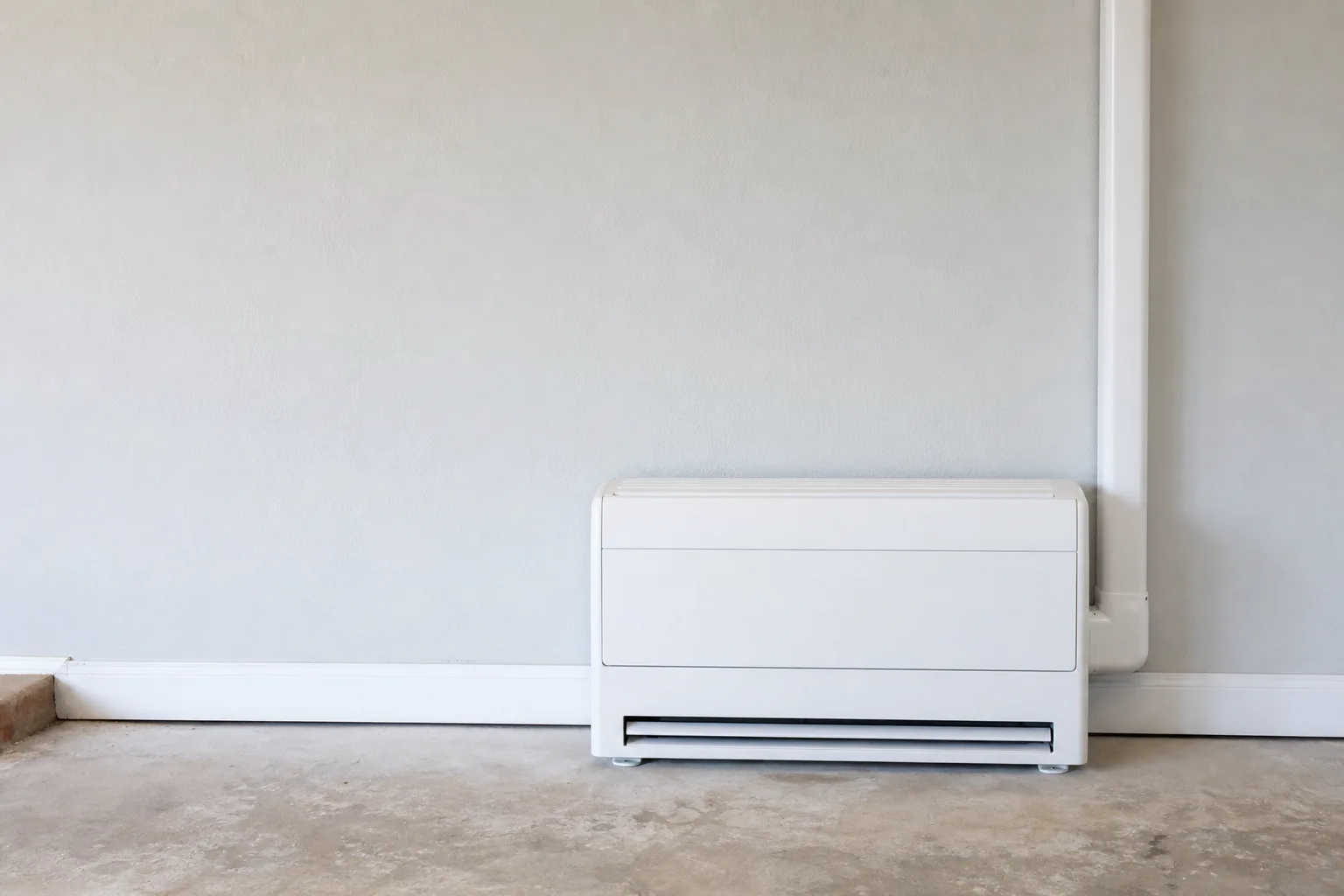
Magnolia Springs Garage Mini-Splits: 13 Years of Failure Patterns
Garage mini-splits failing their first summer in Magnolia Springs trace to three upstream root causes. What they look like, and what 'going right' looks like.
Published 2026-06-19 · Updated 2026-06-19
Author: Landon Jahnke | ACExperts251
Reviewed by: Landon Jahnke · Owner · Alabama HVAC License AL #16117 · EPA 608 Certified
Over 13 years working Baldwin County HVAC, garage mini-splits in Magnolia Springs that fail in their first summer almost always trace to one of three upstream root causes. The symptom — dripping line set, iced indoor coil, blower wheel seized, breaker tripping, refrigerant low — varies. The cause does not vary much.
Here is what those three causes look like, what "going right" looks like instead, and what NOT to do on Father's Day weekend.
Root cause 1: Skipped vacuum-down and charge verification
Refrigerant-side install errors account for the largest share of first-summer failures I see. Either the vacuum pull was not done correctly, the charge was not adjusted for line set length, or the flare connection was not torqued to spec. Every one of those failures was avoidable with a proper install procedure.
What goes wrong: the line set installed in any new mini-split contains air, water vapor, and trace contamination from the manufacturing process. Before refrigerant flows, that has to be evacuated to 500 microns and held there. Most DIY installs use a brake-bleed pump or a single-stage HVAC supply-house rental that bottoms out at 1,500 microns and never gets the moisture out. The system runs fine for 60 to 180 days while the residual moisture forms acidic compounds inside the closed loop. Then components fail in sequence: expansion valve first, then compressor.
A line set kinked at a sharp 90-degree bend that someone made with their hands rather than a proper bender shows the same pattern — refrigerant flow restricted, system running at reduced capacity, compressor overheating during peak afternoon load. So does an under-torqued flare at the indoor unit that produces a slow leak undetectable for the first two months until it becomes an audible hiss in month three. So does a 35-foot line set on a system pre-charged for 25 feet with no additional refrigerant added during install.
What going right looks like: two-stage vacuum pump pulling to 500 microns, holding for 30 minutes without rise, then opening the service valves to admit refrigerant. Charge verification by superheat-and-subcool measurement under operating conditions, not just by trusting the pre-charge label. Adjusted refrigerant for line set length variance.
The same root cause shows up across coastal mini-split installs in Daphne and Fairhope — it is not a Magnolia Springs problem specifically, it is a DIY-and-undertrained-installer problem that shows up wherever mini-splits are popular.
Root cause 2: Garage envelope mismatched to the system
A system spec that does not match the building it is installed in is the next-most-common cause.
What goes wrong: a 12,000 BTU mini-split is sized for somewhere around 450-550 square feet of conditioned space with reasonable insulation (R-13 walls, R-19 ceiling, R-15 garage door if applicable). Magnolia Springs has a lot of older detached carriage-house garages where the actual insulation is closer to R-3 — bare frame walls, uninsulated ceiling, single-skin metal door. A correctly sized unit by square footage is dramatically undersized for the actual heat load when the envelope is thin. The result is an iced indoor coil after the system overruns its design envelope, or a blower wheel whose bearings rust out because indoor humidity stayed above 70% the entire first summer.
The reverse problem is just as common: someone reads "you can't go too big on cooling capacity" online and installs an 18,000 BTU unit in a 350 sq ft space. The unit short-cycles, never runs long enough to dehumidify, and the garage stabilizes at 73°F and 67% RH. The owner blames the unit. The unit is fine. The sizing is wrong.
A particular Magnolia Springs flavor of this: an outdoor unit mounted directly on a riverside wall with no salt-air-rated coating, no maintenance, in a microclimate the homeowner did not disclose to the installer because he did not know it mattered. By the end of one summer the fan grille has corroded enough to perforate.
What going right looks like: a Manual J load calculation for the actual garage as it stands, not a rule-of-thumb based on square footage. If the envelope cannot support the cooling load with a sane equipment size, the envelope gets fixed first. R-13 wall insulation in a 400 sq ft garage is a weekend of materials and labor. R-19 in the ceiling is small money on top of that. The total pre-install envelope upgrade is cheaper than the recurring electricity cost of running an undersized system at 100% duty all summer, and it is a fraction of the cost of replacing a system that failed because the load exceeded its design envelope.
Root cause 3: Electrical work done by someone without the credential
A smaller share of the failures by count, but the most expensive and the most dangerous — they trace to electrical install errors. Wrong wire size, wrong breaker, wrong polarity at the disconnect, no proper grounding path. An inverter board fried on first startup because the 240V circuit was miswired by homeowner DIY. A breaker tripping every 4-6 hours because the wire size between panel and disconnect was 14 AWG on a 20A circuit (code violation, intermittent voltage drop under load, breaker doing exactly what it is supposed to do).
What goes wrong: a homeowner who can run a wire and trip a breaker thinks the electrical install is the easy part. It is the part where the consequences of getting it wrong include component failure, fire risk, and a code violation that voids the install permit if there ever was one. An inverter-board repair on a miswired install is on the homeowner — warranty does not cover wiring errors.
What going right looks like: a licensed electrician for two to three hours, running 10 AWG (or 12 AWG depending on circuit length and amperage) from a properly sized breaker at the panel to a disconnect mounted within sight of the outdoor unit. The wire is clamped at every entry, the conduit is appropriate for outdoor exposure, the disconnect is rated for the amperage, and the grounding is bonded correctly. None of that is hard. All of it requires someone who has done it before.
What this means for Father's Day weekend
Do not make the install your Father's Day project. Make the planning the Father's Day project.
The right Father's Day weekend with a garage mini-split on the wishlist looks like this:
Saturday morning. Walk the garage with a tape measure and a notebook. Square footage. Wall and ceiling insulation R-value (look for visible insulation thickness, or accept that bare framing is R-1). Garage door type. Window count and glazing type. Distance from the electrical panel to the planned outdoor unit location. Existing breaker capacity at the panel.
Saturday afternoon. Get a free in-home assessment from someone qualified. I do them in Magnolia Springs and the surrounding river corridor on weekly routing. The assessment tells you what the install actually costs — not the unit cost, the install cost — and what the prerequisites are.
Sunday. Make the decision based on real numbers. If the install penciled out, schedule it for the following weekend. If the envelope work has to come first, scope that. If the electrical panel needs an upgrade, factor it.
The wrong Father's Day weekend: gift-wrapped DIY kit Saturday morning, frantic big-box-store run for additional materials Saturday afternoon, partial install Sunday, system running at half capacity by Tuesday, dripping water by Friday, and a call to a contractor by the following Wednesday.
A note on Magnolia Springs garages specifically
The carriage-house style is its own thing. Plaster-on-lath walls do not accept standard wall anchors. Limited stud bay clearance complicates line set routing. Older electrical panels often do not have spare slots for a new 240V circuit. Riverside humidity puts higher demands on the indoor unit's drain pathway and the outdoor unit's corrosion resistance.
None of those make a mini-split unworkable. They make pre-planning more important than for a tract-home garage in newer Spanish Fort or Daphne construction. The Magnolia Springs IAQ angle overlaps with this — high-humidity envelopes need different equipment specs and different maintenance — and the same principle applies inside a detached garage.
The cluster siblings here cover the financial angle and the success-story angle: what an honest tech charges for Father's Day garage HVAC in Fairhope in 2026 and how one Orange Beach homeowner caught Father's Day garage HVAC early walk through what right looks like instead of what wrong looks like.
Three root causes. The avoidable ones are all of them.
Call 251-383-HVAC for a free in-home assessment. The mini-split installation service page covers the standard install process for Magnolia Springs, and the Repair vs. Replace calculator handles the math if you are weighing a mini-split addition against a duct extension off the main house system.
Get it right the first time. Father's Day is for the planning. The install can wait one more weekend.
FAQ
- Are detached carriage-house garages in Magnolia Springs harder to mini-split?
- Often, yes. The historic carriage-house style common along Magnolia River and Riverside Drive frequently has limited stud bay clearance for line set runs, plaster-on-lath walls that don't accept standard wall anchors, and electrical panels that aren't sized for an additional 240V circuit. The work isn't impossible — I've installed plenty of them — but the assessment matters more here than in newer construction. A 30-minute walkthrough before the install date catches the surprises that turn a one-day job into a three-day job.
- Can I run a mini-split in a Magnolia Springs garage with no insulation?
- You can run it. It will not control humidity, it will not hold temperature, and it will burn 35-50% more electricity than the same unit in an insulated space. I do not recommend installing a mini-split in an uninsulated carriage house. The pre-install spend on R-13 wall insulation and R-19 ceiling insulation is small relative to the equipment, and it pays itself back in equipment longevity and operating cost within a few years. The insulation is the install.
- Will a garage mini-split survive the river humidity in Magnolia Springs?
- If the install is correct, yes. The Magnolia River corridor runs higher year-round humidity than inland Baldwin County, but the equipment is rated for it. The failure modes I see are install-related, not equipment-related — improper line set insulation that causes outdoor sweating, drain pan slopes that hold water and grow biofilm, outdoor units mounted too low to a ground that floods during heavy rain. Get the install right and the equipment lasts the full 12-15 years.
- How long does a garage mini-split installation take in Magnolia Springs?
- A clean installation in a properly prepared garage runs about 6-8 hours for a single-zone system. A historic carriage house with electrical surprises, plaster walls, or a non-standard line set route can run 10-14 hours and sometimes spills into a second day. I assess before I quote, so the timeline is set before the install date — not discovered at hour six when I am standing on a ladder figuring out how to route around a 1923 ceiling joist.
Need this handled?
Straight to the service page for your town — pricing, local details and a form that reaches a technician.
More from Fathers Day

ACExperts HVAC
We Take The Heat So You Don't Have To
Fast, honest heating and air service across Baldwin County. Speak with a technician and get on the schedule today.