
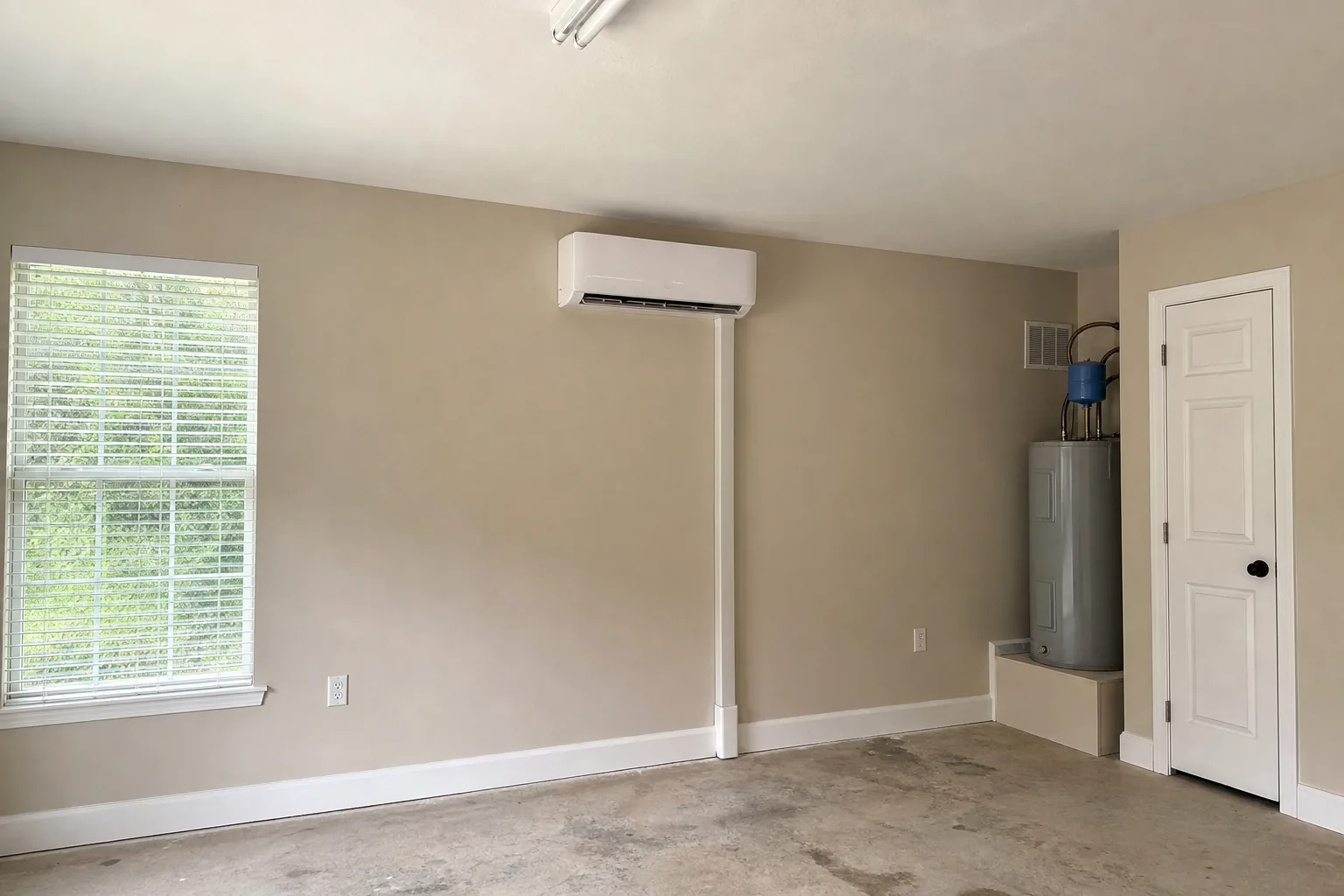
How One Orange Beach Homeowner Caught Father's Day Garage HVAC Trouble Early — A Mini-Split's Biography
Tracing an Orange Beach garage mini-split from holiday-sale buy through storage, a DIY install, and a second-summer failure. The unit's history is the diagnosis.
Published 2026-06-16 · Updated 2026-06-16
Author: Landon Jahnke | ACExperts251
Reviewed by: Landon Jahnke · Owner · Alabama HVAC License AL #16117 · EPA 608 Certified
This post traces a composite Orange Beach garage mini-split — the kind of equipment biography I've watched play out plenty of times over 13 years working Baldwin County HVAC. The details are illustrative; your specific unit will differ. The arc, unfortunately, is typical.
Here's the biography — and what each step tells you about why DIY garage mini-splits in Orange Beach face specific risks the manufacturer's box doesn't warn about.
Chapter 1 — The big-box holiday purchase
The unit is a single-zone 12,000 BTU mini-split — common spec, the kind used for a two-car garage workshop conversion or a small bay-side studio. The buyer is a homeowner with a place at Bear Point Estates or similar single-family neighborhood, thinking about converting half the garage into a workshop.
Bought during a holiday sale at a deep discount, taken home, set in the corner of the garage. Then life happens. The workshop conversion gets pushed to "next year" two or three years in a row. The mini-split sits in the box, gets moved to a non-climate-controlled storage unit during a move, sits some more. Summer interior temperatures in those Canal Road storage units reach into the 100s. Winter overnight lows can dip into the 30s.
What this tells you: by the time this unit is finally unboxed, it has spent 24-36 months in non-climate-controlled storage. Sealed refrigerant systems handle temperature swings well — that part is fine. What's not fine: foam gaskets around the indoor unit cabinet partially compress and partially harden, the electronics board gets heat-cycled hundreds of times, and any condensation that has formed in the indoor blower compartment over Gulf Coast humid winters leaves a thin film that the homeowner can't see and that doesn't get addressed before installation.
Pro installers commission a unit before they install it — pull the cabinet, inspect, address any suspect gaskets, run a continuity check on the boards. DIY installers typically don't.
Chapter 2 — The Father's Day gift
In June, the homeowner gives the still-boxed mini-split to a son-in-law or daughter as a Father's Day gift for their Orange Beach garage workshop. The recipient has been complaining all spring that the garage is unworkable above 84°F.
The gift comes with the comment: "I'll help you put it in. We can do it ourselves."
What this tells you: the equipment now belongs to a homeowner who didn't choose it for the specific application, didn't size it against the actual heat load of his garage (insulated? attached? south-facing? insulated garage door?), and is working with someone who's done his own installs before but not in a coastal environment.
Sizing is the silent killer of DIY mini-splits. A 12,000 BTU unit might be exactly right for the workshop, or it might be 30% undersized given a south-facing aluminum garage door with no shade. The unit came with the box, not with a Manual J calculation.
Chapter 3 — The DIY install
Over a long holiday weekend, the recipient and a helper unbox the unit and install it. The install takes about a day and a half. They do the work the way YouTube videos walk them through: drill the wall pass-through, mount the indoor head, set the outdoor unit on a wall bracket, run the line set, make the flare connections, open the service valves to release the precharged refrigerant, and turn it on.
It works great. Cools the workshop from 91°F to 76°F in about 40 minutes.
What gets done wrong, in order of how badly it bites later:
-
No vacuum-pump evacuation. The line set is filled with atmospheric air. Manufacturer warranty specification requires evacuation to 500 microns or below before opening service valves. Skipping it traps moisture and non-condensables inside the system. The system runs okay at first. Over months and years, the moisture becomes acidic, the refrigerant oil degrades, and copper components corrode from the inside.
-
No coastal-spec line set insulation. The factory line set insulation is fine for an interior installation. For an Orange Beach garage with high salt-air exposure, the line set should be wrapped in UV-resistant, coastal-spec armor. Otherwise the salt air starts working on the line set the moment it's installed.
-
No permit, no electrical inspection. Orange Beach generally requires permits for new HVAC installations. The permit process is the friend of the DIY install — it catches the unsized line breaker on the wall side and the lack of a proper outdoor disconnect.
-
Outdoor unit mounted on the bay-facing wall. Direct salt air, no condenser sock, no shielding. Bay-facing exposure is meaningfully worse than Gulf-facing for some Orange Beach addresses because the persistent breeze comes off Wolf Bay and across exposed water for miles before hitting the unit.
The system works fine through the first cooling season.
Chapter 4 — The first winter
The unit gets used a few times for heating — these are heat pumps, after all, and the workshop gets cold a few nights in January. Otherwise it sits off, fan covered with a homeowner-bought outdoor cover (incorrect for these units; manufacturers explicitly say not to cover them in winter because moisture gets trapped underneath the cover and accelerates corrosion).
What this tells you: the cover is the third corrosion accelerator after the bay-facing exposure and the lack of coastal-spec line set armor. The cover traps moisture against the cabinet for weeks at a stretch. By the following spring the cabinet is already showing visible corrosion on the lower seam.
Chapter 5 — The second cooling season
System comes back online in April. The homeowner notices in early June that it's not quite as cold as he remembered from the previous summer — maybe 73°F instead of 70°F at the same setting. He attributes it to a warmer summer and doesn't think much of it.
July rolls around. The performance gap widens. By late July the unit is running continuously and holding the workshop at maybe 76°F on a 92°F day. He turns it down to 65°F on the remote, hoping that will force more cooling. It doesn't — that's not how thermostats work, but a lot of homeowners try it anyway.
On a 94°F afternoon in mid-August, the system trips on high refrigerant pressure and goes into fault. Fan keeps running, no cold air. Won't reset. Workshop goes from 78°F to 88°F over the next four hours.
He calls.
Chapter 6 — The diagnostic
The unit's biography reveals itself in about 25 minutes of inspection:
- Outdoor cabinet: heavy corrosion on lower panels, salt deposits visible on coil, mounting bracket showing rust through the powder coat.
- Coil fin pack: substantially blocked with salt-and-dust crust. Original factory finish gone in patches.
- Refrigerant pressures: high side reading well above design. Low side reading low. Classic non-condensable contamination signature — atmospheric air trapped in the system from the no-evacuation install.
- Line set insulation: brittle and split where bay-facing UV has degraded it. Visible corrosion on the line set itself underneath.
- Electrical: outdoor disconnect is a standard pull-out, not a coastal-rated unit. Heavy oxidation on the contact blades.
Combined diagnosis: the system has operated outside warranty spec from day one, the moisture-and-air contamination from the missing evacuation step has degraded the refrigerant oil and corroded the internal copper, the coastal exposure has eaten the cabinet from the outside in, and the high-pressure trip was the system's last warning before catastrophic compressor failure.
The honest answer: this unit can be revived, in the sense that we could flush the system, evacuate, recharge, replace the line set, replace the disconnect, and clean the coil — but it's a substantial repair on an inexpensive piece of equipment that's already corroded externally and is probably 18 months from another major issue. The economic answer is replacement.
Chapter 7 — The replacement
Replacement with a coastal-spec mini-split — proper coil coating, manufacturer-spec flares, the install that should have happened originally. Free replacement estimate, written quote on site, work scheduled within days. The quote itemizes equipment, evacuation, coastal-spec line set, proper outdoor disconnect, condensate handling, commissioning, and the permit pull.
The new unit will run reliably for many years in that location when installed to spec. The old unit gave maybe 14 months from the homeowner-noticed performance drop to total failure.
What this teaches Orange Beach homeowners
The equipment's biography is composite in its details but completely typical in its arc. Most Father's Day garage mini-splits in Orange Beach follow some version of this story. Box bought before the install is actually planned. Storage in non-ideal conditions for months or years. Install by a well-meaning amateur who treats YouTube as a manual. First-summer success masking second-summer failure.
The Orange Beach environment is harsher than the equipment manufacturers test for. Bear Point, Cotton Bayou, Bayou St. John, Terry Cove, Ono Island — all of these have variations of the salt-and-humidity-and-bay-air load that compounds installation shortcuts faster than inland environments do. A DIY install in Loxley might run several years before the same issues appear. In Orange Beach, the timeline collapses.
Not every homeowner needs me to do the install. The smart middle path: buy the equipment, hire the install. Buy the unit when you've decided on the application — not years before. Hire a licensed installer to do the vacuum evacuation, the flare connections, the coastal-spec line set, the permit, and the commissioning. Ask for a written quote on install-only with a customer-supplied unit; that's the difference between "Father's Day gift that lasts" and "Father's Day gift that becomes an August service call."
The companion posts in this cluster — the Bay Minette Father's Day mistake list and the Fairhope Father's Day garage HVAC pricing breakdown — cover the inland and Eastern Shore variations. The Orange Beach version is this one. Coastal exposure compresses the timeline. Plan accordingly.
A note on condo restrictions
A meaningful share of Orange Beach housing is condominium with HOAs that restrict balcony or exterior modifications. If you're at Bella Luna, Perdido Grande, Phoenix on the Bay, Cottages at Romar, or any of the dozens of similar buildings, you can't just bolt a mini-split outdoor unit to the unit's exterior wall. The garage workshop scenario in this post is for owners of Ono Island, Bear Point, Terry Cove, Caswell, and other single-family neighborhoods.
For condo owners with small interior cooling problems — the kind of bedroom, sunroom, or den that the central system never quite reaches — there are better solutions: a high-velocity ducted retrofit, a properly permitted coastal-rated mini-split, or a fan strategy paired with humidity management. Call for a free replacement estimate. The condo version of the Father's Day garage problem is solvable; it's just a different conversation than the single-family workshop case.
The honest summary
The homeowner in this story catches it earlier than many — pre-failure trip instead of compressor seizure. He pays for a replacement instead of an emergency same-day call.
The version that catches it earliest is the one that calls before the install — at the gift-receiving moment, or at the "we should put this in" moment. The equipment doesn't have to fail in two summers. It fails because of choices made along the biography. Choose differently and the same equipment runs many years longer.
If you're holding a mini-split box and wondering whether to install it yourself or call, that's the call worth making before the holiday weekend, not after. Use the scheduler or call 251-383-HVAC. Free replacement estimates.
Disclaimer: This post is general information about mini-split installation in coastal environments, not warranty or legal advice. Manufacturer warranty terms vary by brand; verify the specific evacuation and commissioning requirements for your unit against the manufacturer's installation manual before any install. ACExperts LLC, AL #16117, founded 2026.
FAQ
- Is a Father's Day garage mini-split actually a bad gift, or is this post anti-DIY in disguise?
- It's a great gift if the install is done right. The post isn't anti-DIY — it's pro-honest-install. A correctly mounted, correctly evacuated, correctly charged mini-split in an Orange Beach garage will run reliably for many years. The same equipment installed by an enthusiastic amateur over a long weekend, without vacuum-pump evacuation and without coastal-spec line set protection, often fails much sooner. The difference isn't the equipment. It's the install.
- Why does Orange Beach specifically chew through DIY garage mini-splits?
- Three reasons. Salt-laden air from the Gulf and Wolf Bay deposits corrosive film on outdoor units year-round. The closed-and-reopened seasonal pattern of part-time residents means equipment sits with refrigerant lines exposed for months. And condo HOA restrictions push owners toward garage and bay-side workshop installs that aren't always permitted, which means homeowners go DIY rather than navigate the approval process. All three factors compound on the same equipment.
- If a mini-split sat in a storage unit for three years, is it ruined before installation?
- Not ruined, but compromised. Refrigerant in a sealed system stays put — that's not the issue. The issue is gaskets and o-rings going hard, the indoor blower wheel collecting dust if the box wasn't fully sealed, and electronics taking storage damage in non-climate-controlled storage units (Canal Road storage in particular gets very hot in summer). A pro will commission the unit, inspect suspect gaskets, and pull a proper vacuum. A DIY install often skips that and lives with the consequences.
- What does a proper Orange Beach garage mini-split install actually cost?
- Pricing depends on line set length, electrical work, whether a permit is needed, and whether you supply the equipment or I do. Replacement estimates are free; I'll give you a written quote on site that itemizes equipment, vacuum-pump evacuation to 500 microns, coastal-spec line set, condensate routing, electrical disconnect, permit, and commissioning. The manufacturer warranty stays valid when the install meets the manufacturer's published spec.
Need this handled?
Straight to the service page for your town — pricing, local details and a form that reaches a technician.
More from Fathers Day

ACExperts HVAC
We Take The Heat So You Don't Have To
Fast, honest heating and air service across Baldwin County. Speak with a technician and get on the schedule today.