
5 Halloween-Noise Mistakes Fairhope Homeowners Keep Making
Five late-October mistakes Fairhope homeowners make when HVAC starts making weird noises — and what to do instead, in a 1908 Craftsman or 2022 build.
Published 2025-10-24 · Updated 2025-10-24
Author: Landon Jahnke | ACExperts251
Reviewed by: Landon Jahnke · Owner · Alabama HVAC License AL #16117 · EPA 608 Certified
Five mistakes. One post. Each one I've seen plenty of times over 13 years working Baldwin County HVAC, and each one has cost the homeowner real money — sometimes a few hundred bucks, sometimes a full system replacement that could've been a much smaller fix in October.
The mistakes don't sort by housing era. Whether you're in a 1908 Craftsman in the Fruit & Nut District with retrofitted ductwork through a pier-and-beam crawl space, or a 2022 build in Rock Creek with spray-foam insulation and a brand-new variable-speed heat pump, the underlying patterns are the same. People hear a noise, they make a decision based on how the noise sounds rather than what it actually is, and the decision goes wrong.
Here are the five.
Mistake 1: Treating the dust burn-off smell like a fire emergency
What people do: They smell something burning the first time the heat kicks on in late October, panic, shut the system off at the thermostat, and call us in alarm. Sometimes they call the fire department first. Sometimes they air out the house all night, leave the system off through the cold front, and end up running space heaters in every room because they're afraid to turn the furnace back on.
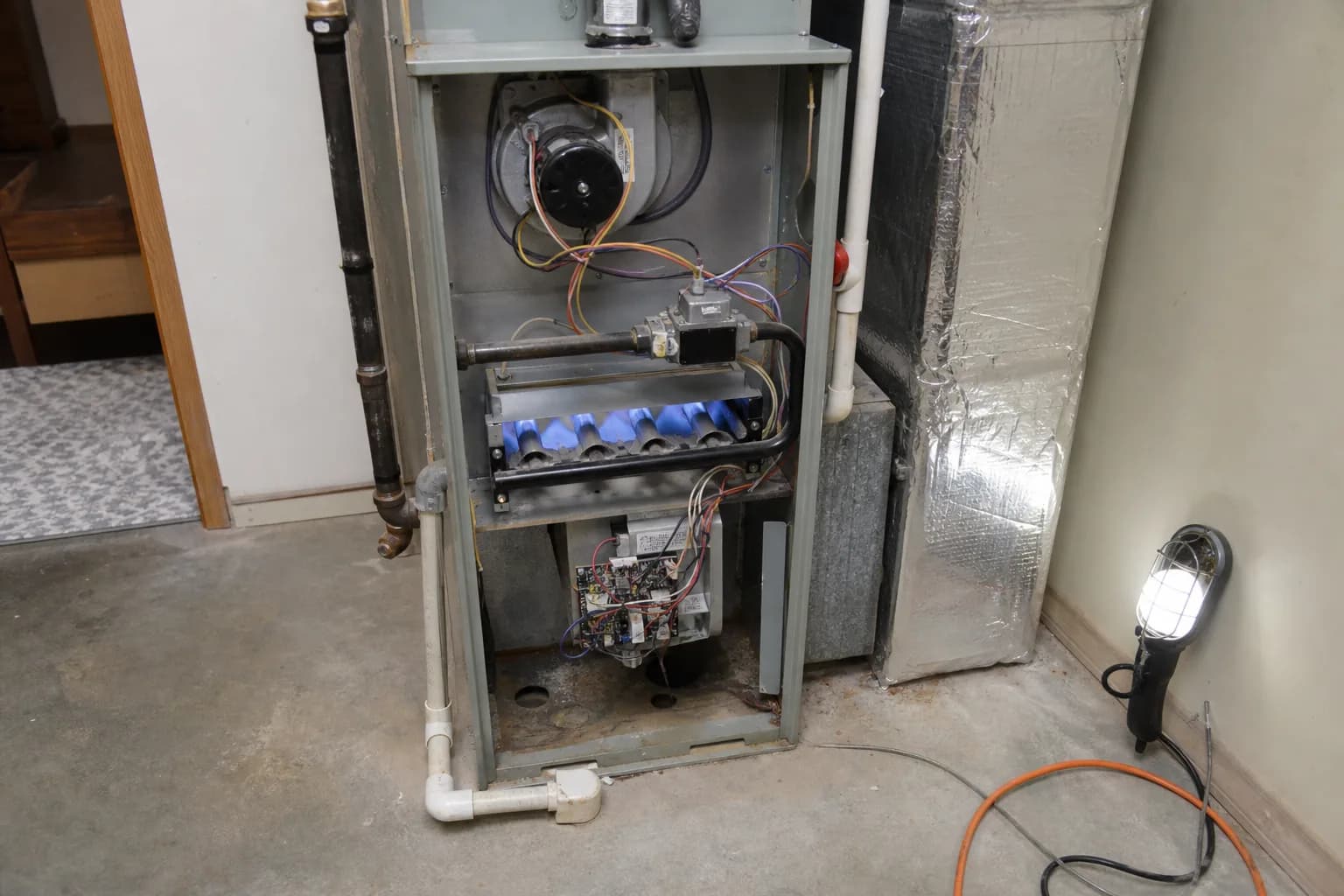
What's actually happening: Six to eight months of dust, pollen, and HVAC sealant residue have settled on the heat exchanger and burner assembly. When the burners hit 1,200°F+ for the first time since spring, that organic material vaporizes and burns. The smell is dusty, slightly acrid, and unmistakable for the first 15 to 30 minutes the system runs. It clears.
What to do instead: Open a few windows, let the system run, and let it burn off. If the smell persists past about an hour or turns chemical, sulfurous, oily, or burnt-plastic, then shut it off and call. Otherwise, this is normal first-run behavior — the same thing a Spanish Fort furnace does on the same first cold morning. The smell is a sign of a system that needs a fall tune-up, not a system that's failing.
Mistake 2: Ignoring the popping in the ductwork — or panicking over it
What people do: Two camps here. Camp one ignores rhythmic popping and ticking from the duct system through the entire heating season because "it's always done that." Camp two interprets the same sound as ductwork imminently collapsing, calls in a panic, and asks whether they need to evacuate.
What's actually happening: Sheet metal ductwork expands and contracts as supply air temperature changes. In tight Rock Creek and Stone Creek subdivisions, the expansion is fast and audible — supply trunks go from 65°F to 110°F in a minute, and the metal pops. In older Fairhope homes with ductwork running through unconditioned crawl spaces, the same physics produces deeper groans and ticks because the duct insulation is older or missing entirely. Both are normal seasonal behavior.
What to do instead: Note when the popping happens. If it's at the start and end of heating cycles, when supply air temperature is changing, that's expansion noise and it's harmless. If it's constant during steady-state operation, or paired with reduced airflow at the registers, that's a different problem — possibly a loose hanger, a damper actuator working against itself, or a duct connection that's failing — and it's worth a call. The distinction is whether the noise tracks with temperature change or with the system simply running.
Mistake 3: Doing the DIY furnace fix at midnight on Halloween
This is the Fairhope-specific one. The DIY demographic out here is real, and I respect it — but there are limits, and three of them keep showing up.
What people do: Three categories I see annually:
- Cleaning the burners themselves. Pulling the burner assembly, brushing it off, putting it back, and ending up with a flame sensor knocked out of position or a burner crown that's not seated correctly. The next call from the wife is "the furnace won't light at all anymore."
- Replacing the thermostat with a smart unit they bought at Home Depot at 9 p.m. Eight years of low-voltage wiring conventions don't always match the new thermostat's terminal labels, and miswiring can short the transformer, blow the fuse on the control board, or worse. Common-wire confusion is the single most frequent cause of "the new thermostat killed my furnace" calls in this trade.
- Replacing the air filter with the wrong-rated filter. Going from a builder-grade MERV 8 to a high-end MERV 13 in a system not designed for the static pressure load. The blower struggles, the heat exchanger overheats, the high-limit switch trips, and the system shuts down repeatedly. Fairhope homeowners with allergies tend to make this one — and it's one of the easier ones to fix once we identify it.
What to do instead: Filter changes are absolutely DIY territory — but match the MERV rating to what the manufacturer specs (look at the equipment data plate or your existing filter), or ask us. Thermostat replacements are DIY-able if you photograph the existing wiring before disconnecting, label every wire, and don't proceed if the new thermostat needs a common wire your system doesn't have. Burner cleaning is a tune-up task, not a DIY task. The combustion analysis afterward is what tells you whether the cleaning was done correctly.
Mistake 4: Dismissing CO detector chirps as low-battery noise
What people do: A CO detector chirps in late October. The homeowner assumes it's the low-battery warning, replaces the battery, the chirp stops. Two weeks later it chirps again. The homeowner replaces the battery again. The pattern continues all winter.
What's actually happening: Could be a battery. Could also be a heat exchanger that developed micro-cracks during the dormant summer. Heat exchanger cracks are most common in furnaces 12 years and older, and they tend to leak combustion byproducts only during high-demand cycles when burner temperatures peak. A sensitive CO detector picks up those transient releases and reports them. The detector isn't malfunctioning — the system is.
What to do instead: When a CO alarm activates during the heating season, treat it as real until verified otherwise. Steps: get the family out of the home, call the fire department if you're uncertain, ventilate the home, and then call us for a combustion analysis. We use a calibrated combustion analyzer to measure CO production at the flue and a borescope to inspect the heat exchanger if needed. If the detector is just battery-failing, we'll tell you that too — but the test is worth doing. A failed heat exchanger isn't repaired; it's replaced, and depending on system age that's often a full furnace replacement decision, covered under our heating installation page.
Mistake 5: Putting off the fall heating tune-up because "the system was fine last winter"
What people do: Skip the fall tune-up because the previous heating season went smoothly, then call us at 6 a.m. on the morning of the first hard freeze when the system won't come on and the kids need to get to school. First-freeze mornings are the busiest day of the year for any HVAC operation in Fairhope, Daphne, or Spanish Fort, because every other homeowner who skipped the tune-up has the same idea.
What's actually happening: Eight months of dormancy is enough to reveal weaknesses that a tune-up would catch in October. Ignitor cracks, capacitor degradation on the blower motor, a slow refrigerant leak on a heat pump that didn't show up until the system worked harder in heat mode, a flame sensor coated with combustion residue that's about to fail to light — all of these are routine fall-tune-up findings. They become emergencies only when nobody looked.
What to do instead: Schedule the tune-up. Mid-October is ideal, before the first hard cold front. Our preventive maintenance plan at $20/month includes both the fall heating visit and the spring AC visit, plus $0 service fees and 10% off any repairs throughout the year. For most Fairhope households the math is favorable on the first repair call alone. Single tune-ups outside the plan are also fine — call the scheduling line and we'll get you on the route.
There's also a Daphne-area noise post that walks through some of the same logic from a different angle, if you want a second read on which noises matter.
A quick note on Fairhope's housing-stock split
The reason these mistakes are particularly common in Fairhope is that the city's housing stock pulls in two directions at once. The Fruit & Nut District, the streets around the Municipal Pier, and the historic district carry homes with HVAC systems that were retrofitted decades after original construction — often into pier-and-beam crawl spaces with limited access, often with original 1970s or 1980s equipment that's now been replaced two or three times into the same compromised duct system. Those homes make older-house noises and have older-house failure modes.
A few blocks east, in Rock Creek, Stone Creek, Old Battles Village, and Magnolia Commons, the housing is brand new — tight envelopes, smart thermostats, variable-speed equipment, sealed crawls, sometimes spray-foam encapsulation. Those homes make tighter, faster, electronics-driven noises and have electronics-driven failure modes.
The mistakes above happen in both. The fixes look slightly different depending on which house you're in, but the diagnostic logic is the same: hear the noise, identify what it actually is rather than what it sounds like, and act on the actual cause. We've covered the historic-home sizing question separately in the Fruit & Nut District sizing post — same principle, different topic.
The shortest possible recap
Don't panic at the dust burn. Don't ignore the duct popping if it doesn't track temperature changes. Don't DIY the burner cleaning. Don't dismiss the CO chirp. Don't skip the fall tune-up. Five things, ten minutes of reading, hopefully a couple of avoided service calls this winter.
FAQ
- I have a Fruit & Nut District home from 1912 — should I be more worried about heating noises than my neighbors in Rock Creek?
- Different worries, similar level. Older Fairhope homes have long retrofit duct runs, often through pier-and-beam crawl spaces, that flex and pop more audibly than modern construction. Newer homes have tighter spaces, faster temperature ramps, and electronics-heavy equipment. The noise profile is different for each — neither is automatically more dangerous, but both reward an annual fall heating tune-up.
- Is it dangerous to keep running the system if it's making a new noise?
- Depends on the noise. Burning smells past the first hour, persistent CO alarm activity, gas odors, grinding from the blower, or anything paired with reduced airflow — shut it off and call us. Pops and ticks during temperature ramps, brief startup whines, and the dust burn-off smell at first ignition usually clear on their own. When in doubt, call. A diagnostic visit is $79 and credited toward any repair we perform.
- How much does a fall heating tune-up cost in Fairhope?
- Single tune-ups vary by system type and complexity. Most Fairhope homeowners do better on the Comfort Plan — $20/month or $240/year — which includes two tune-ups per year (fall heating and spring AC), $0 service fees, and 10% off repairs. For a typical Fairhope household it pays for itself the first time something fails.
- My historic home doesn't have a furnace — just a heat pump. Do these noise issues still apply?
- Yes, with different specifics. Heat pumps make their own first-cold-morning noises: reversing valve thunks, defrost-cycle hissing, auxiliary heat strip activation. Same advice applies — most resolve on their own within the first heating week, and any noise that doesn't resolve or that gets louder is worth a call.
Need this handled?
Straight to the service page for your town — pricing, local details and a form that reaches a technician.
More from Halloween Noises

ACExperts HVAC
We Take The Heat So You Don't Have To
Fast, honest heating and air service across Baldwin County. Speak with a technician and get on the schedule today.