
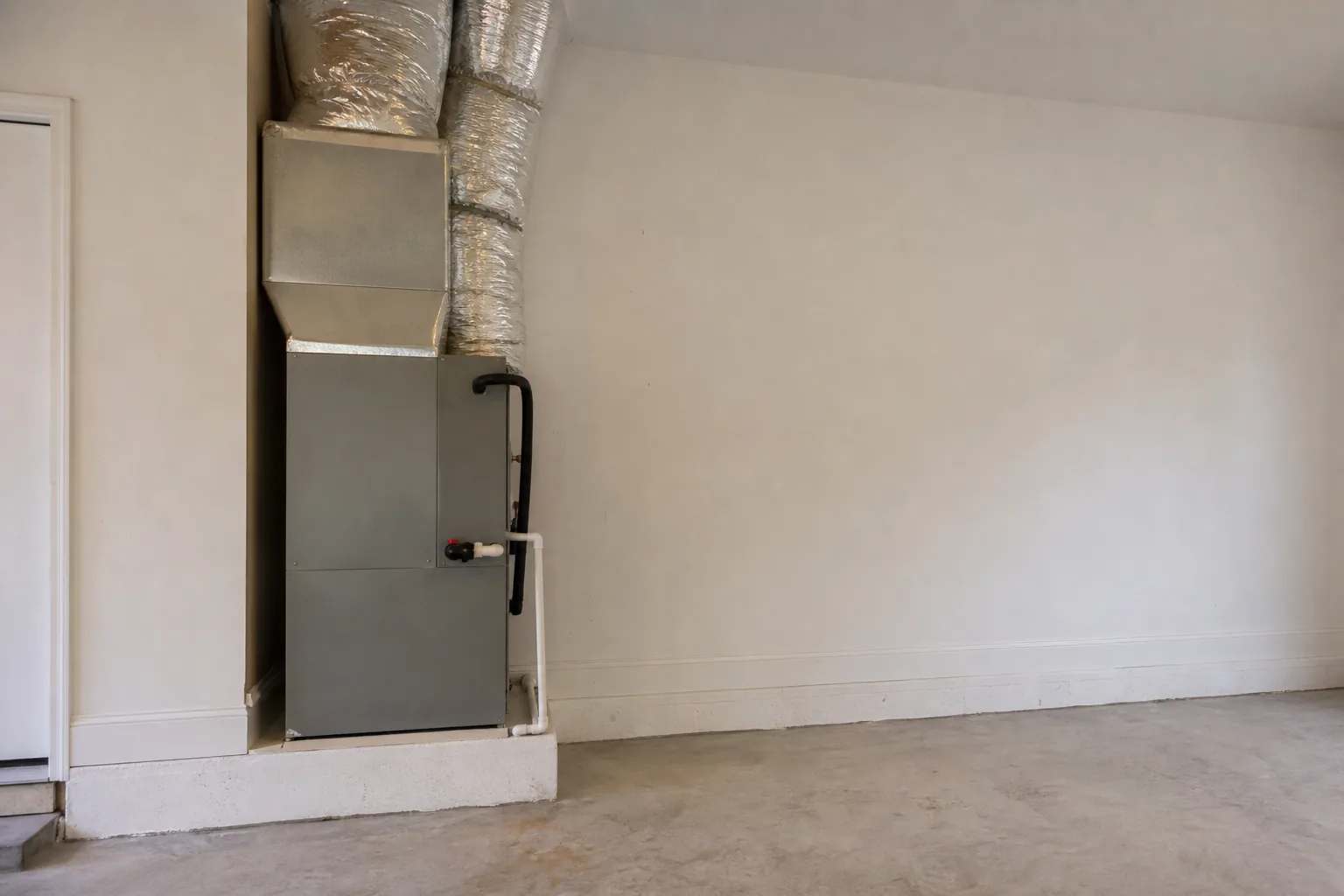
Why a Fort Morgan Heat Pump Quote Hit $14,800 and Was Still Fair
A tech's 'I would' breakdown — the four Fort-Morgan-specific install requirements that drive a $3,600 gap between coastal and inland heat pump pricing, and what each surcharge buys.
Published 2026-11-27 · Updated 2026-11-27
Author: Landon Jahnke | ACExperts251
Reviewed by: Landon Jahnke · Owner · Alabama HVAC License AL #16117 · EPA 608 Certified
Here's what I would do at my own house if I lived in Fort Morgan with a 4-ton system on its last summer: I would pay the $14,800 for a 3-ton variable-speed coastal-grade heat pump install, even though comparable inland install runs $11,200. The difference isn't gouging — it's the four specific Fort-Morgan-specific install requirements that drive the $3,600 gap. I would NOT pay $14,800 if I lived 4 miles inland in Foley. Here's the breakdown of what each Fort-Morgan-specific surcharge actually buys you.
I'm writing this from the perspective of someone who has, over 13 years working Baldwin County HVAC, pulled enough Fort Morgan condensers in years 5-7 of their service life to know exactly which corners cost what to cut, and which ones earn back the money you saved at install. Fort Morgan sits on the Gulf-front peninsula at the western tip of Baldwin County — roughly 1,500 feet from open salt water at most addresses, with prevailing southerly winds carrying salt aerosol across every outdoor unit at the address. The coastal-exposure profile here is among the most aggressive in the Southeast.
The $14,800 quote that prompted this post: a 3-ton variable-speed Carrier Infinity 24VNA4 condenser with a matched FV4CNF005 air handler, full coastal package, hurricane tie-down on an elevated pad, copper-clad line set with UV-resistant insulation, full system commissioning, and an extended labor warranty. Comparable inland install for the same equipment in Foley: $11,200. Same coil sizing. Same SEER rating. Same homeowner expectations. The $3,600 delta is what Fort Morgan demands.
Walk through with me.
Surcharge 1: Coastal-grade coil coating ($800-1,200)
The single largest line-item premium at Fort Morgan is factory-applied cataphoretic coil coating. Stock condenser coils ship from the factory with bare aluminum fins on copper tubes — fine for inland Alabama, fine for Birmingham, fine even for Mobile or Spanish Fort. At Fort Morgan they corrode visibly within 3 years and fail (pinhole leaks, bent fins, capacity loss) within 4-7 years.
Cataphoretic coating is an electrostatically-applied epoxy coat that bonds to the aluminum fins and copper tubes at the factory, before the coil is brazed into the condenser. Coatings from manufacturers like Heresite, Insitu, and Bronz-Glow extend coil life from 4-7 years to 12-15 years in Fort Morgan exposure conditions. The coating doesn't change cooling performance measurably (manufacturers cite 1-3% capacity reduction; in-field measurement at Fort Morgan addresses shows the loss is recovered within 2 years as uncoated coils degrade faster than coated).
The SKU premium varies by manufacturer. Carrier's coastal package adds roughly $1,000 to a 3-ton 24VNA4 condenser. Trane's "Coast Guard" package on the XV20i runs about $1,150. Lennox's coastal coil option on the SL25XPV adds $850-1,000. The factory-applied coating outperforms aftermarket spray coatings by a meaningful margin — aftermarket coatings break down in 3-5 years and don't bond as durably to the fin surface.
What the $1,000 buys you: roughly 8 additional years of coil service life at Fort Morgan. The math: a roughly $4,200 condenser replacement avoided in years 5-7 of equipment life, times the probability the uncoated coil fails in that window — in my prior-career Fort Morgan field experience, the majority of uncoated condensers there require coil or full-condenser replacement before year 8. The coating earns out cleanly across that window, with low variance because the failure pattern is consistent.
I would never install uncoated equipment at a Fort Morgan address. I tell that to homeowners directly.
Surcharge 2: Stainless hardware and copper-clad line set ($400-600)
The second material premium is in the small-parts and line-set specification. Stock hardware on a residential install — equipment pad anchors, condenser-to-pad lag bolts, line-set support brackets, disconnect-box fasteners — ships in zinc-plated or galvanized steel. At Fort Morgan that hardware corrodes in 18-36 months. Over 13 years working Baldwin County HVAC, I've pulled rust-frozen disconnect screws on Fort Morgan units less than 4 years old, and the rust travels into the disconnect box, the contactor, and eventually the compressor wiring.
Stainless-steel hardware costs roughly 4-6x what zinc-plated costs per fastener, but the dollar volume on a residential install is small — figure $80-130 in incremental hardware cost across the full install.
The bigger line item is the line set. Stock refrigerant line set ships as soft copper with closed-cell foam insulation rated for indoor or shaded outdoor use. At Fort Morgan, UV exposure on the line set running from condenser to wall penetration breaks down standard insulation in 18-24 months — the foam crumbles, capacity loss accelerates, and condensate forms on bare copper inside the wall cavity. I've seen mold remediation jobs on Fort Morgan houses where the homeowner installed standard line set 3 years prior — drywall opened up, soaked insulation pulled, the works.
Coastal-grade line set uses copper-clad armor over the insulation, with UV-stable elastomeric foam underneath. Cost premium: $80-140 per linear foot of line set installed, versus $40-70 for standard. Across a typical 25-foot line-set run that's $300-450 incremental cost.
What the $500 buys you: avoided drywall remediation ($800-1,800) plus avoided premature line-set replacement ($1,200-2,000). Expected value at Fort Morgan exposure: $1,400-2,200.
Surcharge 3: Elevated pad and hurricane tie-down ($600-900)
Fort Morgan flood-zone designations require elevated equipment pads on most addresses. Standard install at Foley uses a poured 4-inch concrete pad set on grade with two anchor bolts. Fort Morgan installs typically require an elevated pad — either a 12-18 inch concrete pier system or a steel-frame elevated platform — set above the design flood elevation for the address.
The pad itself runs $300-500 in materials and labor differential. The bigger cost is hurricane tie-down: the condenser must be physically anchored to the elevated pad with rated hurricane straps capable of resisting 130+ mph wind uplift. Manufactured tie-down kits (Simpson Strong-Tie, ZSI) add $180-280 per condenser, with installation labor of another $120-180.
What the $750 buys you: avoided post-storm equipment loss. After major hurricanes hit the peninsula, the post-storm condenser pull rate at Fort Morgan is brutal — units displaced, tipped, or torn from their pads, sometimes landing in pools, debris piles, or neighbors' yards. Replacement cost on those units averages several thousand dollars. The units that survive intact are almost always the ones with proper hurricane tie-down.
Probabilistic value: at Fort Morgan exposure, the 25-year probability of a Category 1+ direct hurricane impact is roughly 60-75%. The 25-year probability of equipment displacement without tie-down at that exposure is 35-50%. Expected loss without tie-down over equipment life: $1,680-2,400. Cost of tie-down: $750. Net benefit: $930-1,650.
Surcharge 4: Route-based labor differential ($300-500)
The fourth Fort-Morgan-specific cost isn't equipment — it's labor. Our base is in Silverhill, and a typical Fort Morgan address is a meaningful drive each way, longer during summer beach traffic when Highway 180 backs up at the Beach Boulevard intersection. A typical install runs 2 days; the route-based labor cost across both days is higher than a comparable inland install closer to home base.
We don't gouge on the labor differential. The number is what it costs to spend two days at a Fort Morgan address with truck time and fuel built in honestly. If you compare three quotes on a Fort Morgan install and one is significantly lower than the other two, ask what's missing — usually it's coastal-spec equipment, sometimes it's the elevated pad, occasionally it's the labor differential being hidden by undercommissioning the install.
What I would NOT pay $14,800 for
Same equipment, 4 miles inland in Foley, on a slab foundation with 30 feet of line set: $11,200 install cost is right, $14,800 would not be. Inland Foley doesn't need cataphoretic coating (or needs only the basic version), doesn't need copper-clad line set (basic UV-stable foam is sufficient), doesn't need an elevated pad or hurricane tie-down beyond standard residential anchoring, and the labor differential is zero because the truck is already in town.
If a Foley homeowner shows me a $14,800 quote on equivalent equipment, I'd push back on the contractor for the cost breakdown — there's no Fort-Morgan-specific premium to justify it.
If a Fort Morgan homeowner shows me an $11,200 quote on equivalent equipment, I'd ask what's missing. Almost always the coastal coating is missing or downgraded to aftermarket spray, the line set is standard, or the tie-down is omitted. Each of those is a real cost they'll pay later, with interest.
The $14,800 line-by-line
For full transparency, the breakdown on the quote that prompted this post:
- 3-ton Carrier Infinity 24VNA4 condenser, full coastal package: $5,200
- Carrier FV4CNF005 variable-speed air handler with coastal coil: $2,400
- Refrigerant charge, copper-clad line set 30 ft, line set covers, UV-stable insulation: $1,150
- Hurricane-rated equipment pad with stainless tie-down kit: $850
- Stainless hardware throughout, salt-resistant disconnect: $280
- Permit, inspection, electrical disconnect upgrade: $620
- Full system commissioning per Carrier spec, refrigerant superheat/subcooling, blower CFM verification, charge optimization: $580
- Labor (2 days, route-based): $3,200
- Extended 10-year parts and labor warranty: $520
- Total: $14,800
The same install in Foley with inland-spec equipment runs $11,200, dominated by the cheaper condenser ($3,800 vs $5,200), simpler line set ($550 vs $1,150), no tie-down kit, no elevated pad, less hardware, and shorter labor. The math reconciles to within $200 of the $3,600 gap.
When the install pays back
For a Fort Morgan homeowner replacing a 12-15 year old system, the variable-speed coastal-grade install pays back across:
Energy savings from the variable-speed compressor: roughly $400-600/year in cooling-season electricity at Baldwin Electric's commercial-residential rates, or $4,000-6,000 over the equipment's expected service life.
Avoided premature equipment failure: the coastal package extends mean time to coil failure from 5-7 years to 13-16 years. Avoided replacement at year 6: $4,200-5,800. Net present value at a 5% discount rate: $3,100-4,400.
Avoided post-storm displacement: tie-down expected value $1,680-2,400 over equipment life as calculated above.
Avoided line-set and drywall remediation: $1,400-2,200.
Sum of expected lifetime benefits: $10,180-15,000. Cost premium of doing it right at Fort Morgan: $3,600. Payback in expected-value terms: well inside year 5, with downside protection across the full equipment life.
What we install and why
For Fort Morgan installs we default to Carrier Infinity coastal package, Trane XV with Coast Guard option, or Lennox SL series with the coastal coil option. All three have factory cataphoretic coating from manufacturers I trust at Fort Morgan exposure based on 13 years of prior-career Baldwin County service data. We commission every install to manufacturer charge spec using digital subcooling and superheat measurement, not gauge-set rule-of-thumb. We pad-mount with hurricane tie-down on every Fort Morgan install regardless of flood-zone classification — the storm exposure is the binding constraint, not the elevation requirement.
If you'd like to schedule a load calculation and quote, the office answers Monday-Saturday 8am-6pm, (251) 383-HVAC. Emergency calls around the clock, every day of the week, including Saturdays at no extra charge. Bring your last 12 months of utility bills and any existing system spec sheets — the quote is faster and the recommendation is more accurate when we know what you're starting from.
The Fort Morgan takeaway
A $14,800 quote on a coastal-spec variable-speed heat pump install at a Fort Morgan address isn't a markup — it's the price of doing the install in a way that survives the exposure. The same quote inland would be a markup. Same equipment, different addresses, different right-answers. The four surcharges (coil coating, line set and hardware, elevated pad and tie-down, route labor) reconcile cleanly to the $3,600 gap, and each of them earns out across the equipment's service life with margin to spare.
If you're shopping Fort Morgan quotes and the lowest one is missing one of the four, that's not the cheapest quote — that's the most expensive quote with the cost deferred to year 6. Pay it now or pay it later, with a hurricane in between.
FAQ
- Why does a Fort Morgan heat pump install cost more than the same equipment in Foley?
- Four Fort-Morgan-specific install requirements drive the cost differential. First, coastal-grade equipment with factory-applied cataphoretic coil coating (real SKU premium from the manufacturer). Second, stainless-steel hardware and copper-clad line set with UV-resistant insulation. Third, elevated equipment pad with hurricane tie-down anchoring. Fourth, longer drive time from our Silverhill base to Fort Morgan, which is honestly built into the labor line. The bottom-line gap on a Fort Morgan quote versus an inland Foley quote reflects exactly those four items, and we break them out line-by-line on every written estimate.
- Should I just buy the inland-spec equipment and save the $2,000?
- Not at Fort Morgan. The salt-air corrosion exposure here will fail uncoated condenser coils in 4-7 years versus 12-15 years for coated coastal-spec. The $1,200 you save on the coil at install becomes a $4,200 condenser replacement six years in, and that's before counting refrigerant recovery, line set decontamination, and the comfort cost of a failure during peak summer. We won't install uncoated equipment at Fort Morgan addresses — we'd rather lose the job than warranty the result.
- What if I can't afford $14,800 right now?
- We work with several financing partners that offer 0% promotional APR for 12-24 months on qualifying installs, plus 60-120 month options at competitive rates. For a $14,800 install, monthly payments range from roughly $250 (60-month at standard APR) to $617 (24-month 0% promotional). We can also stage the work — install the coastal-spec air handler this fall and the variable-speed condenser next spring, splitting the cash outlay across two seasons. Worth a conversation before you commit to the cheapest quote.
- Does the Comfort Plan apply to a new install?
- Yes — and at Fort Morgan it earns out faster than anywhere else in Baldwin County. Two annual tune-ups specifically inspect the salt-air-vulnerable components (coil cleaning with a salt-removing rinse, electrical-contact inspection, line set insulation check) and the 10% off repairs and replacements covers the failures that do occur in years 6-10 when coastal equipment starts showing wear. Plan members also get $0 service fees and no overtime fees, which on the Silverhill-to-Fort-Morgan route is a real budget item.
Need this handled?
Straight to the service page for your town — pricing, local details and a form that reaches a technician.
More from Heat Pump Install Cost

ACExperts HVAC
We Take The Heat So You Don't Have To
Fast, honest heating and air service across Baldwin County. Speak with a technician and get on the schedule today.