
What an Honest Tech Charges for a Pre-Summer Inspection in Spanish Fort in 2026
Eight pre-summer maintenance steps for a Spanish Fort heat pump — ranked by cost-per-prevented-failure, with the honest framework for what an inspection should cover.
Published 2026-06-08 · Updated 2026-06-08
Author: Landon Jahnke | ACExperts251
Reviewed by: Landon Jahnke · Owner · Alabama HVAC License AL #16117 · EPA 608 Certified
A real pre-summer inspection isn't a fixed-script routine. It's eight checks, performed in a particular order, with the priority of what to fix first dictated by what shows up on the equipment that day. Some steps catch problems that haven't surfaced yet; some catch the small problems that always show up; some are zero-cost looks that buy a lot of confidence for the summer ahead.
Over my 13 years working Baldwin County HVAC before founding ACExperts, the eight-step pre-summer pass on Spanish Fort homes has been remarkably stable. The equipment changes, the neighborhoods grow, but the failure modes that show up on a May or early-June visit are the same year to year.
Here's the framework. Eight steps, ranked by cost-per-prevented-failure for a typical Spanish Fort home.
The eight steps
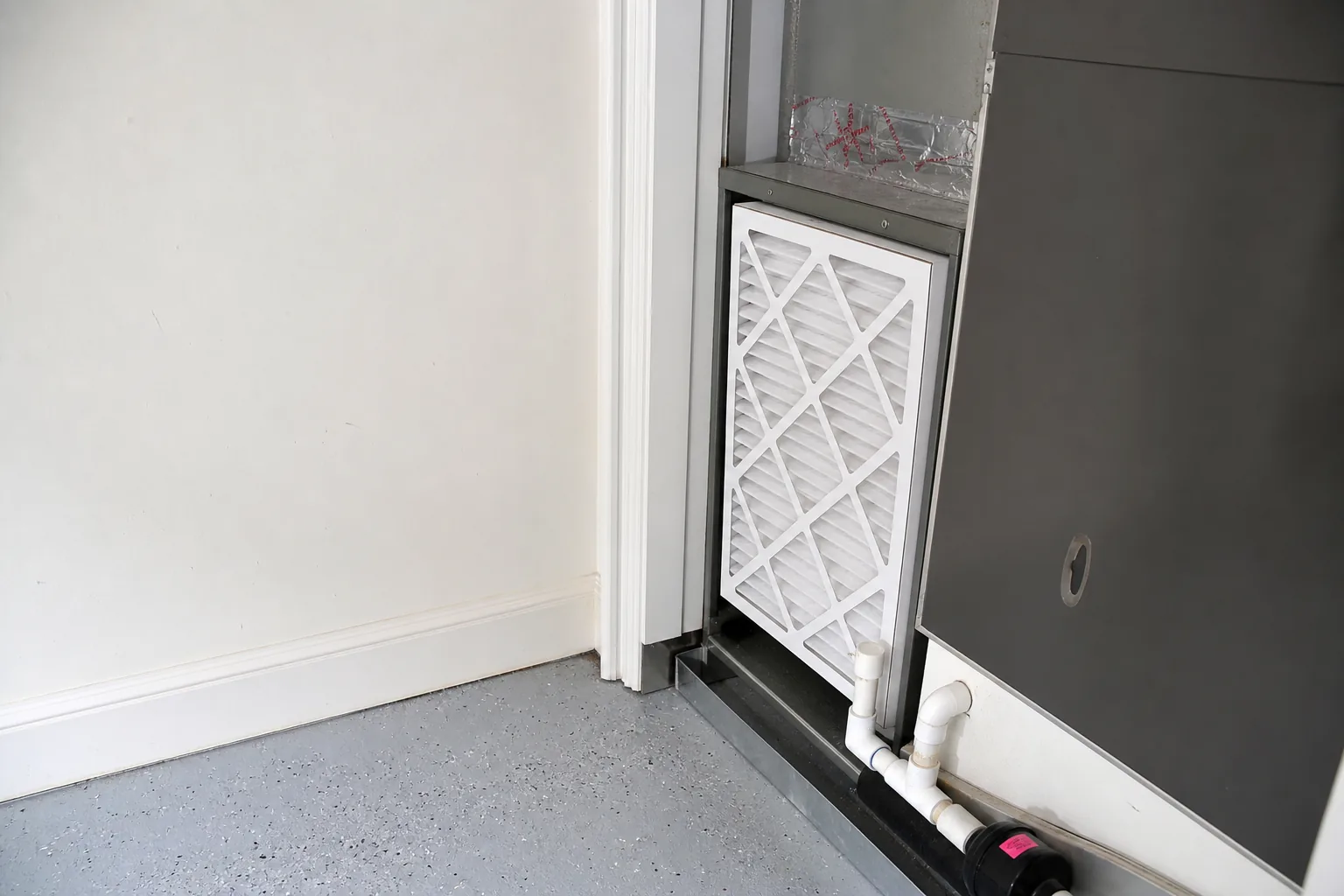
- Filter inspection and replacement
- Condensate drain clear and float-switch test
- Capacitor microfarad measurement (start and run capacitors)
- Contactor inspection and amp draw under load
- Refrigerant charge verification (subcooling/superheat depending on metering device)
- Coil cleaning — rinse or chemical wash depending on load
- Static pressure and airflow measurement at the air handler
- Thermostat staging and heat-pump changeover audit
All eight get done on every tune-up. The bracket below is about which ones tend to matter most when something has to be prioritized.
The two highest-value steps
Condensate drain clear and float-switch test. Same labor cost as a filter swap — close to zero, folded into the visit — but the failure consequence is huge. A clogged drain in June in Spanish Fort's tight-built construction can put water on a ceiling within hours. The float switch trips, the system goes off, and the homeowner returns from work to a warm house and a wet sheetrock ring in the dining room. Drywall repair, paint, and the service call to clear the drain — a meaningfully larger bill than a ten-minute drain blow-out in May would have been.
Outdoor coil cleaning (rinse or chemical wash). A fouled outdoor coil can cost a heat pump a noticeable share of its rated capacity. On a hot July afternoon, that's the difference between holding 74°F inside and stalling out at 78°F. For homes east of Highway 31 or within a mile of Mobile Bay — including a meaningful chunk of TimberCreek, Stonebridge, Stillwater, and Rayne Plantation — the salt-haze plus pollen plus biofilm load is real and adds up over multiple seasons.
A clean coil with light dust gets a hose rinse and is fine. A coil that hasn't been touched in several years usually benefits from a chemical wash. I borescope first and show you the photo before recommending which one.
The high-frequency / mid-impact steps
Capacitor microfarad measurement. Meter the cap with a clamp meter and read the actual microfarad value against the nameplate. A run capacitor rated 45 µF that reads 38 µF is failing. Replace it now versus replace it on an emergency call in July when it finally lets go and the compressor refuses to start.
Contactor inspection. Flashlight, clamp meter, a few minutes. Contactors are among the cheapest parts on the system and one of the most common failure points. Pitting shows visually long before the system fails. Catch them in May, replace them in May, no August call.
The diagnostic steps
Static pressure measurement at the air handler. Tells you whether the duct system is moving air the way the equipment was designed for. Even on a recent Spanish Fort spec build, the duct system was usually installed by the lowest-bid sub and not commissioned. I routinely find return ducts undersized, supply trunks pinched at framing transitions, and filter slots that drop static so far the blower is fighting itself. The fix, if there is one, ranges from a small filter rack swap to a larger return-duct addition. Either way, surfacing the problem is the high-value move.
Thermostat staging audit. Verify a two-stage heat pump is actually staging. Sometimes the thermostat was wired single-stage during installation and nobody caught it for years. Easy fix, high impact on humidity control and cycle efficiency.
Refrigerant charge verification. Twelve minutes of gauge time and a static-temperature math check. I do not add or remove refrigerant unless the readings demand it. Adding refrigerant to a "low" system without finding the leak is the dishonest version of this trade — it masks the symptom and ensures another call later. Refrigerant pricing has been volatile, and the EPA's A2L refrigerant transition is in progress, so any charge work gets quoted in writing on-site.
What the visit costs
The pricing framework is the same as every other call:
- $79 service fee for a diagnostic-only visit — waived if work proceeds. No weekend upcharge during regular hours.
- Free estimates on replacements.
- Free second opinions on quoted repairs from another contractor.
- Comfort Plan ($20/month with a 1-year minimum, or $240/year): two tune-ups per year included, $0 service fees, 10% off repairs and replacements, no overtime fees, priority scheduling.
For a standalone pre-summer tune-up, the price is quoted on the call when you book, accounting for the system count, access, and whether a chemical coil wash is likely needed. If I find work during the visit, I quote it with photos before any wrench turns.
The Comfort Plan is the version most Spanish Fort homeowners settle into after one season. Two visits per year — pre-summer in May or early June, pre-winter in October — covers the equipment lifecycle the way it was designed to be covered. The repair discount and waived service fees more than pay for the plan in any year that involves a single capacitor or contactor replacement.
What the inspection actually finds
I'm not going to print fabricated statistics on "22 visits last May." What I will say honestly: across Spanish Fort homes in the 8-14 year age range, a pre-summer pass routinely surfaces a partial drain clog, a marginal capacitor, a contactor with measurable pitting, or a static-pressure number well outside design range. Many homes have at least one of these. Some have multiple.
None of them are catastrophic on the May visit. All of them are catastrophic enough on a July afternoon to make the inspection worth doing.
The honest answer to "do I really need this"
If your system is brand new and was correctly commissioned, you can probably skip a year. Once. The drain still needs blowing out and the filter still needs changing — that's homeowner work — but you don't need a paid tune-up every spring for the first couple of years.
If your system is several years old or older, or you don't know how it was commissioned, or you live east of Highway 31 where the bay air gets meaningful, the pre-summer inspection earns its keep.
The companion posts in this cluster — the Bay Minette pre-summer mistake list and the Foley homeowner early-catch story — show what skipping the inspection actually costs in different cities and different equipment ages.
Call 251-383-HVAC when you're ready. Standard hours are Monday-Saturday 8am-6pm, with emergency calls answered around the clock, every day at no extra charge. I quote tune-ups in writing on the call and don't upsell into anything the bracket doesn't justify. That's the whole point of writing the math down.
FAQ
- What does a pre-summer inspection cost in Spanish Fort?
- A standalone diagnostic visit is $79, waived if work proceeds. A pre-summer tune-up gets quoted on the call when you book — the price depends on system count and access. Comfort Plan members ($20/month or $240/year) get two tune-ups per year included along with $0 service fees, 10% off repairs and replacements, no overtime fees, and priority scheduling.
- Why does my newer build need maintenance?
- Even relatively new equipment drifts. Capacitor microfarad ratings change, contactors pit, drain lines accumulate biofilm, refrigerant charge slowly drops if the line set was crimped during install. None of that shows up as a comfort complaint until July, when the load is high and the margin for error is gone. The pre-summer inspection is the cheapest version of catching all of that before it bites.
- Is it worth paying for a coil chemical wash, or is a rinse fine?
- Depends on the load on the coil. A clean fin pack with light dust gets a hose rinse folded into the tune-up. A coil with multiple years of pollen, biofilm, and the salt-haze that drifts in off Mobile Bay benefits from a chemical wash. I borescope first and show you the photo. If the rinse will do it, we do the rinse. If it won't, I explain why and quote the wash in writing.
- How long does a Spanish Fort pre-summer visit take?
- Plan on 75-90 minutes for a single-system home. Two-system homes — common in larger Stillwater estates — run roughly 2 to 2.5 hours. I don't rush these because the whole point is finding the small problem now instead of meeting it as an emergency in August. The visit ends with a walk-through and a written report.
Need this handled?
Straight to the service page for your town — pricing, local details and a form that reaches a technician.
More from Pre Summer Inspection

ACExperts HVAC
We Take The Heat So You Don't Have To
Fast, honest heating and air service across Baldwin County. Speak with a technician and get on the schedule today.