
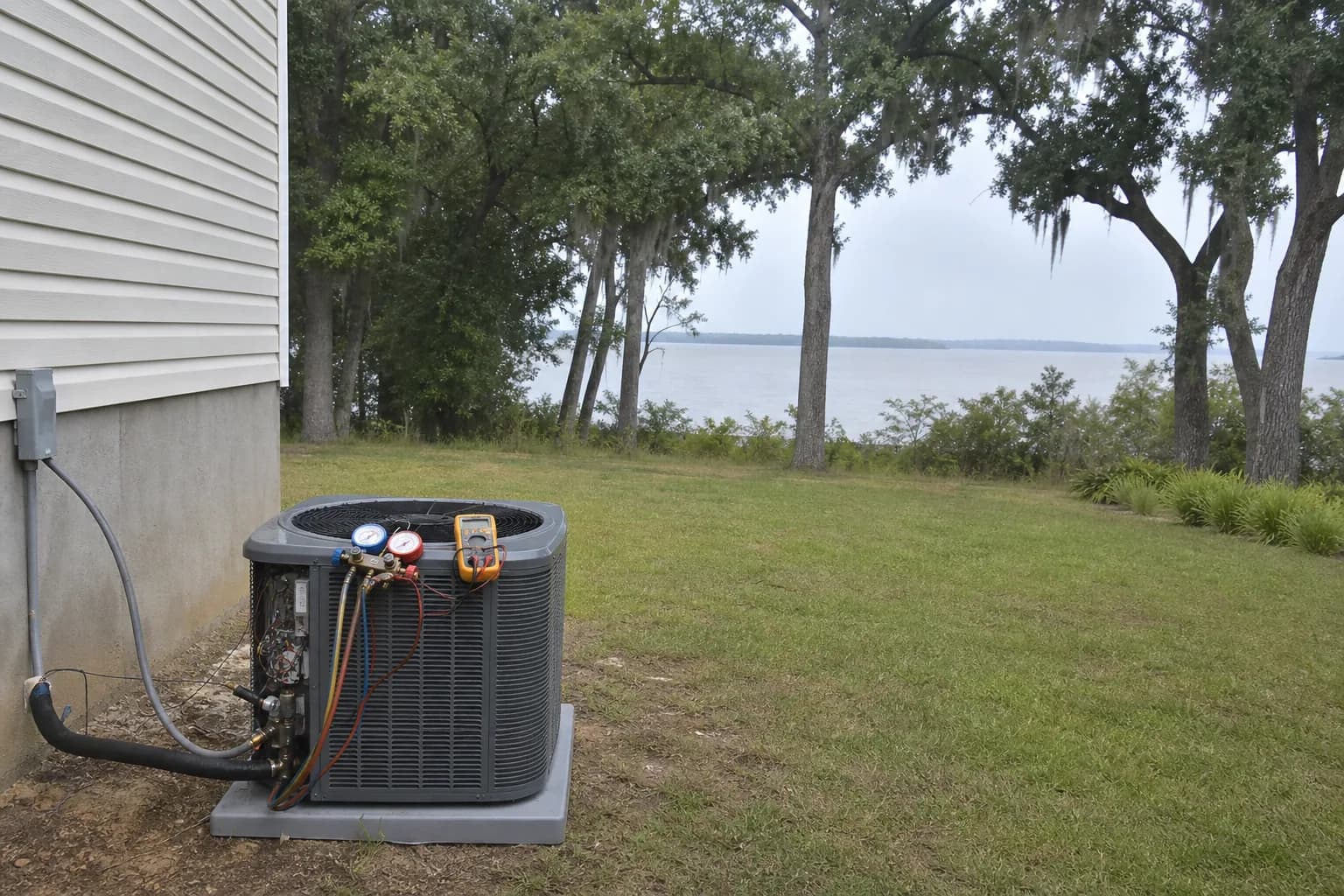
Daphne HVAC Repair: The Five Failures We See Most in Summer
Five HVAC repairs account for most summer no-cooling calls in Daphne. Here's what each one looks like from the thermostat, which you can rule out yourself, and which need a tech.
Published 2026-06-20 · Updated 2026-06-20
Author: Landon Jahnke | ACExperts251
Reviewed by: Landon Jahnke · Owner · Alabama HVAC License AL #16117 · EPA 608 Certified
Across a Daphne summer, the no-cooling calls we run tend to land on the same short list of failures over and over. Five of them account for most of what strands a homeowner on a hot afternoon. Knowing what each one looks like from the thermostat — and which you can safely sort out yourself versus which need a technician — saves you money, saves you a panicked evening, and sometimes saves you a service call entirely.
Here are the five, roughly in the order we see them in Daphne, with the bay-side wrinkles that make this city its own animal.
1. A clogged condensate drain line
This is the number-one summer call here, and it's almost pure Daphne humidity. Your AC pulls a remarkable amount of water out of the air, and that water drains away through a PVC line, usually about three-quarters of an inch, that runs from the air handler to a termination point outside. Inside that line, a biofilm — basically slime — grows, and in the bay's humidity and summer heat it grows fast. When it blocks the line, water backs up. A safety device called a float switch senses the rising water and shuts the system off to keep it from flooding your ceiling.
From the thermostat: the AC just stops cooling, often with no warning and no noise. You may find standing water in the secondary drain pan under the air handler, or a damp spot near the unit.
Can you fix it? Often, yes. Find where the drain line terminates outside and put a wet/dry vacuum on the end of it to pull the clog out. If the system runs and drips water out that line afterward, you've solved it. If it backs up again quickly, the blockage is deeper and it's a call.
2. A failed run capacitor
A close second, and the most common true component failure of the summer. The run capacitor is a small cylinder that gives the compressor and fan motors the jolt they need to start and the steady push to keep running. Heat is hard on capacitors, and Daphne's runs them at full tilt for months — so a marginal one that limped through spring tends to give out on a hot afternoon under peak load.
From the thermostat: the indoor side blows but the air isn't cold; outside, you may hear a low hum without the compressor or fan actually starting, or the outdoor fan sits still. Sometimes the lights flicker briefly when the system tries to kick on.
Can you fix it? No — and please don't try. A capacitor stores an electrical charge and can shock you badly even with the breaker off. This is a quick, inexpensive repair when we carry the common values on the truck, which we do, but it's a technician job.
3. A dirty outdoor coil
The outdoor unit sheds heat through its coil, and that coil has to breathe. When the fins clog with pine straw, oak leaves, grass clippings, pollen, and the salt film that rides the bay breeze inland, the system can't reject heat, pressures climb, cooling drops, and the compressor works harder and hotter than it should.
From the thermostat: cooling is weak across the whole house even though the system runs constantly, and the outdoor unit feels like it's blowing hot. Bills creep up too.
Can you fix it? The maintenance part, yes. Kill power at the disconnect, then rinse the coil gently from the top down with a garden hose. Never use a pressure washer — it bends the fins flat and that's a permanent airflow problem. If rinsing doesn't restore cooling, the coil fouling has already pushed something else out of range, and that's a diagnostic.
4. A choked air filter (and the iced coil it causes)
The humblest failure on the list and one of the most common. A one-inch return filter left in since spring is loaded with Daphne's heavy pollen — grass and pecan run into mid-May, and the cottonwood drift along the bay lingers past that. A choked filter starves the system of airflow, the indoor coil gets too cold, condensation on it freezes, and the coil turns into a block of ice that blocks airflow completely.
From the thermostat: cooling fades and then stops; you might see ice on the refrigerant line or the indoor coil, and water on the floor once it melts.
Can you fix it? Yes — this one's squarely on the homeowner. Replace the filter, then turn the system to fan-only (or off) for a few hours to let the ice melt before running cooling again. Write the date on the new filter with a marker. If it ices up again with a clean filter, the cause is deeper — low refrigerant or a blower problem — and it's a call.
5. A pitted or failed contactor
The contactor is the electrical relay that switches power to the outdoor unit when the thermostat calls for cooling. Its contacts arc a little every time they close, and over years they pit and corrode — a process Daphne's salt air speeds right along. Eventually the contactor either won't close (no cooling at all) or sticks closed (the outdoor unit won't shut off).
From the thermostat: the system won't start when it should, or it runs and won't stop; sometimes you'll hear a chattering or buzzing at the outdoor unit.
Can you fix it? No. It's line-voltage electrical work, and it commonly comes paired with a worn capacitor, so it's a technician job — usually a same-visit fix.
The Daphne thread running through all five
Notice the pattern: salt air drives three of these (the corroding coil, the pitting contactor, and the electrical wear that takes capacitors early), and humidity drives the other two (the condensate clog and the moisture load that makes airflow problems bite harder). Daphne sits close enough to Mobile Bay that even homes a few miles inland get salt on the prevailing southwest winds — Scenic Highway 98, the bluff neighborhoods, Lake Forest, TimberCreek, Bellaton — and the bay's humidity loads the dehumidification side of every system in the city. The Daphne service area page has more on how the Eastern Shore microclimate shapes this, and the why coastal AC units fail faster post covers the corrosion physics in detail.
When it's a repair, here's how it goes
When the DIY checks don't bring cooling back, an AC repair visit starts with a $79 service fee and a diagnostic — we test the system, find the actual cause, and quote the repair in writing before we touch anything, so you approve the number first. We carry the common parts, so capacitors, contactors, and drain clears are frequently same-visit fixes. If you've already been quoted a repair elsewhere and it didn't sit right, we offer free second opinions. And if the real story is a system near the end of its life, we'll give you a free estimate rather than nurse it along — but most of this list is a genuine repair, not a replacement.
Four of these five are preventable
Look back at the list: the drain clog, the dirty coil, the choked filter, and the marginal capacitor are all things a pre-summer tune-up catches and clears while the weather's mild and the schedule's open. That's most of the summer's emergencies, found in May instead of felt in July. The ACExperts Comfort Plan builds two seasonal visits and priority routing into $20 a month or $240 a year, and the Daphne May punch list is the do-it-yourself version of the same checklist.
If you're not cooling right now, call 251-383-HVAC. Regular scheduling is Monday through Saturday, 8am to 6pm, and we answer emergencies 24/7, every day.
FAQ
- What's the most common AC repair in Daphne during summer?
- A clogged condensate drain line is the one we see most. Daphne's bay-side humidity means systems pull a lot of moisture out of the air, and the slime that forms inside the drain line grows fast in the heat. When it blocks, water backs up, the float switch trips to prevent a ceiling leak, and the system shuts off — so the call comes in as 'the AC just died' when it's really a $79-diagnostic drain issue. A failing run capacitor is a close second.
- Which of these AC problems can I fix myself?
- A clogged condensate line is often clearable with a wet/dry vacuum on the outdoor end of the drain pipe, and a dirty filter or a fouled outdoor coil you can handle with a fresh filter and a gentle garden-hose rinse from the top down — never a pressure washer. Capacitor, contactor, and refrigerant problems are not DIY: a capacitor holds a charge and can shock you even with the power off, and refrigerant work requires EPA certification by law. When in doubt, the safe and cheaper move is to have it diagnosed before a small problem becomes a compressor problem.
- Why do Daphne AC systems fail more than systems further inland?
- Two reasons. Salt air off Mobile Bay reaches well inland on the prevailing southwest winds, and it corrodes outdoor coil fins and pits electrical contactors faster than systems see away from the water — neighborhoods along Scenic Highway 98 and within a few miles of the bluff get a real dose. And the high humidity loads the condensate and dehumidification side of the system hard, which is why drain clogs and biofilm problems are so common here. Annual maintenance offsets most of it.
- How much does an AC repair cost in Daphne?
- Our service fee is $79, and we quote the repair in writing before any work starts, so you approve the number before we touch anything. The repair cost itself depends on the failure — a drain clear and a capacitor replacement are very different jobs. For pricing against your specific system, call 251-383-HVAC. We also give free second opinions if you've already been quoted a repair elsewhere and want it checked.
Need this handled?
Straight to the service page for your town — pricing, local details and a form that reaches a technician.
Related reading

ACExperts HVAC
We Take The Heat So You Don't Have To
Fast, honest heating and air service across Baldwin County. Speak with a technician and get on the schedule today.