
Why Coastal AC Units Fail Faster (and How to Stop It)
Salt air corrodes coastal HVAC from the outside in. Why outdoor units fail faster in Gulf Shores, Orange Beach, and Fort Morgan — and the choices that buy you years.
Published 2026-04-07 · Updated 2026-04-07
Author: Landon Jahnke | ACExperts251
Reviewed by: Landon Jahnke · Owner · Alabama HVAC License AL #16117 · EPA 608 Certified
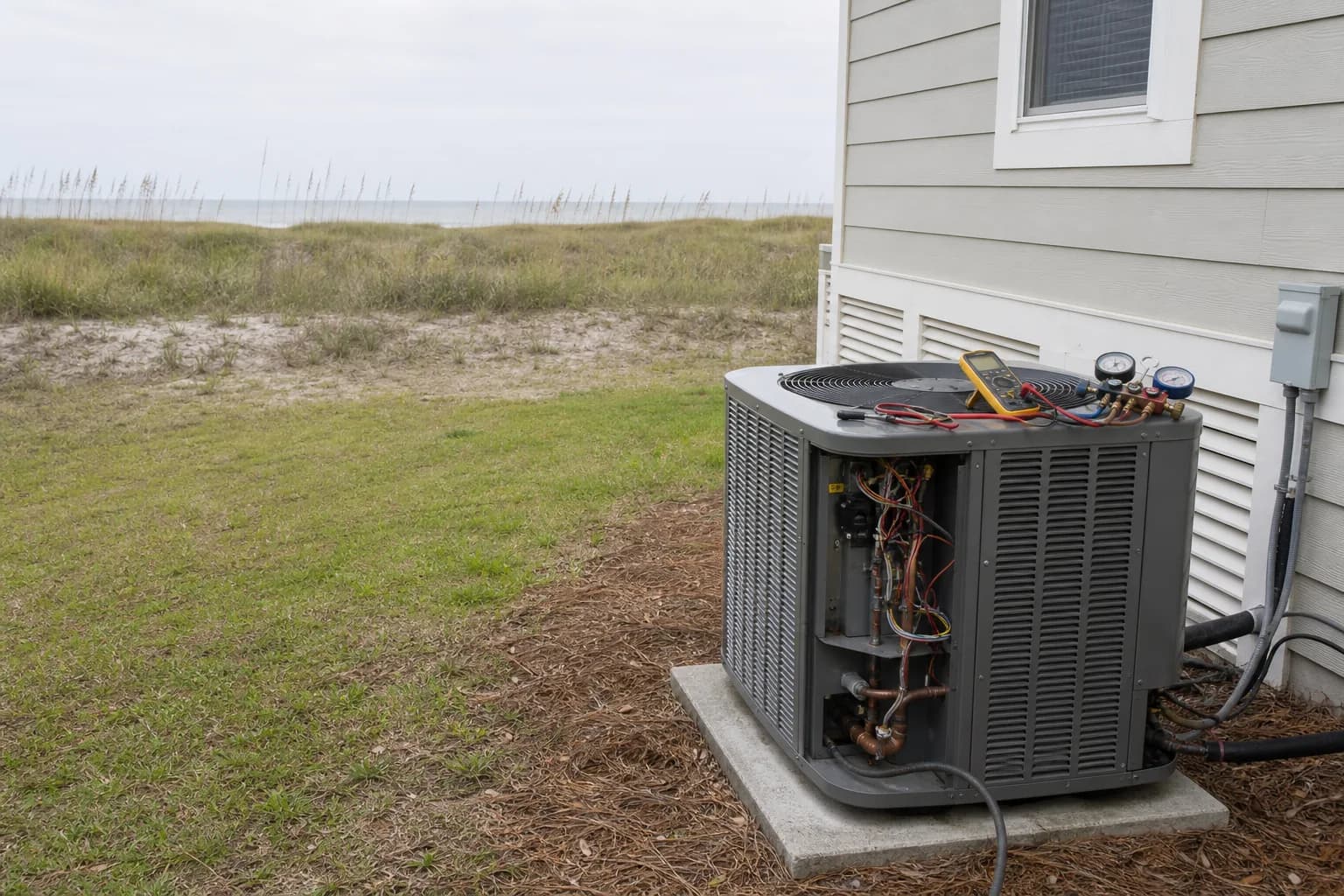
If you live within sight of the Gulf, your outdoor AC unit is fighting a battle that inland equipment never has to. Salt is in the air around the clock — not just during storms, but every single day — and it settles on everything outside, including your condenser. Over time it eats the coil, dissolves the fins, and corrodes the electrical components from the outside in. It's the reason a unit that would run a decade and a half inland can reach the end of its life years earlier in a beachfront home in Gulf Shores, Orange Beach, or out on Fort Morgan.
Here's the part worth knowing: this is largely preventable. You can't change the salt air, but you can change the equipment you put out in it and how you care for it. This is the honest explanation of why coastal units fail faster — and the specific, practical things that buy you back the years.
What salt air actually does to your equipment
Salt-laden coastal air does its damage in a few specific ways, and understanding them is the key to defending against each one.
It corrodes the outdoor coil
The outdoor condenser coil is how your system dumps heat outside, and it lives fully exposed to the air. Salt settles onto the thin aluminum fins and copper tubing and accelerates corrosion. The aluminum fins degrade and crumble, the copper develops pinhole leaks, and the coil slowly loses its ability to reject heat. A corroded coil means a system working harder for less cooling — and eventually a refrigerant leak that's tough to repair on a coil that's already deteriorating.
It pits the electrical components
Inside the outdoor unit's cabinet sit the capacitor, the contactor, and the wiring connections — the electrical heart of the system. Salt-laden humidity infiltrates the cabinet and corrodes them. The contactor's contacts pit and weld from the chloride exposure. Capacitors degrade out of spec earlier than they would inland. Connections corrode and work loose. This is why so many coastal "no cooling" calls come down to an electrical part that gave out before its time, not a refrigerant problem.
It attacks the hardware and cabinet
The fasteners, screws, and the cabinet itself corrode too. Hardware that should last the life of the unit rusts, panels seize, and the structural integrity of the outdoor unit degrades faster than the equipment was ever designed for.
Put it together and the coastal environment compresses the whole timeline. Every part of the outdoor unit ages faster than its inland twin.
Why the lifespan gap is real
We won't put a made-up number on it, but the pattern is consistent: the same outdoor unit reaches the end of its useful life noticeably sooner in direct Gulf-front exposure than it would a few miles inland. The closer you are to the water and the more direct the salt spray, the steeper the curve. A beachfront condo takes the full brunt. A home a few miles back from the water gets a much gentler version of the same thing.
What goes first is usually the coil and the electrical components. The coil corrodes until a pinhole leak develops, or the capacitor and contactor give out early. By the time a coastal system is leaking refrigerant from a corroded coil, the repair-versus-replace conversation is often already on the table — and that conversation arrives years earlier near the water than it does inland.
The lesson isn't to accept early failure. It's to plan for the environment with the two decisions that actually move the needle.
How to stop it: equipment choice
The first and biggest lever is the equipment you put outside, and it's a decision you make exactly once — at installation.
Coastal-rated equipment is built specifically for this fight. It comes with treated coil coatings that resist salt corrosion, corrosion-resistant fasteners and cabinet hardware, and better-sealed electrical compartments to keep the salt humidity off the capacitor and contactor. Standard-grade equipment simply isn't built to stand in year-round salt spray, and putting it on a Gulf-front home is how you end up replacing a unit early.
Yes, the coastal package costs more up front. But on a near-water home it's the difference between a unit that fights the environment and one that surrenders to it, and the protection typically pays for itself in fewer repair calls and a longer service life. When we handle a coastal AC installation, the equipment recommendation is shaped by exactly how close to the water you are — that's not an upsell, it's matching the equipment to the conditions it has to survive.
How to stop it: maintenance and rinsing
The second lever is care, and it's split between what we do and what you do.
What you do between visits
Rinse the outdoor coil regularly through the warm months. Kill power at the disconnect, then use a plain garden hose at gentle pressure and flush the fins top to bottom to wash off the accumulated salt and dust. For a Gulf-front home, monthly is reasonable; a little further back, less often. Never use a pressure washer — bent fins choke airflow worse than the salt does — and skip the chemical cleaners. This simple rinse slows the corrosion rate between professional visits, and on the coast it's genuinely one of the highest-value things a homeowner can do.
Also keep the unit breathing: a couple feet of clearance on every side, no salt-tolerant landscaping crowded right up against it trapping moisture, no debris in the coil.
What a coastal tune-up adds
A standard tune-up checks the system over. A coastal-aware one goes after the corrosion specifically. When we do preventive maintenance on a near-water home, we pay particular attention to the things salt air attacks first: a proper coil cleaning, close inspection of the contactor and electrical connections for pitting and corrosion, reading the capacitor against spec before it strands you, checking the refrigerant lines and insulation where they're exposed, and watching for the early signs of a corrosion-driven leak. Catching a pitting contactor or a weakening capacitor in spring is the difference between a planned part and a no-cooling call during a beach-house weekend.
Two visits a year is the right cadence on the coast — and for Gulf-front and rental properties, where a failure during a busy weekend is especially costly, even more frequent inspections during peak season are worth considering.
Warning signs your coastal unit is corroding
Corrosion doesn't announce itself with a failure — it shows itself first, if you know where to look. Catching these signs early is the difference between a planned repair on your schedule and an emergency on the hottest weekend of the summer. Walk out to your outdoor unit a few times a season and look for:
Discoloration or crumbling on the coil fins. The thin aluminum fins wrapping the outdoor coil should look uniform. White powdery deposits, dark staining, or fins that look like they're dissolving or flaking are corrosion in progress. As the fins go, the unit loses its ability to dump heat and starts working harder for less cooling.
Rust on the cabinet, fasteners, or base. Surface rust on the outdoor unit's cabinet, screws, or pan is the salt air doing its work on the hardware. It's cosmetic at first, but it's also a clock — the same environment rusting the cabinet is corroding the electrical components you can't see inside it.
Needing refrigerant more than once. This is the big one. Refrigerant circulates in a sealed loop and never gets used up, so if a coastal system has needed a recharge more than once, it has a leak — and near the water, the most common source is a corrosion-driven pinhole in the coil. A unit that's been "topped off" twice isn't low, it's leaking, and on the coast that leak is often a sign the coil is reaching the end of its life.
Intermittent no-starts or hard starts. A unit that hesitates to start, starts and stops, or occasionally won't kick on at all often has a corroding capacitor or a pitting contactor — the electrical components salt humidity attacks first inside the cabinet. These are inexpensive parts when caught early and a stranded summer afternoon when they're not.
A power bill creeping up for no reason. A corroded coil and a struggling electrical system make the whole unit work harder to deliver the same cooling, and that shows up on the bill before it shows up as a breakdown. A summer-over-summer jump with no change in how you run the system is worth investigating.
None of these mean the unit has to be replaced today. They mean it's time for a real look, so the repair-versus-replace decision gets made deliberately instead of on the worst possible day.
The bottom line for coastal homeowners
Salt air is real, it's relentless, and it's the reason coastal AC units fail faster than they should. But it's not a sentence — it's a set of conditions you can plan around. Two decisions do most of the work: choose coastal-rated equipment when you replace, and stay on a real maintenance schedule while rinsing the coil yourself in between. Together they claw back much of the lifespan the salt would otherwise take.
If your outdoor unit is showing its age — visible corrosion on the coil, rust on the cabinet, or it's needed refrigerant more than once — that's worth a look before it strands you on a hot weekend. We service all of Baldwin County out of Silverhill, including the beach communities of Gulf Shores, Orange Beach, and Fort Morgan. Our service fee is $79, and second opinions on a repair you've already been quoted are free. Call 251-383-HVAC or reach out here. When a coastal unit does fail, AC repair is the call.
FAQ
- Should I rinse my outdoor coil?
- Yes — and on the coast it's one of the most valuable things you can do. Rinsing washes off the salt that settles on the coil and accelerates corrosion. The method matters, though. Kill power to the unit at the disconnect first, then use a plain garden hose at gentle pressure, spraying top to bottom to flush salt and dust off the fins. Never use a pressure washer — the aluminum fins bend easily and bent fins choke airflow worse than dirt does. No chemical cleaners, either; some are caustic and do more harm than good. For Gulf-front homes, a monthly rinse during the warm season is reasonable. Ask us for guidance if you're unsure how to do it safely on your unit.
- Is coastal-grade equipment actually worth the extra money?
- Within sight of the water, in our experience servicing the area, it almost always is. Coastal-rated equipment is built for this environment — treated coil coatings that resist salt corrosion, corrosion-resistant fasteners and hardware, and better-sealed electrical compartments. Standard-grade equipment isn't built to take year-round salt exposure, and it shows: the coil corrodes, the fins dissolve, the electrical components pit, and the unit reaches the end of its life early. The protective package costs more up front, but on a Gulf-front or near-water home it typically pays for itself in fewer repair calls and a longer service life. We'll lay out the trade-off honestly so you can decide for your situation.
- How much faster do coastal units really fail?
- Enough that it changes how you should plan. The same outdoor unit that might run 15 to 20 years in inland Baldwin County often reaches the end of its useful life noticeably sooner in direct Gulf-front salt exposure — the coil corrodes, refrigerant pinhole leaks develop in the copper, and the electrical components give out earlier. The closer to the water and the more direct the salt spray, the faster it goes. A home a few miles inland in Foley sees a much gentler environment than a beachfront condo in Gulf Shores or Orange Beach. The fix isn't to accept it — it's to choose coastal-rated equipment and stay on top of maintenance, which together claw back much of that lost lifespan.
- I'm a few miles inland — does salt air still affect my system?
- Less, but it's not zero. Salt exposure is a gradient, not a line. A beachfront home in Fort Morgan or a Gulf-front condo takes the full brunt of it. A home a few miles back from the water sees a milder version, and well inland it's a minor factor. The practical takeaway: the closer you are to the water, the more the coastal-grade equipment choice and the regular coil rinse matter. If you're right on the water, treat it as a real factor in both your equipment selection and your maintenance routine. If you're inland, normal maintenance is plenty.
- What's the single best thing I can do to make a coastal unit last?
- Two things, really. First, buy coastal-rated equipment when you replace — the protective coatings and corrosion-resistant hardware are the foundation of a long life near the water, and that decision is made once, at installation. Second, get on a real maintenance schedule and rinse the coil regularly yourself between visits. Maintenance catches the corrosion on the electrical components and the early refrigerant leaks while they're still cheap to deal with, and the rinses slow the corrosion rate down between visits. Equipment choice plus maintenance is the whole formula. Skip either one near the water and the unit ages fast.
Need this handled?
Straight to the service page for your town — pricing, local details and a form that reaches a technician.

ACExperts HVAC
We Take The Heat So You Don't Have To
Fast, honest heating and air service across Baldwin County. Speak with a technician and get on the schedule today.