
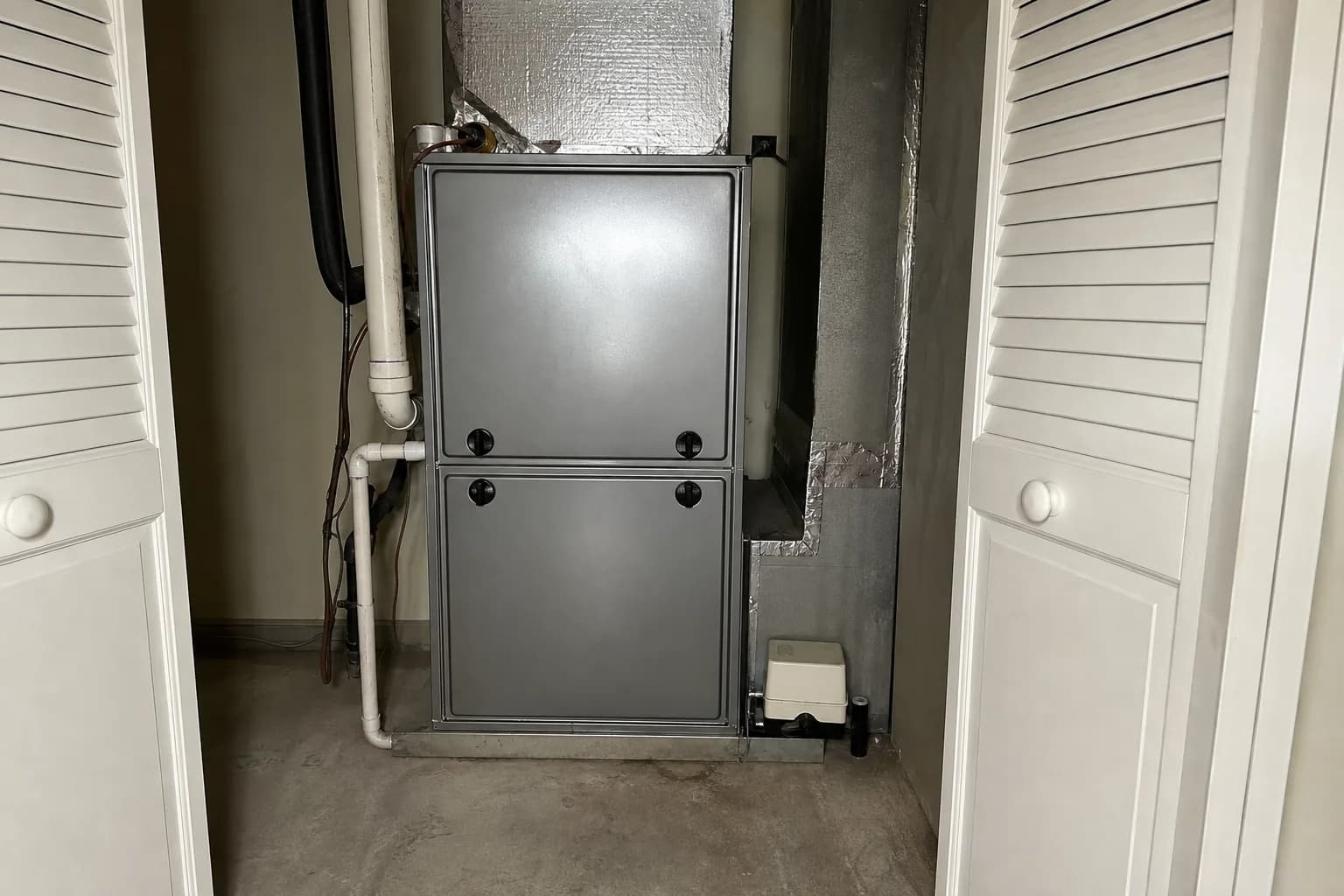
AC Not Cooling? 9 Fixes Before You Call a Technician
Nine safe checks a Baldwin County homeowner can run before paying for a service call when the AC stops cooling — and the clear line where troubleshooting stops and a technician starts.
Published 2026-04-10 · Updated 2026-04-10
Author: Landon Jahnke | ACExperts251
Reviewed by: Landon Jahnke · Owner · Alabama HVAC License AL #16117 · EPA 608 Certified
When the AC quits on a hot Baldwin County afternoon, the instinct is to grab the phone — and sometimes that's exactly right. But a real share of the "no cooling" calls we get turn out to be something a homeowner could have spotted and fixed in five minutes: a thermostat set wrong, a tripped breaker, a filter so clogged it froze the coil. Before you pay for a service call, it's worth walking a short list of safe, simple checks.
So here are nine of them, in the order we'd want you to run them, from the most common and easiest to the ones that start pointing toward a real repair. None of these involve refrigerant, opening sealed components, or anything dangerous. At the end is the honest line — the point where troubleshooting stops and a technician starts, because some problems are not DIY territory and trying to force them makes things worse.
The 9 checks, in order
1. Confirm the thermostat is actually calling for cooling
Start at the wall. Make sure the thermostat is set to cool, not off, heat, or fan-only, and that the setpoint is several degrees below the current room temperature. It sounds too simple to mention, but a bumped setting or a guest who changed the mode is behind a surprising number of "it stopped working" calls. While you're there, if it's a battery thermostat, weak batteries can cause it to misbehave — swap them if it's been a while.
2. Check the breakers
Head to the electrical panel and look for a tripped breaker for the AC. A tripped breaker can sit in the middle position and not look obviously off, so flip the AC breaker fully off and back on. Reset it only once. If it trips again, stop here and skip to the end of this list — a breaker that won't hold is telling you there's a real electrical problem, and repeatedly forcing it back on is asking for trouble.
3. Check the outdoor disconnect
Near the outdoor unit there's usually a disconnect — a small box on the wall with a pull-out handle. Make sure it's fully seated. These occasionally get pulled for service or maintenance and not pushed all the way back in, which leaves the outdoor unit dead while the indoor blower still runs (so you get airflow, but it's warm).
4. Replace the air filter
Pull the filter and look at it against a light. If it's gray and loaded and you can't see light through it, that's very likely your problem. A clogged filter starves airflow across the indoor coil, and in our humidity a starved coil freezes into a block of ice and shuts down cooling. Put in a clean filter of the right size. If the old one was badly clogged, also check whether the coil has frozen (see check 6).
5. Clear and rinse the outdoor unit
Walk out to the condenser. It needs clear air on all sides to dump heat. Pull away any leaves, grass clippings, or debris packed against it, and trim back shrubs crowding it. Then, with the power off at the disconnect, rinse the coil gently with a garden hose top to bottom to wash off the dust — and near the water, the salt — that insulates it. Use a hose, never a pressure washer, which bends the fins. A smothered or filthy outdoor coil makes the system run hard and cool poorly.
6. Look for a frozen coil
If the air is weak or warm and you've had airflow problems, check for ice. Look at the larger copper refrigerant line where it enters the indoor air handler, and at the coil if you can see it. Frost or ice means the coil is frozen. If it's frozen, shut the system off at the thermostat and set the fan to 'on' to thaw it — and leave it off until it's fully thawed, which takes an hour or more. Running a frozen system risks the compressor. Once thawed, a fresh filter and a clean outdoor coil may have it cooling again; if it freezes back up, that's a call.
7. Check the condensate drain and safety switch
In Gulf Coast humidity your system makes a lot of condensate, and many systems have a safety float switch that shuts the unit down if the drain clogs and water backs up — a good feature that also stops cooling. Look for water around the indoor unit or a full drain pan. If the drain is clogged, that's likely why the system shut off. Clearing a condensate clog is sometimes doable, but if water is backed up near a ceiling, call before it overflows.
8. Make sure all the supply vents are open
Walk the house and check that the supply registers are open and not blocked by furniture, rugs, or boxes. Closing off too many vents to "redirect" air actually raises pressure in the duct system and hurts overall cooling — it can even contribute to a frozen coil. Open them up. Also check the return-air grille isn't blocked.
9. Give it time after a power blip
If the power just flickered or came back after an outage, some systems have a built-in delay before the compressor restarts — a protective feature, not a fault. Give it a few minutes. Also double-check the thermostat didn't reset to default settings after the outage and quietly switch modes on you.
Where troubleshooting stops and a technician starts
If you've run all nine and the house still won't cool, you've reached the honest limit of DIY. The remaining causes need a meter, gauges, and the right parts — and a couple of them are stop-now safety situations.
Call us, and don't keep fighting it, if you find any of these:
- A breaker that won't stay set, a burning or electrical smell, or any smoke. Shut the system off at the breaker and call. This is not something to troubleshoot further.
- Repeated freeze-ups after a clean filter and a clear outdoor coil. That points to low refrigerant or a blower/airflow problem that needs diagnosis.
- Suspected low refrigerant. If the air is weak and nothing above fixed it, the system may be low — which means a leak. Refrigerant work requires a certified technician, and "topping it off" without finding the leak just wastes money. Find the leak, fix it, recharge by weight.
- A unit that runs but won't cool after the basics check out — a failing capacitor, a pitted contactor, a struggling compressor, or a metering-device problem all show up this way and all need a technician with instruments.
None of those are failures on your part — they're just past the line where homeowner checks safely end. The first 20 minutes of a real diagnostic don't even involve a refrigerant gauge; we work down the electrical and airflow causes first, with measurements, before anyone touches refrigerant. That's how a problem gets fixed once instead of masked.
What to tell us when you call
The checks you already ran aren't wasted even when they don't fix the problem — they tell us where to look and what to load on the truck before we arrive. When you call, the most useful thing you can do is report what you found:
- Which checks you ran and what each one showed. "The filter was clean, I rinsed the outdoor coil, all the vents are open, and it still blows warm" points us in a completely different direction than "I haven't touched anything." The first tells us it's likely electrical or refrigerant; the second means we start from scratch.
- Whether the coil froze, and whether it froze again after thawing. A coil that ices back up after a clean filter and a clear outdoor unit is a strong signal of low refrigerant or a blower problem, and we'll bring leak detection and the right gauges.
- Whether a breaker tripped. A breaker that won't hold changes what we look at first — and it tells us to treat the visit as electrical from the start.
- What you're hearing and smelling. A new rattle, a buzz, a hum with no air movement, a musty odor, or anything that smells electrical — these are diagnostic clues, and an electrical smell moves the call to the front of the line.
- How long it's been happening. A system that's been slowly getting weaker for weeks is a different story than one that quit all at once, and it shapes what we suspect.
That handful of details is the difference between a quick diagnosis and a long one. A good description of the symptom often gets the right part on the truck the first time.
How to keep it from happening again
Most no-cooling calls trace back to something that built up slowly — a filter that got ignored, an outdoor coil that hadn't been rinsed in a year, a drain quietly clogging, a capacitor drifting out of spec. The way to stop the next one is the same boring routine that prevents the first: change the filter on schedule, keep the outdoor unit clear and rinsed through the summer, and get a real tune-up before the cooling season so a weakening part gets caught in spring instead of failing in July. A measured tune-up catches the drifting capacitor and the pitting contactor while they're still cheap parts, long before they strand you. Our Comfort Plan puts two of those visits a year on a schedule so they actually happen, and it's the cheapest insurance there is against a summer no-cooling call.
The bottom line
When the AC stops cooling, a few minutes of simple checks genuinely can save you a service call — most often it's the thermostat, a breaker, a filter, or a frozen coil. Run the nine checks above before you pay anyone. But know where the line is: an electrical smell, a breaker that won't hold, or a suspected refrigerant leak is a call, not a project, and Gulf Coast heat is no joke for anyone with health concerns or young kids in the house.
When you do need us, we answer emergency calls 24/7, every day, and we run all of Baldwin County out of Silverhill. Our service fee is $79, with no upcharge for weekends during regular hours, and second opinions on a repair you've already been quoted are free. Call 251-383-HVAC or reach out here. For what's covered when it's a real failure, see AC repair and emergency HVAC.
FAQ
- Is ice always a filter problem?
- No — and this is an important one to get right. A dirty filter is the most common cause of a frozen coil because it starves airflow, but low refrigerant and a failing blower motor cause ice too. Here's the rule that matters more than the cause: the moment you see ice on the coil or the refrigerant line, shut the system off at the thermostat and switch the fan to 'on' to thaw it. Do not keep running it. Running a frozen system pulls liquid refrigerant back to the compressor, and that's how a frozen coil turns a cheap filter problem into an expensive compressor problem. Thaw it fully first — that takes an hour or more — then figure out the cause.
- How long should I wait after resetting a tripped breaker?
- If a breaker tripped, you can reset it once. If it trips again, stop — do not keep resetting it. A breaker that won't stay set is doing its job: it's telling you there's an electrical fault, a failing component, or a motor drawing too much current, and repeatedly forcing it back on risks damaging equipment or worse. One reset to rule out a fluke is fine. A second trip means it's time to call rather than fight the breaker.
- Why is my AC running constantly but the house won't cool down?
- On a brutal Gulf Coast afternoon, some of this is just physics — a system can run continuously and still struggle to pull a house down when it's extremely hot out, especially if the home is sun-exposed. But constant running with warm or weak air at the registers usually points at something specific: a clogged filter or a dirty outdoor coil choking the system, a frozen evaporator coil, a failing capacitor, or low refrigerant from a leak. Work through the nine checks below. If the filter's clean, the outdoor unit is clear and rinsed, and the coil isn't frozen, and it still won't cool, you've reached the point where it needs gauges and a technician.
- Should I add refrigerant myself if I think the system is low?
- No — and not only because it's not a DIY job. If your system is low on refrigerant, it has a leak, because refrigerant doesn't get used up — it circulates in a sealed loop. 'Topping it off' just sends more refrigerant out the same hole, so you pay again and again to mask a problem instead of fixing it once. On top of that, refrigerant handling is restricted to certified technicians for good reason. The right move is to have the leak found and repaired, then the system properly recharged by weight. If you suspect low refrigerant, that's a call, not a DIY fix.
- When is a no-cooling AC an emergency versus something that can wait?
- Use comfort and safety as your guide. A burning or electrical smell, smoke, or a breaker that keeps tripping is a stop-now situation — shut the system off at the breaker and call. Beyond safety, Gulf Coast heat is genuinely hard on people, and a house that won't cool in the middle of summer is hard on anyone with health concerns, young kids, or older family members. We answer emergency calls 24/7, every day, for exactly that reason. If it's uncomfortable but safe, running the nine checks first may save you a service call entirely — but never ignore an electrical smell or a breaker that won't hold.
Need this handled?
Straight to the service page for your town — pricing, local details and a form that reaches a technician.
Related reading

ACExperts HVAC
We Take The Heat So You Don't Have To
Fast, honest heating and air service across Baldwin County. Speak with a technician and get on the schedule today.