
Why an Oversized AC in Spanish Fort Costs You Twice
A 30-second test on your Spanish Fort thermostat tells you whether your AC is oversized. Oversizing costs you on the install and again on the bill — how to fix it.
Published 2026-10-19 · Updated 2026-10-19
Author: Landon Jahnke | ACExperts251
Reviewed by: Landon Jahnke · Owner · Alabama HVAC License AL #16117 · EPA 608 Certified
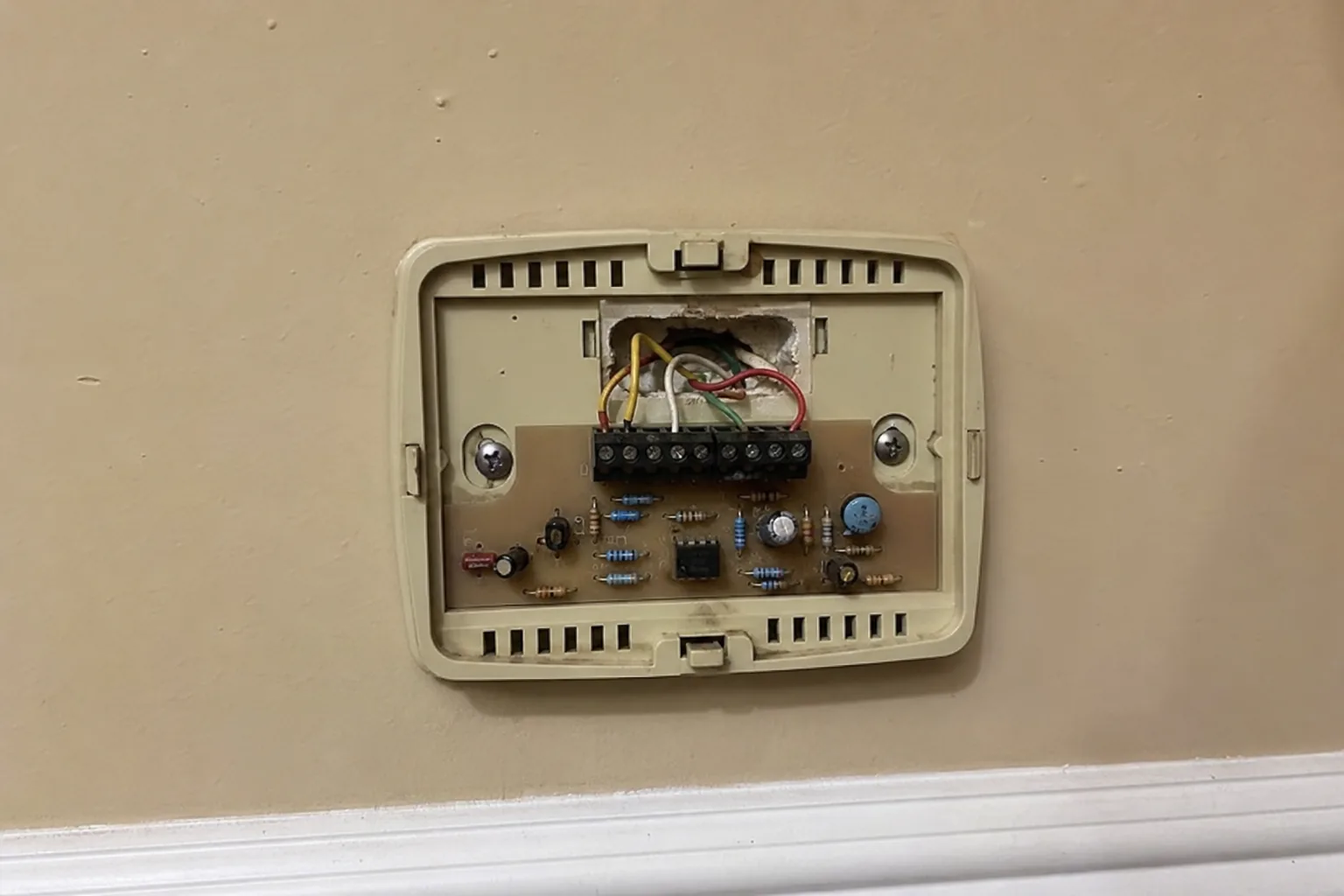
Set a timer for 30 seconds. Walk to your Spanish Fort thermostat. Drop the setpoint by 4°F. Listen for the outdoor unit to kick on. Time how long it stays on. Stop the timer when you hear it shut off.
If your unit ran less than 7 minutes, you have an oversizing problem and you've been paying for it twice — once on your install and once monthly. Here's what the 30-second test just told you and what to do about it.
What the test actually measures
That short-cycle test isolates one thing: whether your equipment is matched to the load of your house. A correctly sized AC in a Spanish Fort home should run a single cooling cycle for 12-22 minutes on a typical summer afternoon when the indoor temperature is even moderately above setpoint. Cycles shorter than 7 minutes mean the equipment is hitting the thermostat target so fast that dehumidification, comfort, and efficiency all collapse before the cycle has time to do its job.
The 4°F setpoint drop is intentional. It's a big enough delta to force a real cooling call but small enough not to overwhelm even a marginally sized system. If your equipment cannot sustain a cycle of at least 7 minutes against a 4°F call, the unit is oversized for your load — full stop.
Why oversizing is the dominant mistake in Spanish Fort
Drive any neighborhood in Spanish Fort — TimberCreek, Stonebridge, Bay Branch — and look at the condenser tonnage stickers on homes built between 2002 and 2014. The pattern is consistent: 4-ton and 5-ton condensers on 2,200-2,800 square foot homes that should be running 3-ton or 3.5-ton equipment.
Three reasons this happened so often:
- Builder spec was conservative. Tract builders sized cooling equipment with worst-case afternoon heat-load assumptions and added a safety factor on top. The result was systems that handled the design day at 50% capacity and the average day at 25%.
- Replacement contractors matched whatever was already there. When the original builder-grade equipment failed at year 10-14, replacement contractors took the easy route and installed equivalent tonnage rather than running a Manual J load calculation. The oversizing was inherited.
- "Bigger is safer" sells. Homeowners who have suffered through one underperforming summer often push back on right-sizing recommendations, assuming a bigger unit will solve the comfort problem. The opposite is true in Spanish Fort's humidity profile.
The result is that an estimated 60-70% of Spanish Fort homes built before the 2015 code update are running cooling equipment that is at least one tonnage step too large for actual load.
The two ways oversizing costs you
Cost #1: The install itself
A 5-ton condenser-and-coil install costs $1,400-2,200 more than a 3.5-ton install of equivalent quality and SEER tier in 2026 dollars. That's the upfront premium you paid for capacity you never use. The line set, the disconnect, the breaker, the indoor coil, the air handler — every component is sized to the larger tonnage and priced accordingly.
If your last replacement happened in the 2014-2020 window and the contractor "matched what was there," you very likely paid this premium without anyone running the load math.
Cost #2: The monthly utility bill
This is where the money really compounds. An oversized AC in Spanish Fort's humidity profile runs three loss patterns simultaneously:
- Compressor inrush losses. Every time the compressor starts, it pulls 4-6× its steady-state amperage for the first 2-4 seconds. On a correctly sized system running 14-minute cycles, those startup losses are spread across a meaningful productive cycle. On a 4-minute oversized cycle, the startup represents a much larger share of the total energy draw.
- Part-load efficiency losses. Single-stage equipment is most efficient at 70-90% of nameplate capacity. Oversized single-stage equipment is permanently operating at 35-50% of capacity, which is the worst part of the efficiency curve.
- Dehumidification penalty. When the indoor humidity stays above 60%, occupants lower the thermostat to compensate for the muggy feeling. Every degree lower on the thermostat increases runtime hours and total energy use. Oversizing creates the humidity problem that the user then "solves" with more cooling.
Net effect: 18-30% more on the cooling portion of the electric bill, every month, for the entire ownership life of the equipment.
What a 6-minute cycle looks like in real life
A representative Spanish Fort case from my 13 years working Baldwin County HVAC: 2,400 square feet, 5-ton condenser, original install from the late 2000s. Indoor humidity running 64-68% even with the thermostat at 72°F and a July bill north of $300.
Instrumented for a single afternoon, the cycle data looked like this:
- 4 cycles per hour during peak afternoon
- Average run time under 6 minutes
- Average off time about 9 minutes
- Indoor humidity at end of cycle: 62-66%
- Indoor temperature at end of cycle: 71.8°F (hit setpoint comfortably)
- Compressor inrush: ~62 amps for 2.8 seconds, settling to 18 amps running
That kind of system hits the temperature setpoint while completely failing the humidity job. Owners in that situation often compensate by dropping the thermostat from 74°F (where they want it) to 72°F just to feel comfortable, which adds another 8-12% to the bill.
A Manual J on that home came back at 3.5-ton actual load. A properly sized replacement typically gets cycles back into the 16-18 minute range at the same setpoint, indoor humidity settles into the low 50s, and the cooling line of the bill comes down by $60-100/month.
That $90/month is the second cost of oversizing, paid monthly until the equipment changes.
The full diagnostic — beyond the 30-second test
The thermostat test is the screening tool. If your system fails the 7-minute threshold, the next steps to confirm and quantify oversizing are:
Measure cycle count over a full afternoon. Use a smart thermostat's runtime log (if you have one) or just write down start and stop times for 2-3 hours during peak heat. A correctly sized system runs 2-3 cycles per hour at peak; an oversized system runs 4-6.
Check indoor humidity at end of cycle. Hardware-store hygrometer, place it 4-6 feet off the floor in the main living space. End-of-cycle humidity should be 50-55% in a properly performing Spanish Fort home. Readings of 58-65% confirm the dehumidification failure that oversizing causes.
Compare nameplate tonnage to home square footage. Rough rule of thumb in Baldwin County's climate zone for tight, well-insulated homes: 600-700 square feet per ton. For older or less-tight homes, 500-600 square feet per ton. A 2,400 sq ft Spanish Fort home should land somewhere between 3.5 and 4 tons. A 5-ton condenser on that home is one full step oversized.
Look for surface evidence. Sweating supply registers, condensation on metal trim near vents, mildew lines along baseboards in low-airflow rooms — these are all signatures of the dehumidification failure that oversizing produces.
If two or more of those checks point the same direction, the oversizing diagnosis is reliable.
What you can do about it
Three paths, depending on equipment age and homeowner budget:
Path 1 — retrofit the existing system. If the equipment is under 8 years old and otherwise healthy, a variable-speed blower swap and ECM motor upgrade can let the existing condenser run gentler cycles. Pair that with a proper preventive maintenance plan and the comfort and bill issues largely resolve. Cost: $1,200-2,400. This is the right call for younger equipment.
Path 2 — plan a properly sized replacement at next failure. If the equipment is 10-14 years old, the math usually says ride it out and replace correctly when it fails. Run the Manual J load calculation before the failure happens so you can specify properly sized replacement equipment when the time comes. Cost: nothing now, plus $7,500-10,500 at replacement.
Path 3 — proactive replacement now. If the equipment is past 12 years and the bill is hurting badly, replacing now at the right size pays back in 4-6 cooling seasons typically. Worth running the numbers specifically. Spanish Fort homeowners on this path often see immediate $60-100/month bill reductions and dramatic comfort improvement.
For most Spanish Fort homes the answer is Path 2 — the equipment is aging, replacement is on the horizon anyway, and getting the size right at the next event captures all the benefits without forcing the financial event sooner.
What about two-stage and variable-speed conversions?
Worth covering specifically because it comes up often. A two-stage or variable-speed inverter conversion lets a single piece of equipment operate at multiple capacity levels — typically 65% on most calls and 100% on the hottest afternoons. That's effectively how you fix oversizing without downsizing the nameplate tonnage.
The catch is the cost. Variable-speed inverter equipment runs $2,500-4,500 more than equivalent single-stage at the same SEER tier. It's the right answer for some homes — particularly those with marginal duct capacity that can't support a smaller condenser, or homes where the owner specifically wants the comfort profile of continuous low-speed operation. For most Spanish Fort homes the simpler properly-sized single-stage replacement is the better dollar.
The AHRI-matched system explainer goes deeper on why component matching matters for any of these tiers. The Robertsdale builder-grade vs premium comparison covers what eight years of bill data looks like across equipment tiers. For homes already showing humidity-related symptoms, our musty-smell diagnostic post walks through what the dehumidification failure looks like at the indoor coil specifically.
The Spanish Fort context
Why does this hit Spanish Fort homes harder than, say, Daphne or Fairhope? A few reasons.
The TimberCreek and Stonebridge build cycles concentrated in 2002-2008 used the same general HVAC contractors with the same conservative sizing assumptions. The neighborhoods near Fairhope and the Daphne corridor had more varied builders and more varied equipment specs, so the oversizing pattern is less concentrated. Spanish Fort's building stock is more uniform, which means the oversizing is more uniform.
The Mobile Bay influence on local humidity is also a factor. Spanish Fort runs 3-5% higher average outdoor humidity than equivalent inland zones because of the bay proximity. Higher ambient humidity makes the dehumidification penalty of oversizing more visible — the homes that hit the thermostat target without solving the humidity problem feel measurably worse than they would inland.
And the local utility rate structure with Baldwin EMC means a 25% kWh penalty on the cooling line translates directly to dollars. The bill is unforgiving of efficiency losses.
What I'd tell a Spanish Fort neighbor
If a Spanish Fort homeowner ran the 30-second test and got a 5-minute cycle, here's the honest answer:
Your equipment is one tonnage step too big. That happened at the original install and probably got carried forward through the last replacement. You're paying for it on the bill every month. The fix isn't urgent unless the equipment is failing — but at next replacement, do not let the contractor "match what's there." Make them run the load calculation. The cost of that calculation is going to save you $80-100/month for 12 years.
The 30-second test is your starting point. The Manual J is your specification. The properly sized replacement at next event is your fix.
Free in-home replacement estimates include a load calculation for Spanish Fort homeowners considering replacement. Phones are answered Monday through Saturday, 8am to 6pm, with emergency calls around the clock, every day of the week. Call 251-383-HVAC or request a visit online.
FAQ
- Why does an oversized AC dehumidify worse than a correctly sized one?
- Dehumidification happens at the indoor coil, and it requires sustained airflow across cold coil surfaces so moisture has time to condense and drain out. An oversized system pulls the air temperature down to setpoint very fast — often in under 7 minutes — and shuts off before meaningful humidity removal occurs. The result is an indoor environment that hits the temperature on the thermostat but feels muggy, sticky, and 3-5°F warmer than the number on the wall. Spanish Fort summers run 70-78% outdoor humidity routinely, so a system that cannot dehumidify is leaving the comfort half of the equation completely unsolved.
- How much extra is an oversized AC actually costing me per month in Spanish Fort?
- Roughly 18-30% more on the cooling line of the electric bill compared to a correctly sized system in the same home. The extra cost comes from compressor inrush current on every short cycle (the first few seconds of compressor startup pull 4-6× the running amperage), reduced part-load efficiency because the system never settles into its efficient operating window, and the parasitic blower energy that runs whether or not the cooling cycle is productive. On a typical Spanish Fort summer bill of $220-310, that translates to $40-90 of avoidable monthly cost during cooling season.
- Can I just turn the thermostat down lower to make the system run longer?
- No, and this is one of the most common mistakes homeowners make trying to compensate. A lower setpoint just means the system runs many more short cycles to chase a colder target, which makes the bill worse without solving the underlying problem. The fix has to be at the equipment level — either a properly sized replacement, or in some retrofit cases a two-stage or variable-speed conversion that lets the existing tonnage operate at lower capacity for longer cycles. The thermostat cannot fix what the equipment is doing wrong.
- If my system is oversized, do I have to replace it right now?
- Not necessarily, and not all at once. If the equipment is under 8 years old and otherwise healthy, sometimes you can downstage the existing system with a variable-speed blower upgrade and an ECM motor swap that lets the system run gentler cycles on most calls. That is a $1,200-2,400 retrofit rather than a $9,000+ replacement, and it captures most of the comfort and bill benefits. If the equipment is older and approaching end-of-life anyway, planning a correctly sized replacement at the next failure event is often the right call. The oversizing diagnosis itself does not force the replacement decision — it just informs it.
Need this handled?
Straight to the service page for your town — pricing, local details and a form that reaches a technician.
More from Short Cycling

ACExperts HVAC
We Take The Heat So You Don't Have To
Fast, honest heating and air service across Baldwin County. Speak with a technician and get on the schedule today.