
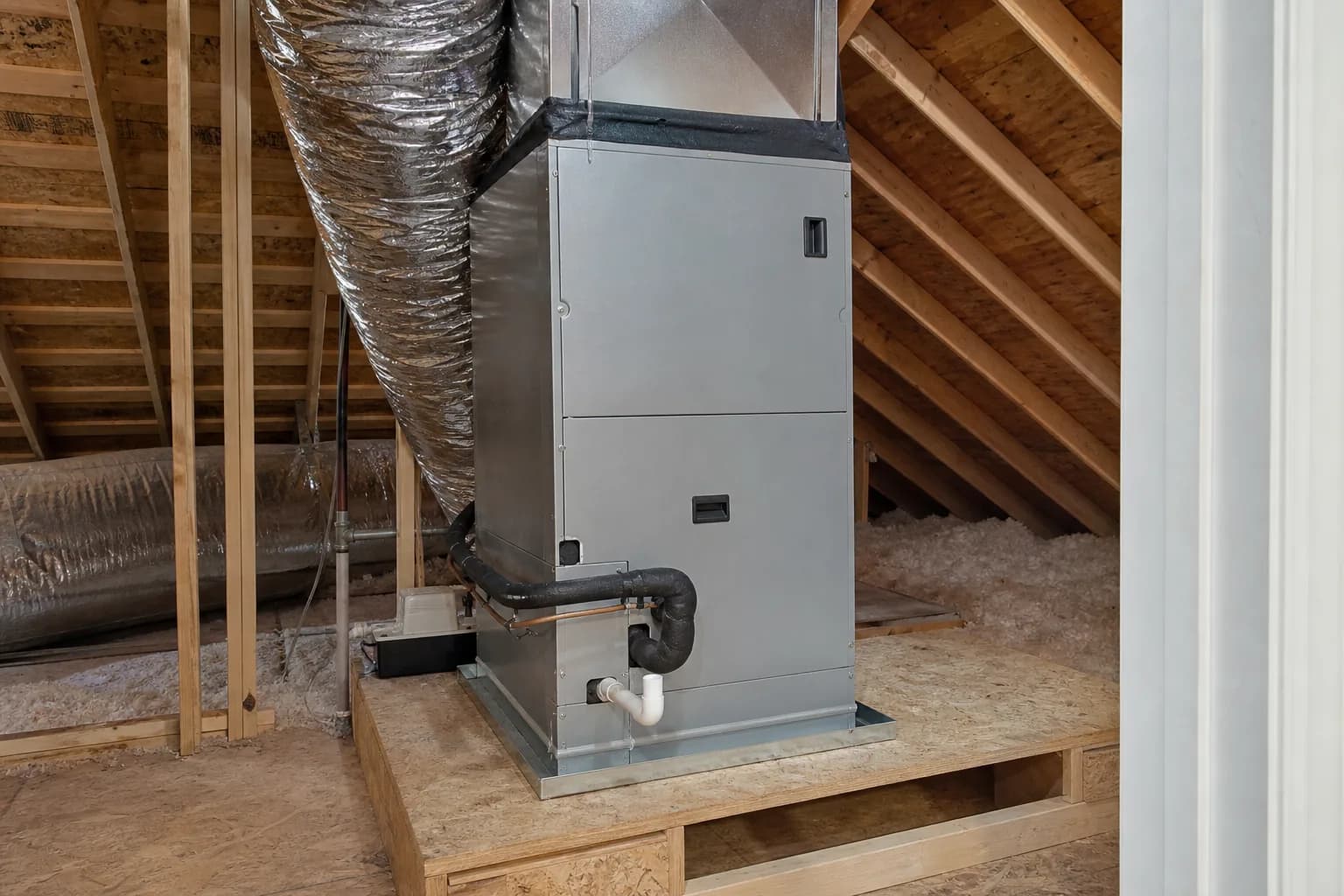
The Gulf Shores Mismatched-Coil Story — Years of Lost Efficiency
A Gulf Shores mismatched coil story: a 16 SEER condenser paired with a 14 SEER coil quietly cost efficiency for eight years. Why AHRI-matched systems matter.
Published 2026-10-22 · Updated 2026-10-22
Author: Landon Jahnke | ACExperts251
Reviewed by: Landon Jahnke · Owner · Alabama HVAC License AL #16117 · EPA 608 Certified
A Gulf Shores homeowner installs a 16 SEER condenser in 2018, paired with a different-brand 14 SEER indoor coil to fit the existing line set without replumbing. Eight years later, the mismatch has quietly cost a meaningful chunk of utility-bill efficiency. The system still runs. The bill has crept up. The coil looks like rust on a beach chair.
Over 13 years working Baldwin County HVAC, I've watched this story play out many times on the coast. Here is the chronological sketch of how it happens, why coastal exposure makes it worse, and what to do if your install is showing the same pattern.
2018: Homeowner buys 16 SEER condenser. Installer stocks a different-brand 14 SEER indoor coil to fit the existing line set without replumbing. White coil, polished copper, factory specs. System fires up and cools the house. Owner is pleased.
A couple years in: Equipment running, no symptoms. Summer electric bill running its normal trend. Coil starting to show brown coating on fins along the leading edge where supply air first hits the surface. Coastal air pulling salt and moisture across the coil surface 24/7. Owner notices nothing.
Year five-ish: Bill creeping noticeably higher than baseline. Owner blames Riviera Utilities rate increases (some of it is). Heavy biofilm now on coil surface, fins partially blocked, drain pan showing biological growth. Coil cleaning has not been performed since install. System runs but works harder.
Year eight: Bill running significantly above baseline summer. Brown patches across the coil that look like rust on a beach chair, with measurable airflow restriction. End-of-cycle indoor humidity in the low 60s. System cycle times lengthening because the coil is no longer transferring heat efficiently.
Total efficiency lost over those years: a substantial fraction of the original rated capacity, paid for one month at a time on the electric bill.
The mismatch is the story.
What "AHRI-matched" actually means
AHRI is the Air-conditioning, Heating, and Refrigeration Institute. Manufacturers submit specific equipment combinations — outdoor condenser, indoor coil, air handler — to AHRI for joint certification. The certification verifies that the components, as paired, deliver the SEER and capacity ratings printed on the equipment.
Critically, an AHRI rating is for a specific combination. A 16 SEER condenser paired with the manufacturer's matching 16 SEER coil and air handler delivers 16 SEER. That same condenser paired with a different brand's 14 SEER coil delivers neither 16 SEER nor 14 SEER — it delivers some unknown number lower than both, because the components were never engineered to operate together and have never been tested as a system.
The AHRI certificate is the proof. If your installer cannot hand you an AHRI certificate at completion of work showing the specific combination installed, you do not have an AHRI-matched system. You have a cobbled-together system that may work, may work poorly, or may work fine until coastal exposure starts compounding the design gaps.
How the Gulf Shores story actually plays out
Walk through the install in detail.
The homeowner's original system had failed — compressor seized, line set sound, overall good bones. The decision was to replace the outdoor unit and indoor coil while keeping the existing air handler and ductwork. Standard replacement scope.
The contractor pulls a 16 SEER condenser off the truck. Different brand than the existing air handler — that's where the trouble starts. To pair properly with the air handler, the contractor would have needed to special-order an indoor coil from the air-handler manufacturer that matched the new condenser brand. Lead time some days, additional cost on the parts side.
Instead, the contractor pulls a 14 SEER indoor coil from the truck — different brand than the condenser, different SEER rating, but it physically fits the line set and the air handler cabinet. Refrigerant charge is set to manufacturer recommendation for the condenser. System starts, cools, no immediate symptoms.
That decision saved the contractor a return trip and inventory holding cost. It cost the homeowner real money over the following years of operation.
Why coastal exposure makes mismatch worse
If this same install happened in Stockton or Bay Minette, the efficiency loss over the same window would have been smaller — meaningful but not dramatic. Why does coastal exposure compound the cost?
Salt-driven coil degradation. Standard 14 SEER indoor coils have thinner fin coatings than coastal-rated equipment. Gulf Shores ambient air carries several times the salt aerosol of inland zones — quantifiable in milligrams of chloride deposition per square meter per day. That salt finds the unprotected fin surfaces and accelerates corrosion well above normal rates.
Refrigerant flow tolerance gaps. A mismatched system runs slightly off-design refrigerant flow, which means the coil temperature profile is slightly different than designed. Slightly warmer coil surfaces shed condensate slower. Slower condensate flow means more biological growth on the coil surface. More biological growth means more airflow restriction. Coastal humidity (running 75-82% routinely in Gulf Shores summers) supercharges this cycle in ways inland air does not.
Compressor stress. When the indoor coil is undersized or mismatched relative to the outdoor unit, the compressor runs at higher head pressure than designed. Higher head pressure means more thermal stress on the compressor windings, which means shorter compressor life. Coastal humidity already shortens compressor life on average; mismatch compounds the shortening.
The cumulative effect is what shows up at year 8. A coil that looks like rust on a beach chair. A bill that has crept up well above the install year. A system that still cools but is doing it inefficiently and is heading toward premature failure.
The bill pattern, year by year
The homeowner's summer bill progression from the install year typically looks something like this:
- Year 1: baseline, equipment new
- Year 2: rate inflation only, modest creep
- Year 3: first year showing efficiency drift
- Year 4: coil degradation accelerating
- Year 5-6: biofilm and corrosion compounding
- Year 7-8: cumulative loss is unmissable on the year-over-year comparison
Compare to a Riviera Utilities rate index over the same period: rates rise a modest amount cumulatively. The homeowner's bill rises substantially more. The delta is the efficiency loss attributable to the mismatched coil.
What a properly matched install would have looked like
Same starting point. Contractor pulls the 16 SEER condenser off the truck. Contractor identifies that the existing air handler is a different brand and either:
Option A: orders the indoor coil from the air-handler manufacturer that pairs with the new condenser brand. A few days of lead time. AHRI certificate obtained, filed with the homeowner.
Option B: replaces the air handler in addition to the condenser and coil, sourcing all three components from the same manufacturer family. AHRI certificate obtained, filed with the homeowner. More expensive at install, but full system match and full SEER delivery.
For Gulf Shores specifically, Option B is usually the right answer because the coastal exposure rewards a fully matched, fully coastal-rated system in ways that pay back over 10-15 years. The upfront premium recoups over a number of cooling seasons through avoided efficiency losses, and the equipment lasts longer than a mismatched system.
For more on the broader installation cost picture and what to look for in a quote, the AC installation cost overview covers the line-by-line. The AHRI-matched explainer for Silverhill goes deeper on the certification mechanics.
How to spot a mismatched system in your home
Walk to your equipment with a phone camera. Photograph the data plates on:
- The outdoor condenser
- The indoor coil (often inside the air handler cabinet)
- The air handler itself
Note the manufacturer brand, the model number, and the SEER rating on each plate. Then ask your installer (or me during a maintenance visit) for the AHRI certificate that pairs those three components.
If the brand on the condenser does not match the brand on the indoor coil, you almost certainly have a mismatched system. (Some manufacturers do cross-pair under specific certified combinations, but those are the minority.) If the SEER ratings are different across components, you have a mismatched system regardless of brand.
Visual inspection of the indoor coil itself is also informative. A healthy coil has clean aluminum fins with a uniform appearance. A coil with brown patches, fins blocked or bent, biofilm visible on the surface, or pitting on the copper tubes is showing the symptoms of a mismatched or under-maintained installation. Shine a flashlight across the fin surface from one end of the coil — even airflow distribution should look the same on both ends. Uneven illumination signals airflow restriction.
What to do if you have a mismatch
Three options depending on equipment age and bill severity.
If equipment is under 5 years old: address coil cleaning aggressively under the preventive maintenance program to slow further degradation. The mismatch is baked in, but the rate of loss can be reduced. The Comfort Plan ($20/month or $240/year) bundles two tune-ups a year, $0 service fees, 10% off repairs, and no overtime fees.
If equipment is 5-9 years old and bills are moderate: continue running but plan a properly matched replacement at next failure event. Document the model numbers now so you have the AHRI specification ready when replacement happens.
If equipment is 8+ years old and bills are severe: replace proactively with a properly matched AHRI-certified system sized correctly for the home. Replacement estimates are free. The pay-back math frequently works inside a handful of cooling seasons given the rate of accumulated losses.
For the heat-pump tier of equipment selection, the Gulf Coast heat pump vs central AC comparison covers the parallel decision. For Orange Beach and Fort Morgan specifically — where coastal exposure is even more aggressive than Gulf Shores proper — the Fort Morgan SEER bill math walks through tier selection on the peninsula.
What I'd tell a Gulf Shores neighbor
The install in this story is unfortunately representative — not unique. Plenty of replacement-only AC work done in Gulf Shores over the past decade went in without an AHRI certificate. The contractors who took shortcuts on component matching were often the cheapest bid and won the work. The homeowners are paying the difference now.
If a Gulf Shores neighbor asked me what to do about an older install showing creeping bills and creeping humidity issues, I'd say: pull your model numbers, request the AHRI certificate, and if it can't be produced, plan for a properly matched replacement on a 24-36 month horizon. Don't wait for failure to make the decision — failure usually happens during the worst week of summer when contractor schedules are full and your options are limited.
The dollars compound. The coil degrades. The bill creeps. The right answer is to address the mismatch on a planned schedule before the equipment forces the timing.
I'll verify your AHRI status during a maintenance or diagnostic visit. The $79 service fee covers the inspection, and any replacement quote that follows is free and in writing. Call 251-383-HVAC — Monday-Saturday 8a-6p, emergency calls around the clock, every day with no Saturday upcharge.
FAQ
- Why does a mismatched coil lose efficiency over time rather than just at install?
- Three compounding reasons. First, the refrigerant flow control on a mismatched system runs slightly off the design point, which means the indoor coil operates at a slightly warmer surface temperature than it should. Warmer coil surfaces shed condensate slower and accumulate biofilm faster. Second, the airflow profile across a mismatched coil is rarely optimized for the supply CFM the air handler is producing, which creates dead zones where moisture pools and biological growth seeds. Third, the salt-laden coastal air finds and exploits any gap in the design intent — a properly matched system has tighter tolerances that resist coastal corrosion in ways a cobbled-together system cannot. The losses do not show up year one. They compound year over year as the coil degrades.
- Can I just clean the coil and recover the lost efficiency?
- You can recover some of it — typically a meaningful fraction of the accumulated loss — but you cannot recover all of it. A coil that has been operating in a mismatched configuration for 5+ years will have permanent damage to the fin coatings and pitting on the copper tubes that no chemical cleaning can reverse. Annual coil cleanings under the [preventive maintenance plan](/services/preventive-maintenance/) slow the rate of degradation but do not undo prior degradation. The honest answer is that mismatched systems should be addressed at the equipment level, not the cleaning-protocol level.
- How can I tell if my Gulf Shores system is AHRI-matched right now?
- Look for the AHRI certificate, which should have been provided at install and which the manufacturers maintain in a public database. The certificate lists the specific outdoor unit model, indoor coil model, and air handler model paired together along with the certified system SEER and capacity. If you cannot produce the certificate, the system is almost certainly not AHRI-matched. I can verify a system's AHRI status during a maintenance visit by reading the model and serial numbers off all three components and cross-referencing the manufacturer database.
- Does AHRI matching matter as much for inland Baldwin County homes?
- It matters everywhere, but the consequences are more severe on the coast. Inland homes in Bay Minette or Stockton can run a mismatched system for years before the losses accumulate to the level of a coastal home. The reason is environmental — coastal homes face salt-laden air that exploits any tolerance gap in the equipment design, while inland homes face only normal humidity stress. A mismatched system on the coast loses efficiency considerably faster than an equivalent inland system. The dollars work out to similar magnitudes only over much longer ownership windows.
Need this handled?
Straight to the service page for your town — pricing, local details and a form that reaches a technician.
More from Ahri Matched

ACExperts HVAC
We Take The Heat So You Don't Have To
Fast, honest heating and air service across Baldwin County. Speak with a technician and get on the schedule today.