
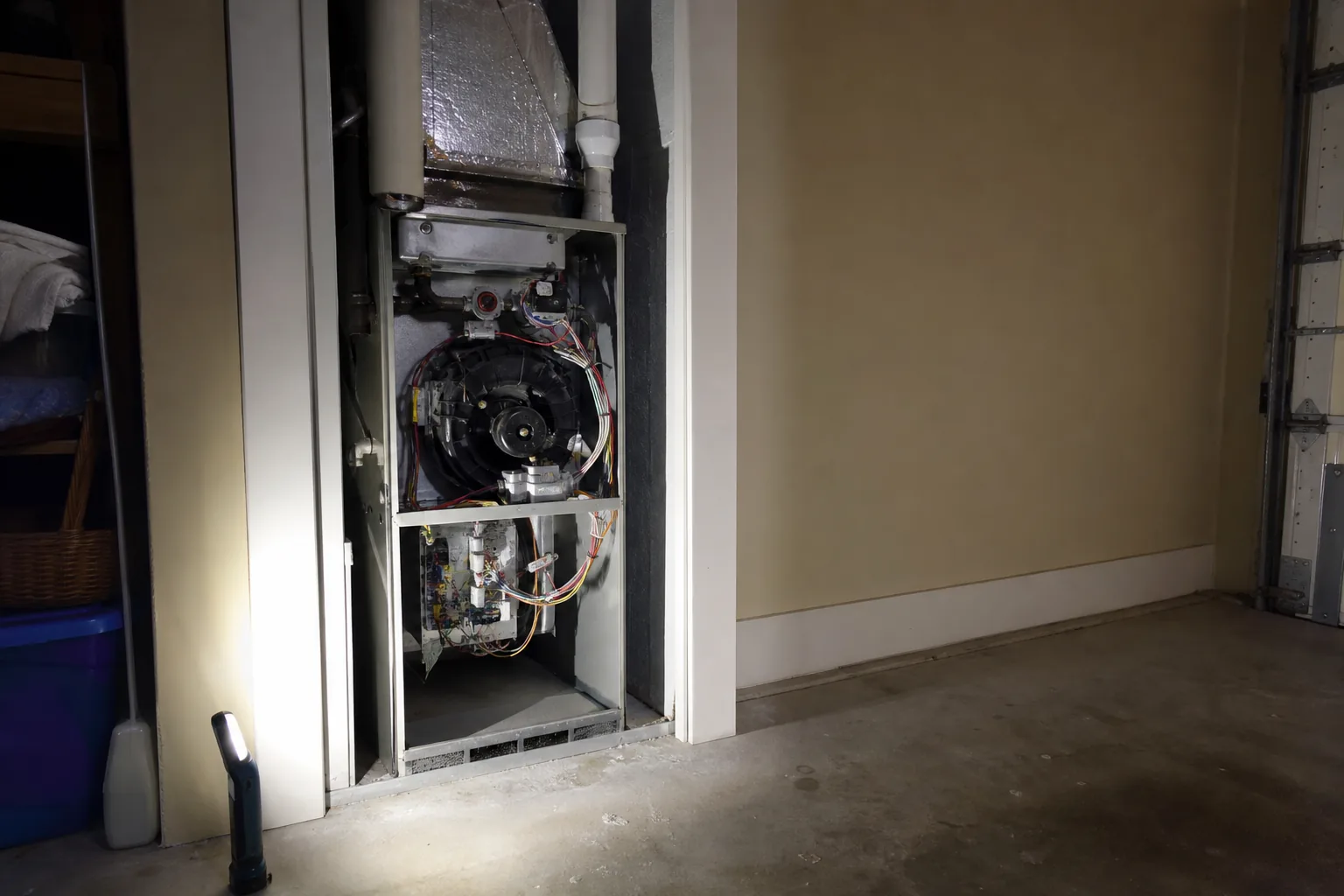
Robertsdale No Heat at Midnight: What to Do Before You Call
The heat's out at midnight in Robertsdale and the house is dropping. six checks before you call for emergency HVAC, how to stay warm, and when to just call.
Published 2026-06-14 · Updated 2026-06-14
Author: Landon Jahnke | ACExperts251
Reviewed by: Landon Jahnke · Owner · Alabama HVAC License AL #16117 · EPA 608 Certified
It's past midnight in Robertsdale, a cold front pushed through earlier, and the heat has quit. The house is already noticeably cooler than it was at bedtime, and it's going to keep dropping. Before you do anything else: take a breath. A lot of no-heat calls turn out to be something small, and several of the most common causes you can check yourself in the next few minutes. Here's the order to work through, how to stay warm safely while you do, and when to stop checking and just call.
Six things to check before you call
Work through these top to bottom. Any one of them might bring the heat right back.
1. The thermostat. Confirm it's set to Heat, not Cool or Off, and push the setpoint several degrees above the current room temperature. If it's a battery-powered thermostat and the screen is dim or blank, dead batteries are a real and common culprit — swap them.
2. The furnace switch. Most furnaces have a switch that looks exactly like an ordinary light switch, mounted on the unit or on the wall right next to it. It gets bumped off more often than you'd think — by a stored box, a cleaning, a curious kid. Make sure it's on.
3. The breaker. Find the breaker for the furnace or air handler. A power blink during a front — common out here on the local electric service — can trip a breaker or lock a control board into a fault state. Flip the breaker fully off, wait thirty seconds, and flip it back on. That resets a lot of sulking control boards. If the breaker trips again immediately, leave it off and call; that's a fault, not a nuisance trip.
4. The filter. Pull the return filter and look through it. A filter that's been in place for months and is choked with dust restricts airflow across the heat exchanger and can trip a high-limit safety that shuts the burners down. If it's loaded, replace it and try again.
5. The outdoor unit, if you have a heat pump. Heat pumps go into a defrost cycle in cold weather and briefly blow cooler air while they melt frost off the outdoor coil — that's normal and clears in a few minutes. But if the outdoor unit is iced over solid, silent when it should be running, or the cool air just won't stop, that's a real problem.
6. The propane or gas supply, if applicable. If you're on propane, check the tank gauge — running out is a simple, common, and easily-missed cause of no heat. If you're on natural gas and other gas appliances also aren't working, the issue may be upstream of the furnace entirely.
If you've worked through all six and the house is still cold, you've done the right triage. Now it's a call.
How to stay warm safely tonight
While you sort it out or wait for us, keep everyone safe and reasonably comfortable:
- Concentrate the heat. Close doors to unused rooms, pull the family into one space, and let body heat and a single safe heat source do more in a smaller area. Layer up and break out the blankets.
- Use only indoor-rated heat. A portable electric space heater is fine if you give it clearance from anything flammable and don't pile it onto an already-loaded circuit.
- Never burn fuel indoors for heat. Do not run a gas range, oven, charcoal grill, camp stove, or any outdoor or vehicle heater inside the house. These produce carbon monoxide, which is colorless, odorless, and can be fatal in an enclosed space. This is the single most important line in this whole post.
- Check your CO detectors. Make sure they're working and have good batteries — especially important any night you've got a gas furnace acting up or you're tempted to improvise heat.
Why this happens in Robertsdale specifically
Central Robertsdale's housing stock skews toward older ranch homes — brick veneer on slab, a lot of mid-century construction — and many of them had central heat retrofitted in years after the house was built. That equipment is often on its second or third generation, the retrofit ductwork in attics and crawl spaces is now decades old, and parts like igniters, flame sensors, and pressure switches are simply old enough to fail on the first hard cold load of the season. Roughly an eighth of the housing here is mobile and manufactured homes, which typically run package units with their own cold-weather failure modes — a gas valve or regulator that ices over on a frigid night being a classic one.
There's also the economics. This is a working community, and we know an out-of-the-blue heating repair isn't a minor line item. That's exactly why we don't believe in selling you a system at 1am out of fear. We'll get the heat back on, and any bigger repair-or-replace conversation happens in daylight with honest numbers — not in a cold living room in the middle of the night.
What happens when we come out
An emergency HVAC no-heat call starts with the fastest safe path to getting your heat running again. We carbon-monoxide test every gas furnace we work on, regardless of age — a furnace that won't light and a furnace with a cracked heat exchanger can look identical from the hallway, and we're not going to hand you back a heater that isn't safe. We check the igniter, flame sensor, pressure switch, and inducer on a gas system, or the reversing valve, heat strips, and refrigerant side on a heat pump, and we carry the common parts so a same-visit fix is often realistic.
Our service fee is $79 and we quote any repair in writing before we start. If the honest answer turns out to be that the system is at the end of the road, we'll say so plainly, give you a free estimate, and let you make the call when you're warm and rested — and we offer free second opinions if you've already been quoted a replacement somewhere else. The Robertsdale service area page has more on the local housing context, and the Robertsdale Thanksgiving furnace post explains why these failures cluster on the first real cold snap of the year.
Get ahead of the next one
The midnight no-heat call is almost always preventable. Running the furnace for fifteen minutes on a cool fall evening — before you actually depend on it — surfaces a weak igniter or dirty flame sensor while the schedule is open. A fall heating tune-up does it more thoroughly, and the ACExperts Comfort Plan folds two seasonal visits and priority routing into $20 a month or $240 a year — which is built for catching exactly the parts that strand people at midnight.
If the heat's out right now
If you've checked the basics and the house is still dropping, call 251-383-HVAC — we answer emergency calls 24/7, every day, and a real no-heat call in an occupied home on a cold night moves up the queue. If it can safely hold until morning, we'll get you on the calendar during regular hours, Monday through Saturday, 8am to 6pm. Stay warm, keep the CO detectors working, and don't burn anything indoors to get through the night.
FAQ
- What should I check first when the heat goes out at night in Robertsdale?
- Start with the simple things, in order: confirm the thermostat is set to Heat with the setpoint above room temperature and the batteries aren't dead; check that the furnace switch (it looks like a light switch on or near the unit) wasn't bumped off; and check the breaker. A power flicker can lock a furnace control board into a fault, and flipping the breaker off for thirty seconds and back on resets many of them. Also check the filter — a badly clogged one can trip a safety limit and shut the burners down. If none of that brings it back, it's time to call.
- How can I stay warm safely until the technician arrives?
- Close off unused rooms to concentrate heat, layer clothing and blankets, and gather everyone into one room. Use only heating sources rated for indoor use. Never run a gas range, oven, charcoal grill, or any outdoor or automotive heater indoors for warmth — those produce carbon monoxide and are genuinely dangerous in an enclosed home. Make sure your CO detectors are working. If you're using portable electric space heaters, give them clearance from anything flammable and don't run them on an overloaded circuit.
- If I have a heat pump, why is it blowing cool air during a cold snap?
- A heat pump in defrost mode briefly blows cooler air while it melts frost off the outdoor coil — that's normal and passes in a few minutes. What's not normal is sustained cool or no air when the thermostat is calling for heat. That can mean the system has lost its heat-pump function and isn't engaging the backup heat strips, or a control or refrigerant issue. If the cool air doesn't resolve after a few minutes and the house keeps dropping, treat it as a no-heat call.
- Will you really come out in the middle of the night?
- Yes. We answer emergency calls 24/7, every day, at 251-383-HVAC, and a true no-heat situation in an occupied home on a cold night gets prioritized. For non-urgent repairs and seasonal tune-ups, our regular scheduling hours are Monday through Saturday, 8am to 6pm. If you call after hours, we'll help you figure out on the phone whether it's a tonight problem or a morning one.
Need this handled?
Straight to the service page for your town — pricing, local details and a form that reaches a technician.
Related reading

ACExperts HVAC
We Take The Heat So You Don't Have To
Fast, honest heating and air service across Baldwin County. Speak with a technician and get on the schedule today.