
Orange Beach Salt-Air HVAC Maintenance: The Schedule That Doubles Equipment Life
Standard outdoor units fail early in Orange Beach salt air. the twice-a-year coastal maintenance schedule, plus between-visit steps that extend equipment life.
Published 2026-05-05 · Updated 2026-05-05
Author: Landon Jahnke | ACExperts251
Reviewed by: Landon Jahnke · Owner · Alabama HVAC License AL #16117 · EPA 608 Certified
Orange Beach is one of the harshest places in the country to own an air conditioner. That's not an exaggeration meant to sell you anything — it's just the chemistry of putting metal equipment in salt-laden air and running it hard for most of the year. The good news is that the corrosion that shortens equipment life here is predictable, and a disciplined maintenance schedule can roughly double how long an outdoor unit lasts before it has to be replaced. This is the protocol we use.
Over 13 years working Baldwin County HVAC, I've pulled a lot of parts off Orange Beach systems, and the pattern is always the same three suspects: dissolved aluminum fins, pinholed copper, and burned-out electrical contacts. Every one of those is corrosion driven, and every one of those slows down dramatically when the equipment is on a real schedule.
Why standard outdoor units fail early in Orange Beach
Direct Gulf-front exposure in the high-rise condo corridor and the Cotton Bayou and Perdido Pass-facing neighborhoods produces one of the most aggressive residential HVAC corrosion environments anywhere. Salt particles in the air settle on outdoor units year-round, not just during storm events. Here's what they do, component by component:
- Aluminum coil fins dissolve. The fins on a standard condenser coil are reactive aluminum. Chloride in salt air disrupts the protective oxide layer and lets the metal corrode continuously, flaking away as white powder. Lose enough fin surface and the coil can't reject heat efficiently — the system runs longer and hotter to do the same work.
- Copper lines develop pinhole leaks. Salt exposure pits the copper tubing from the outside until a pit penetrates the wall. The system slowly loses refrigerant charge, which stresses the compressor.
- Electrical contactors pit and burn. The high-voltage switch that powers the compressor arcs every cycle. In chloride-laden humid air, the contacts erode faster, run hotter, and eventually either weld shut or fail to make contact at all.
- Cabinet hardware corrodes. Fasteners and panels rust faster than manufacturers' standard warranty schedules assume.
The net effect is that standard-grade outdoor units in Orange Beach reach the end of their useful life well before they would inland. Coastal-rated equipment — treated coil coatings, marine-grade fasteners, sealed control compartments — runs substantially longer in the same spot. Either way, maintenance is what gets you to the top of the range instead of the bottom.
The bi-annual coastal-protocol schedule
A normal inland tune-up isn't enough here. The Orange Beach schedule layers aggressive salt-specific work on top of a standard maintenance visit.
Spring tune-up (March–April)
The spring visit gets the system ready for the cooling season it's about to run hard. It includes the standard checks every system needs — refrigerant pressures, electrical connections, capacitor readings, contactor inspection, condensate drain clearing, indoor and outdoor coil cleaning, blower motor amp draw, and thermostat calibration — plus the coastal-protocol additions that matter on the water:
- Outdoor coil chemical wash to remove the salt and oxide a garden-hose rinse can't fully clear.
- Electrical contactor inspection with documentation of any pitting so we can track how fast it's progressing year over year.
- Fastener and cabinet integrity check to catch corrosion on the hardware before a panel works loose.
- Refrigerant-line insulation inspection wherever the lines are exposed to salt air.
- Condensate drain treatment to keep the biofilm that thrives in our humidity from clogging the line at the worst possible time.
Fall tune-up (September–November)
The fall visit repeats the coastal-protocol items and adds heating-mode work for any heat pump or heating system before cold weather arrives: reversing-valve operation under heating load, defrost cycling, auxiliary heat-strip continuity, and balance-point thermostat staging. Fall slots fill quickly along the coast, so it's worth booking ahead — a corroded contactor or a refrigerant issue is far better caught in November than discovered on the first hard freeze.
A mid-summer check for the most exposed properties
For Gulf-front condos and oceanfront single-family homes — Cotton Bayou, Perdido Pass, the high-rise corridor — an additional inspection during peak summer is worth considering. The middle of the cooling season is exactly when a developing capacitor or a pitting contactor is most likely to fail under peak load, and on a rental property that failure lands on a guest. A summer check catches those before they become an emergency. Our preventive maintenance service covers what's included at each visit.
What homeowners can do between visits
The professional visits handle the deep work, but what you do in between matters just as much — sometimes more. Two things carry most of the weight.
Rinse the outdoor coil with fresh water. This is the single highest-leverage maintenance activity a homeowner can do on the coast. Salt deposits accumulate on the coil surfaces and hold moisture against the metal, which is what drives the corrosion. A low-pressure garden-hose rinse, top down through the fins, knocks that salt off before it can do its work. Do it monthly during summer, and weekly on direct Gulf-front properties — the difference in corrosion rate is real and noticeable over a season. Use low pressure only: high pressure bends the aluminum fins and can force water into electrical components, doing more harm than the salt. Skip chemical cleaners too; some are caustic and the fresh-water rinse is what you actually need.
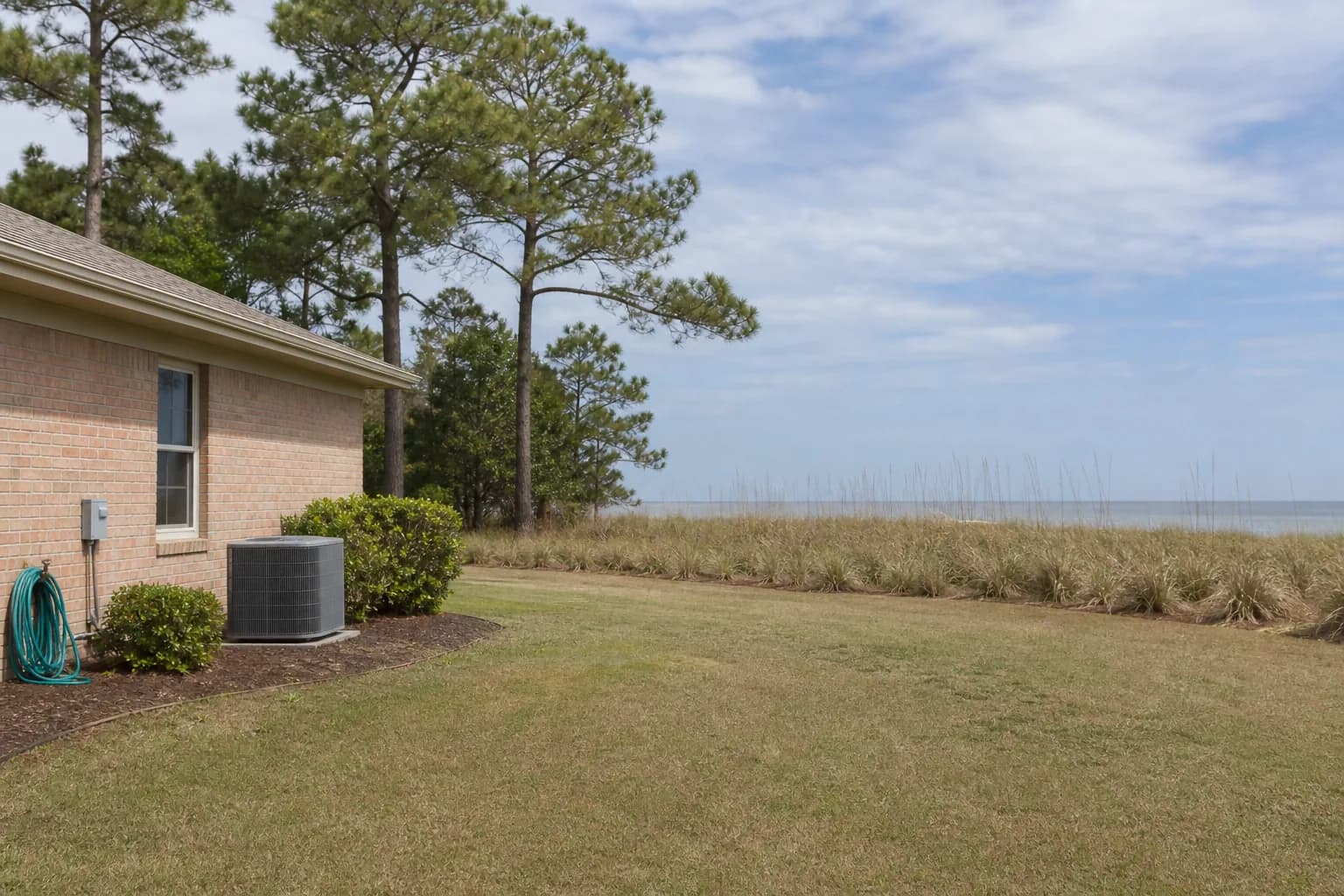
Keep landscaping clear of the unit. Maintain at least 18 inches of clearance on all sides so air moves freely and moisture doesn't get trapped against the cabinet. If you want screening for looks, salt-tolerant plantings like oleander, sea grape, coontie, and native grasses work well without crowding the equipment or holding humidity against it.
A couple of other small habits help: glance at the fins every so often for the telltale white powder of salt and oxide buildup, keep the top grille clear of windblown debris, and call sooner rather than later if you hear a new buzzing, clicking, or laboring sound from the unit — those are usually the early voice of a corroding electrical part that's cheap to fix now and expensive to ignore.
What the schedule actually buys you
Here's the honest version of the value proposition. The salt environment in Orange Beach can't be eliminated — it can only be managed. A standard outdoor unit with no schedule, no coil rinsing, and reactive-only repairs reaches the short end of its lifespan and tends to fail at the worst time, in peak season, at premium reactive pricing. The same kind of equipment on the bi-annual coastal protocol, rinsed regularly between visits, routinely makes it to the long end of the range — and gets there with fewer surprise breakdowns along the way.
That's the "doubles equipment life" claim in plain terms: it's not a gimmick, it's the gap between corrosion left unchecked and corrosion interrupted on a schedule. The math favors maintenance even before you count the comfort and reliability difference. For the homes most exposed to all of this, our Gulf Shores beach house HVAC guide walks through the full salt-sand-sun picture, and the Orange Beach contactor pitting breakdown zooms in on the electrical failure that catches the most homeowners off guard.
Get on a schedule before the season demands it
If your Orange Beach system has never been on a real maintenance cadence, the best time to start is before the next peak season leans on it. We serve Orange Beach, Gulf Shores, and Fort Morgan — the high-exposure southern Baldwin County coast — and the Comfort Plan bundles both annual visits with 10% off repairs and replacements, $0 service fees, and no overtime fees, which is the simplest way to keep a coastal system on track.
Regular calls are answered Monday–Saturday, 8am–6pm, and we're available 24/7 for emergencies, every day, including Saturdays at no extra charge. Call 251-383-HVAC or schedule online.
FAQ
- How often should I have Orange Beach HVAC equipment serviced?
- Bi-annually at minimum — a spring AC tune-up before peak cooling season and a fall heat-pump or heating tune-up before the first cold snap. For Gulf-front high-rise condos and oceanfront single-family homes that take the heaviest salt exposure, an additional mid-summer check is worth considering, especially on rental properties where a peak-season failure is most costly. The Comfort Plan covers two visits a year at a flat rate; extra visits can be added for the most exposed properties.
- Can I clean my outdoor AC unit myself?
- Yes, and you should — a low-pressure fresh-water rinse with a garden hose is one of the best things you can do, and during summer it's worth doing monthly (more often on direct Gulf-front units). Never use a pressure washer, which bends the aluminum fins and can drive water into electrical components, and skip chemical cleaners, some of which are caustic. For the deep work — chemical coil wash, fin straightening, electrical-cabinet cleaning — schedule a maintenance visit. The garden-hose rinse is the part that's safe and high-value for you to do between visits.
- Is coastal-grade equipment really worth the extra cost in Orange Beach?
- For most Orange Beach homes, yes. Coastal-rated equipment with treated coil coatings, marine-grade fasteners, and sealed electrical compartments resists the salt that pits standard aluminum fins and corrodes contacts. The durability difference typically shows up as fewer early repair calls and a longer service life before replacement, which is where it earns its keep. We're happy to lay out the trade-off honestly so you can decide — standard equipment isn't something we'd recommend Gulf-front without making sure you understand the shorter lifespan you're accepting.
- Why do standard outdoor units fail so early on the Orange Beach coast?
- Salt particles settle on outdoor units year-round here, not just during storms. Over time they dissolve the aluminum fins on the condenser coil, drive pinhole refrigerant leaks in the copper, and pit the electrical contactors until the system won't start on a hot day. It's not one dramatic failure — it's the cumulative effect of corrosion on every exposed metal surface, which is why direct Gulf-front equipment tends to reach the end of its useful life noticeably sooner than the same unit installed inland.
- What's the most important thing a homeowner can do between maintenance visits?
- Rinse the outdoor coil with fresh water. It's the single highest-leverage maintenance task you can do yourself, because salt deposits accumulate on the coil surfaces and hold moisture against the metal, which is what accelerates corrosion. Low pressure, garden hose, top down through the fins — a few minutes per side. On Gulf-front properties, rinsing weekly during peak summer noticeably slows the corrosion rate. The second thing: keep landscaping well clear of the unit so air moves freely and moisture doesn't get trapped against it.
Need this handled?
Straight to the service page for your town — pricing, local details and a form that reaches a technician.
Related reading

ACExperts HVAC
We Take The Heat So You Don't Have To
Fast, honest heating and air service across Baldwin County. Speak with a technician and get on the schedule today.