
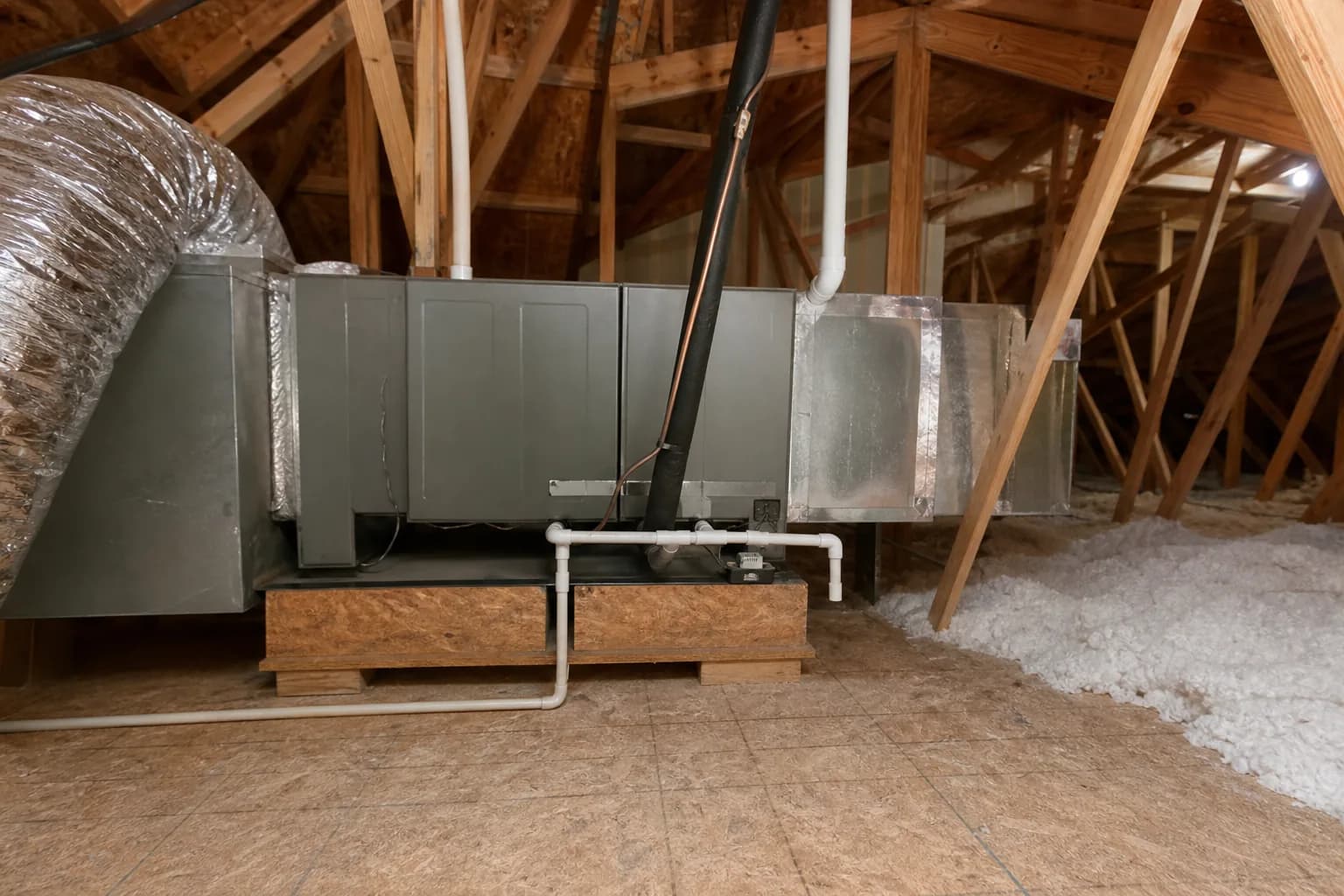
Houseguests, Loxley Heat Load, and the Thermostat Battle
Five things Loxley homeowners believe about Thanksgiving HVAC that aren't true — and what actually fails Black Friday with eleven people in a ranch.
Published 2025-11-18 · Updated 2025-11-18
Author: Landon Jahnke | ACExperts251
Reviewed by: Landon Jahnke · Owner · Alabama HVAC License AL #16117 · EPA 608 Certified
Most Loxley homeowners assume their houseguests will arrive Wednesday afternoon, set the thermostat once, and leave it alone for four days. They won't. The thermostat war during Thanksgiving week is the silent reason heat pumps fail on Black Friday morning, and the Black Friday morning patterns I've seen across 13 years of Baldwin County HVAC work are remarkably consistent: aux heat ran all night, the supply temp dropped, the breaker tripped, or the outdoor unit is iced over because the defrost board couldn't keep up with a system that never got to rest.
Here are five things Loxley hosts believe about Thanksgiving HVAC. None of them are true. The post below knocks each one down and tells you what to actually do about it.
Myth 1 — "My system is sized for the house, so guests don't matter"
This one almost makes sense. Your contractor or builder ran a Manual J load calculation when the system was installed (or was supposed to), and that calculation accounts for square footage, insulation, window orientation, and a reasonable design temperature. What it doesn't account for is eleven people in a four-bedroom ranch off Highway 90, an oven running for six hours, two extra refrigerators in the garage, a fireplace, and the laundry running on heavy duty because somebody's kid spilled gravy.
In summer that combined load would torch your AC. In winter it actually helps your heat pump — body heat and oven waste both push heating load down. The problem is the thermostat doesn't know any of this. It sees indoor temp climbing past setpoint from cooking, kicks off, then 90 minutes later when the kitchen activity stops the temp drops fast and the system slams back on into stage 2 with the aux strips. That on-off-on-off cycling is harder on the equipment than steady run.
What to do: bump the setpoint up by 1°F before guests arrive and let the cooking load coast through the day rather than fighting it. The Loxley service overview walks through how inland heat-load math differs from bay-front cities — same logic flipped for winter.
Myth 2 — "Setting the thermostat to 75 will warm the house faster"
It will not. A heat pump produces a fixed BTU output per minute at any given outdoor temp. Setting the thermostat to 75°F instead of 71°F doesn't make the system work harder per minute — it just makes it run longer, and on a heat pump in November that means the auxiliary electric heat strips engage and stay engaged because the gap between current and setpoint is wider than the heat pump alone can close in a reasonable timeframe.
Aux strips are essentially a 10-15 kW electric space heater bolted to your air handler. They work, but they cost about three times more per BTU than the heat pump itself does. Two hours of unnecessary aux heat on Thanksgiving afternoon adds $8-15 to your bill. Aunt Patricia setting the thermostat to 76°F at noon on Thursday and forgetting about it costs the host real money.
What to do: lock the smart thermostat into a 68-72°F range before anyone arrives. On a basic non-smart thermostat, put a piece of painter's tape over it with a polite note. People will respect the note. They will not respect a thermostat that lets them push it to 78°F.
Myth 3 — "If something breaks Thursday morning we'll just call somebody"
You can call. The question is who's available. Thanksgiving Day in Baldwin County, every reputable HVAC contractor is running a skeleton holiday rotation — typically one or two on-call techs for emergency dispatch, prioritizing true no-heat situations in occupied homes over comfort complaints. ACExperts answers emergency calls around the clock, any day of the week, holidays included. But "as fast as routing allows" is not the same as "in 30 minutes," especially if the call comes in at 11 a.m. when other Loxley and Robertsdale homes are also in line.
Black Friday call volume runs noticeably heavier than a normal weekday. The pattern is the same every year: a system that ran continuously through Thanksgiving Day finally pushes a marginal capacitor or a tired contactor over the edge sometime between midnight and 8 a.m. Friday. By midmorning the schedule is booking out, and the families with houseguests planning to drive home Sunday start calling to ask if there's any way to move them up.
What to do: if your system has any history — odd noises this fall, longer-than-usual run times, a thermostat reading that doesn't match what the room feels like — get it looked at the week before Thanksgiving. The Robertsdale Thanksgiving-eve furnace post gets into exactly which components fail and why holiday week is the trigger.
Myth 4 — "My heat pump is fine because we never use the heat much"
This one is backwards. A heat pump that runs maybe 200 hours a year in heating mode (a fairly typical Loxley winter) builds up problems that don't show up until the system is asked to do real work. The contactor points pit slowly. The defrost board's relays develop carbon buildup. The crankcase heater on the compressor — which is supposed to keep refrigerant from migrating into the compressor oil during long off-cycles — sometimes fails silently because the system doesn't actually need it most of the year.
Then Thanksgiving week hits. The system goes from 200 cumulative hours over six months to 80 hours in a four-day stretch. Marginal components that were fine at 200 hours total can't survive the duty cycle of a continuous Thursday-Sunday run with eleven people in the house and an oven adding humidity load.
What to do: a fall heating tune-up isn't just paperwork. The actual diagnostic work — measuring capacitor microfarads against nameplate, checking contactor resistance, verifying defrost cycle timing, reading refrigerant subcool/superheat — finds the marginal parts that won't make it through the holiday. The diagnostic process is covered on the heating repair page, and the maintenance plan model is on the Comfort Plan page.
Myth 5 — "The kids' rooms always feel cold, that's just the layout"
Sometimes it is the layout. Often, it's a duct problem you've stopped noticing because cooling loads in summer mask it. In a typical 1990s Loxley ranch — Magnolia Trace, Pecan Ridge, Live Oak Acres, the older parts of Loxley Heights — the original ductwork was sized for the original equipment, and when the AC got replaced in 2008 or 2014 nobody re-balanced. The bedroom farthest from the air handler runs 4-5°F off the rest of the house in heating mode because static pressure drops along the longer run and supply temp at the diffuser is 8-10°F cooler than at the closer rooms.
Thanksgiving makes this brutal. The bedroom that's 65°F when only your family is home becomes 61°F when there's a guest in it with the door closed. Closing doors changes the static pressure balance further and the room's supply CFM drops even more. By Friday morning you have a guest who didn't sleep well and is being polite about it.
What to do: open all interior doors at night during the holiday. Leave bedroom doors cracked at minimum. For rooms that are chronically cold even with doors open, the longer-term fix is duct balancing — measuring static pressure at multiple points and adjusting dampers, or in some cases adding a return to a too-tight room. Not a Thanksgiving-week fix, but worth a January conversation. The Lillian neighborhood guide and Fort Morgan service notes both include duct retrofit context for similarly aged housing stock.
Black Friday morning, if you do need us
Emergency calls answered day or night, every day. Calls go in order of severity — true no-heat in an occupied home moves first. No Saturday upcharge during regular hours.
The $79 service fee covers diagnostics, free second opinions on quoted repairs, and free estimates on replacements. For Loxley calls in the I-10 corridor, routing typically runs through Daphne or Robertsdale, so estimated arrival depends on whether the previous call ran long.
If the system died completely overnight, space heaters in occupied bedrooms are fine for the duration of the wait — pull them off circuits that share with major appliances (kitchen, bathroom GFCI). If the system is running but not keeping up, leave the thermostat at a single steady setpoint rather than pushing it higher (see Myth 2). And open the registers you closed last summer.
The full heating installation page covers replacement scenarios for systems that won't make it another season. Most Black Friday calls aren't replacements — they're a capacitor or a contactor or a sequencer, fixable inside an hour. The ones that turn into replacements are usually 14+ year old systems where the compressor finally let go under the holiday load. Those conversations happen, and they get walked through honestly. No upsell on a Thursday night call where you have eight people sleeping in your house.
Have a good holiday. The thermostat war is winnable if you set the rules before guests arrive.
FAQ
- How many people does my Loxley heat pump actually account for in its sizing?
- Standard residential load calculations assume the home's normal occupancy — usually four people for a four-bedroom house. Each additional adult adds roughly 250-400 BTU/hr of sensible heat plus a meaningful humidity contribution. Eleven people in a Whitehouse Forks or Carter Plantation home pushes the indoor heat gain about 2,000-3,000 BTU/hr above design, which is mostly fine in heating mode (it actually helps) but flips against you the moment you also turn on the oven and a fireplace.
- Should I lock my smart thermostat before guests arrive?
- Yes, and not because your guests are doing anything wrong. Most smart thermostats let you set a temperature range that the schedule can't override — Nest calls it Lock, ecobee calls it Schedule Lock. Pick a band like 68-72°F and lock it. This prevents the well-meaning aunt who thinks 76°F is comfortable from running your aux heat strips for nine straight hours and adding $40 to your power bill in one afternoon.
- My Loxley house has had a heat pump for eight years and never had a problem. Why would Thanksgiving be different?
- Because Thanksgiving is often the first time the system runs continuously for 36+ hours under elevated indoor load. Components that have been quietly degrading — a weak capacitor, a contactor with pitted points, a loose blower wheel — fail under sustained run. The system isn't different on Thanksgiving. The duty cycle is.
- Is it cheaper to use the gas fireplace and turn the heat pump down?
- Usually no, in Loxley. A vented gas log set is about 20-30% efficient — most of the heat goes up the flue. A modern heat pump down to about 40°F outdoor delivers 250-300% efficiency. The fireplace is for ambiance and zone-warming a single room. Trying to heat the whole house with it while running the heat pump at 64°F often costs more than just running the heat pump at 70°F.
Need this handled?
Straight to the service page for your town — pricing, local details and a form that reaches a technician.
More from Thanksgiving Prep

ACExperts HVAC
We Take The Heat So You Don't Have To
Fast, honest heating and air service across Baldwin County. Speak with a technician and get on the schedule today.